
60,000-year-old poison arrowheads reveal oldest evidence of toxic hunting
- By Web Desk -
- Jan 08, 2026


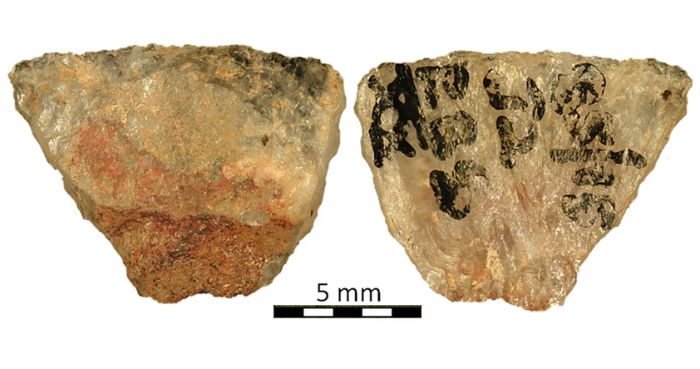
The earliest known evidence of poison arrows has been discovered in South Africa. This pushes back the timeline for this sophisticated hunting method by thousands of years. Scientists noticed traces of plant toxins on Stone Age quartz arrowheads, approximately 60,000 years old. These were used by hunter-gatherers.
The finding, published on Wednesday in Science Advances, arises from an analysis of arrowheads excavated in 1985 from the Umhlatuzana Rock Shelter. Led by Sven Isaksson of Stockholm University, the study’s chemical analysis identified residue from the Boophone disticha plant. Locals know this plant as ‘poison bulb,’ and traditional hunters still utilize it today. In fact, some of these methods involve 60000-year-old poison.
The use of poison arrows in the Late Pleistocene indicates early humans possessed advanced cognitive abilities. Isaksson explained that this hunting method, known as persistence hunting, required complicated cause-and-effect thinking. Hunters needed to understand that a substance applied to an arrow would weaken an animal hours later. They also required the ability to anticipate delayed results. By using poison, hunters could decrease the energy expenditure needed to track and exhaust wounded prey. This was better than having to kill them instantly. These arrows, with their 60000-year-old poison, demonstrate the intelligence of early humans.
The researchers recognized two specific alkaloids, buphandrine and epibuphanisine, on five of the ten arrowheads. These stable chemical compounds survived millennia of burial due to their water resistance. For comparison, the team also tested 250-year-old arrowheads. They found the same toxic alkaloids, which ensures a long-standing tradition of using this specific plant poison.
Before this discovery, the historical record for poison on hunting tools reached back only 6,700 years in South Africa and 4,000 years in Egypt. Indirect finds, like poison applicators, date to 24,000 years ago. The Umhlatuzana discovery greatly extends the confirmed history of this technology, now known to have employed 60000-year-old poison.
The study emphasizes the advanced planning and causal reasoning abilities of early Homo sapiens. This sets them apart from other hominins. Archaeologist Ludovic Slimak, who was not a participant in the study, remarked, “This reinforces the idea that the bow is not a recent invention, but rather a fundamental and complex technology. Its origins extend back at least 80,000 years.”
Isaksson and his team plan to investigate other sites in South Africa to determine how overall the use of poison arrows was during this era, offering additional insight into how early humans understood and used their environment. These sites may further illuminate the use of 60000-year-old poison in hunting.