
Karachi Circular Railway gets ADB backing
- By Web Desk -
- Feb 26, 2026


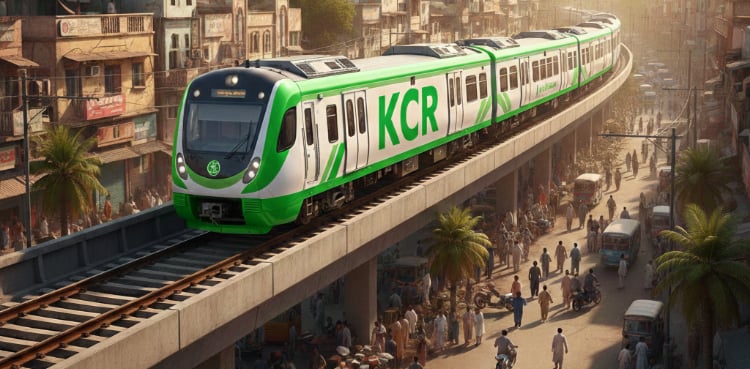
KARACHI The revival of the Karachi Circular Railway (KCR) and the launch of electric bus services in Karachi and other divisional headquarters of Sindh were agreed in principle during high-level talks between the Sindh government and the Asian Development Bank (ADB).
At a meeting held at the CM House, Sindh Chief Minister Syed Murad Ali Shah and an ADB delegation led by Country Director Emma Fan discussed accelerating major transport and development projects, including the long-delayed Karachi Circular Railway (KCR) and new electric bus fleets for major cities of Sindh.
Both sides agreed to deepen development cooperation and expedite priority transport projects across the province.
Opening the discussion, Chief Minister Murad Ali Shah underlined that the KCR remains a flagship priority for the provincial government. He said the megacity of Karachi urgently needs the KCR so it can serve as a feeder to various BRT lines and help resolve the city’s transport issues. He added that his government is seeking financial and technical support to launch the circular railway.
“Karachi Circular Railway is not just a transport project; it is a lifeline for the city,” CM Sindh Murad Shah said.
“We want to revive it with modern infrastructure and integrated urban planning. With ADB’s technical and financial support, we can transform Karachi’s mass transit system and provide affordable, safe transport to millions,” Murad Ali Shah added.
CM Sindh noted that restoring the KCR would significantly reduce congestion, lower carbon emissions, and support inclusive economic growth in Pakistan’s largest city.
The ADB country director, Emma Fan, agreed in principle to support the KCR project and advised the provincial government to submit the required documentation so it could be presented to the bank’s board for approval.
The meeting also focused on expanding electric bus services in Karachi and introducing them in Hyderabad, Sukkur and Larkana under what officials described as a sustainable mobility framework.
The chief minister said the Sindh government is committed to clean and green transport solutions to improve air quality and urban mobility.
“Electric buses will not only modernise public transport but also help us tackle climate change and reduce fuel dependence,” he said.
The ADB Country Director discussed possible financing options, including project readiness financing and co-financing arrangements, to support these initiatives. The meeting agreed that the provincial government would submit the e-buses proposal to the ADB for necessary action.
The meeting also reviewed the proposed ADB pipeline for 2026–2029, which includes major investments in health workforce strengthening, secondary education, sustainable mobility, urban and water projects, rural WASH programmes, coastal resilience, and public-private partnerships.
Additional financing for the Karachi BRT Red Line and preparation of new urban transport schemes were also on the agenda.
“Our focus is on timely completion, transparency and quality,” the chief minister said. “After the 2022 floods, we are not just rebuilding infrastructure – we are building back better and climate-resilient.”
Both sides agreed on the need to improve project readiness, streamline approval processes and strengthen institutional capacity to avoid delays and cost overruns.
The meeting concluded with a shared resolve to advance transformative transport projects – led by KCR and electric buses – while progressing a broader development agenda across Sindh.