
The Aravalli Scandal: Unraveling Modi's Redefinition and Adani Connections
- By Erica Fernandes -
- Jan 02, 2026


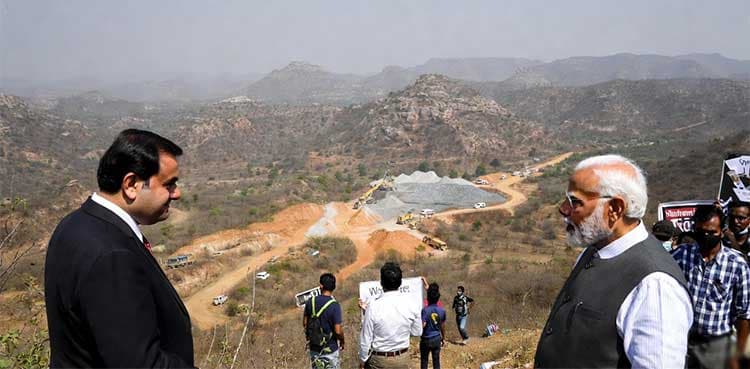
The Aravalli Scandal has emerged as a major environmental and political controversy in India, spotlighting the Modi government’s recent redefinition of the Aravalli hills. Critics allege this move prioritizes mining interests over ecological protection, with links to industrial giants like the Adani Group. Spanning Rajasthan, Haryana, Delhi, and Gujarat, the Aravalli range is crucial for preventing desertification and maintaining air quality in the National Capital Region (NCR).
Background of the Aravalli Controversy
The Aravalli hills, an ancient mountain range, have long faced threats from illegal mining and deforestation. In November 2025, the Supreme Court accepted a new definition proposed by a committee under the Modi-led Ministry of Environment, Forest and Climate Change. This defines an “Aravalli Hill” as any landform elevated at least 100 meters above surrounding terrain, with slopes and adjacent areas included. An “Aravalli Range” is a cluster of such hills within 500 meters of each other.
The government claims this provides legal clarity, restricting mining to just 0.19% of the 1.44 lakh square kilometers across 34 districts, while committing to restoration efforts. However, opposition parties argue it excludes over 90% of the range—hills below 100 meters—from protections, inviting rampant exploitation.
Modi’s Alleged Role and Political Backlash
Prime Minister Narendra Modi’s administration has faced sharp criticism for “bulldozing” amendments to the Forest Conservation Act, 1980, and related rules, which allegedly dilute environmental safeguards. Congress leader Sonia Gandhi accused the Modi government of signing a “death warrant” for the Aravallis, enabling illegal miners to destroy the ecosystem already ravaged by mining. Jairam Ramesh, another Congress figure, questioned why the government is “hell-bent” on this redefinition, ignoring inputs from the Forest Survey of India and potentially fragmenting the interconnected hills.
Public protests erupted in December 2025, with environmentalists warning of worsened air pollution and biodiversity loss. The Supreme Court paused its ruling amid objections, highlighting the issue’s gravity.
Adani’s Involvement and Cronyism Allegations
While official documents do not directly name the Adani Group, the scandal is often tied to Gautam Adani, a close ally of Modi. Social media and critics claim the redefinition aids mining lobbies, with Adani’s operations in Rajasthan—home to much of the Aravallis—under scrutiny. Adani has faced separate controversies, including a U.S. bribery scandal involving $265 million and arm-twisting tactics with Rajasthan’s power utilities. Opponents argue these changes could expand Adani’s mining footprint, exacerbating environmental damage in the region.
Environmental and Societal Impacts
The Aravallis act as a barrier against the Thar Desert’s sands and help mitigate NCR’s severe pollution, linked to thousands of deaths annually. Increased mining could release dust, worsen air quality, and contaminate groundwater with toxins like uranium. Activists like Rajendra Singh have petitioned the Supreme Court, emphasizing the range’s vulnerability.
In summary, the Aravalli Scandal underscores tensions between development and conservation under Modi’s leadership, with Adani’s shadow looming large. Calls for a review persist as India grapples with balancing growth and sustainability.