
Bahraini Dinar to Pakistani Rupee Rate Today– Feb. 21, 2026
- By Web Desk -
- Feb 21, 2026


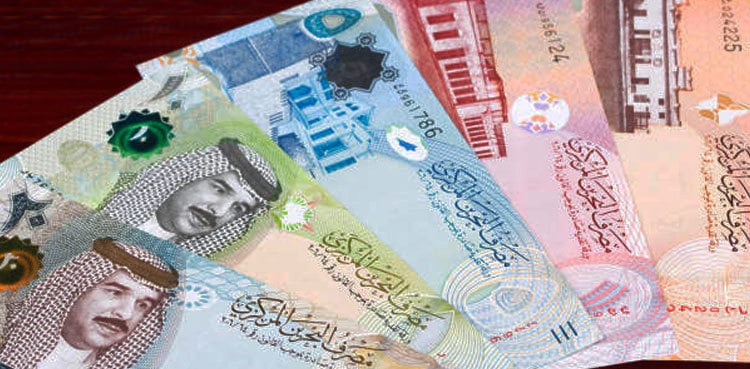
Karachi/Manama, February 21, 2026: The Bahraini Dinar (BHD) is trading at 741.38 Pakistani Rupee (PKR) today according to major currency exchanges. The rate has continued its slow downward trajectory, easing from 741.68 PKR one week ago on February 14 and 741.86 PKR on February 07.
This extends the broader softening pattern seen since the brief peak of 745.46 PKR on January 24.
Tracing back further, the exchange rate has gradually declined through late 2025 and into early 2026: 743.48 PKR (Dec 13), 743.46 PKR (Dec 20), 743.03 PKR (Dec 27), 742.92 PKR (Jan 03), 742.76 PKR (Jan 10), 742.53 PKR (Jan 17), 741.86 PKR (Feb 07), 741.68 PKR (Feb 14), and now 741.38 PKR. The persistent slide reflects the ongoing relative pressure on the Pakistani rupee against the firmly dollar-pegged Bahraini dinar amid divergent economic conditions in the two countries.
The Bahraini dinar is anchored to the US dollar at the fixed rate of 1 USD = 0.376 BHD—a policy the Central Bank of Bahrain has maintained consistently since 2001. This arrangement ensures long-term stability, with the dinar’s value tracking the dollar very closely and reacting chiefly to movements in global oil prices and Bahrain’s fiscal health. By contrast, the Pakistani rupee operates under a managed float overseen by the State Bank of Pakistan. As a result, the PKR remains more sensitive to a wide array of domestic and external variables: inflation trends, trade and current account balances, foreign reserve levels, external debt servicing needs, remittance inflows, and occasional policy actions aimed at limiting excessive volatility.
At today’s level of 741.38 PKR the softer dinar continues to generate several cross-border economic consequences. Bahraini exporters enjoy a marginal improvement in price competitiveness internationally, while Pakistani goods—especially textiles, rice, fresh produce, and certain manufactured items—become slightly more expensive for Bahraini importers and consumers. On the Pakistani side, the reduced rupee cost of Bahraini-origin imports, most importantly petroleum products and other energy commodities, provides some relief against imported inflation and supports household and business budgets to a degree. Remittances sent by the large Pakistani community working in Bahrain lose further purchasing power in rupee terms compared with earlier, higher-dinar periods, exerting modest downward pressure on the real income of recipient families. At the same time, Pakistani exporters targeting the Bahraini market may find their products marginally more price-attractive there, although total trade flows remain driven primarily by demand patterns, logistics costs, quality preferences, and non-price factors.
The Bahraini Dinar (BHD) was introduced in 1965, is subdivided into 1,000 fils, and is issued by the Central Bank of Bahrain. Its dollar peg has kept it among the world’s most valuable currencies for decades; it is denoted by BD or ب.د. The Pakistani Rupee (PKR) dates from 1948, is managed by the State Bank of Pakistan, and is divided into 100 paisa (though paisa coins have been withdrawn from circulation for many years). It is commonly represented as ₨ or Rs and continues to be subject to periodic volatility arising from domestic macroeconomic developments and external shocks.