
BJP ramps up repressive policies targeting diaspora critics
- By Samir Ayub -
- Oct 23, 2025


The ruling BJP government’s crackdown on minorities to suppress dissenting voices that disagree with its oppressive and heavy-handed tactics is nothing new. This has been evident since the BJP came to power back in 2014. However, it is also evident that the BJP’s scope of silencing criticism of its government also applies to Diaspora critics. Punitive measures include revoking visa privileges and refusing entry to the Diaspora. In fact, many academics having valid visas have also been denied entry into the country, largely due to fears they may be a threat to BJP’s extremist policies.
The Human Rights Watch voiced its concern and confirmed that the Indian government officials are denying entry to critics who have voiced opposition to BJP’s government and its policies. This is in stark contrast to the Indian PM Narendra Modi’s moves of attending Diaspora rallies outside India. It now attempts to silence the same Diaspora critics the BJP had earlier credited with strengthening Indian democracy. Such moves are justified under the garb of nationalism and citing the threats these critics pose to India’s image.
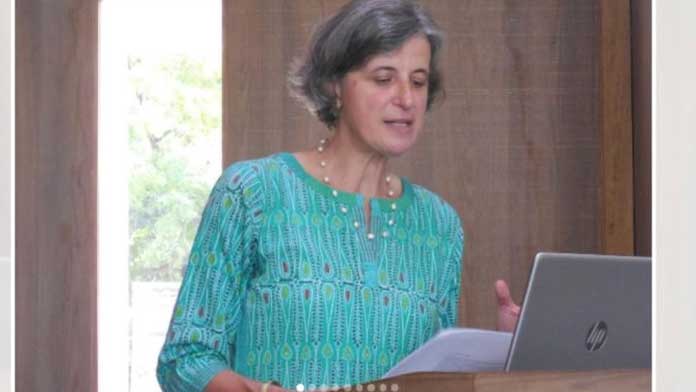
A look at the Indian government’s actions directed against the Diaspora reflects a pattern whereby dissenting voices are suppressed through a state policy of repression. Just recently, an Italian scholar Francesca Orsini was refused entry into India despite holding a visa. Orsini had a valid five-year e-visa as reported by international media. Orsini had been vocal in voicing opposition to RSS policies that happens to be the parent body of the ruling BJP party.
However, Orsini’s case was not an isolated incident. BJP has long tried to silence Diaspora critics. Back in 2024, a UK-based Kashmir academic was deported from India. Natasha Kaul who was deported from Bengaluru reported receiving rape and death threats online. Kaul faced a barrage of online abuse from trolls that were supporters of the BJP govt. From being dubbed a terrorist to a threat to India’s image, Kaul was at the receiving end for her previous criticism of the Indian government.
Another glaring example was that of a British activist named Amrit Wilson. Wilson too was punished with visa cancellation. The Indian government tried to justify its actions based on the previous posts written by Wilson regarding Kashmir and the farmers’ protests. This move was a continuation of the BJP’s policy of going after anyone that dared to oppose its policies.
The BJP government also targeted a UK anthropologist in 2022. Filippo Osella was refused entry at an Indian airport. Osella’s crime was the Pakistani visa on his passport. Osella was also questioned by the Indian authorities regarding his visits to Pakistan.
The BJP government has been trying hard to build a Hindutva narrative that focuses on converting India into a Hindu state. HRW has mentioned that the Indian government has been revoking the visas of Diaspora who have been critical of the government. The HRW in its report has clearly mentioned that scholars and activists who opposed BJP’s policies were specifically targeted. It seems as if the Indian authorities are completely exercising their actions in light of the whims and fancies the BJP government wants to promote to further its extremist political motives.
The findings of the Human Rights Watch are consistent with media reports that have highlighted how the Indian government is increasing oppression. BJP’s actions are motivated by a need to hide its extremist policies that have led to serious human right abuses.