
Black Friday online sales hit record $11.8 billion
- By Anees Hanif -
- Nov 29, 2025


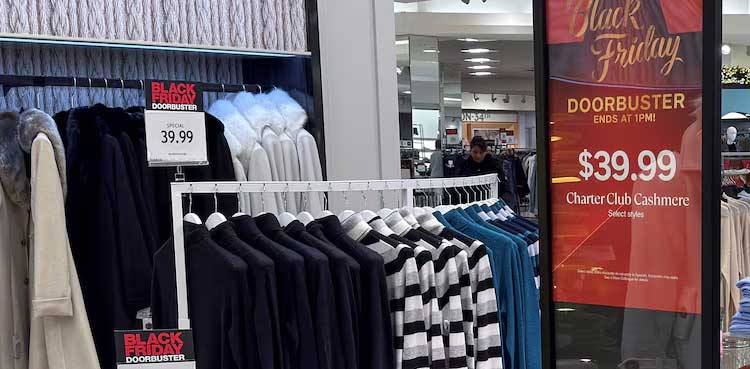
American shoppers spent a record $11.8 billion online on Black Friday, up 9.1% from last year, final data from Adobe Analytics showed.
Adobe Analytics, which tracks over 1 trillion U.S. retail site visits, expects shoppers to spend $5.5 billion on Saturday and $5.9 billion on Sunday, up 3.8% and 5.4% from a year earlier respectively.
Separately, software firm Salesforce reported that American consumers had spent $18 billion on Black Friday purchases, up 3% from a year ago, with luxury apparel and accessories among the most popular categories.
Although U.S. consumers spent more this Black Friday compared to last year, price increases hampered online demand, according to Salesforce, with shoppers purchasing fewer items at checkout compared to last year.
At physical stores, the bargain-chasing was relatively on post-Thanksgiving morning, with some shoppers saying they feared overspending amid persistent inflation, trade policy-driven uncertainty, and a soft labor market.
Cyber Monday, traditionally a big day for online deals, is expected to be the season’s biggest online shopping day again, Adobe projects, driving $14.2 billion in spending, up 6.3% from last year.
Black Friday, the day after Thanksgiving, has become the unofficial and most critical starting point for the US holiday shopping season, which runs through Christmas. Many Americans have the day off, creating a massive, captive audience eager to begin buying gifts. Retailers leverage deep discounts and “doorbuster” deals to capitalize on this immediate surge in consumer traffic—both in-store and online—ensuring their brand is the first stop for holiday purchases. This initial burst of spending is vital for setting a positive tone for the entire December sales period.
Economically, the sales serve two primary functions for stores. First, they are instrumental in pushing retailers “into the black” for the year—a historical term referring to a shift from operating at a loss (‘in the red’) to being profitable. The high volume of Black Friday sales often represents the largest revenue spike of the year. Second, it’s a strategic move to clear out existing inventory, particularly older models of electronics and seasonal goods, making space for new merchandise and ensuring the store doesn’t carry excess stock into the new fiscal year.
The Black Friday phenomenon relies heavily on consumer psychology, specifically the Fear Of Missing Out (FOMO). Stores intentionally brand the sales with limited-time offers, high-value discounts, and limited-quantity items to create an atmosphere of urgency and excitement. This rush motivates shoppers to spend quickly and often on items they might have delayed purchasing. The cultural event of seeking out a great bargain drives massive foot traffic and online engagement, making it a self-fulfilling commercial tradition that stores must participate in to remain competitive.