
China builds world's first quantum sensor network to hunt for dark matter
- By Web Desk -
- Jan 30, 2026


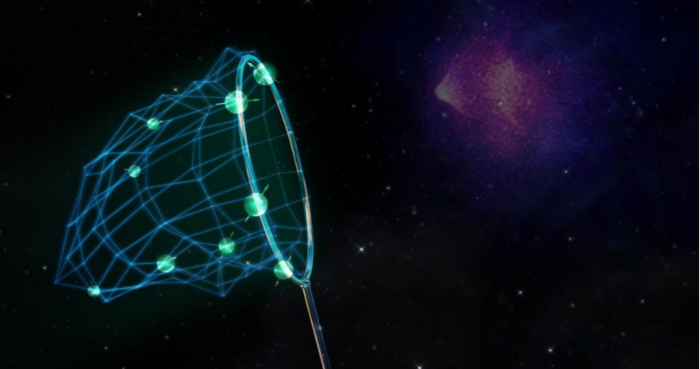
Chinese scientists have achieved a significant breakthrough in the search for dark matter by establishing the world’s first quantum sensor network. The system connects laboratories in the eastern cities of Hefei and Hangzhou, separated by over 300 kilometers.
The research, published Thursday in Nature, demonstrates unprecedented sensitivity in detecting signals from “axions”—hypothetical particles considered top candidates for the universe’s “missing mass.” While dark matter is believed to make up 26.8 percent of the cosmos, it remains invisible, interacting primarily through gravity.
The team theorizes that when Earth crosses invisible dark matter boundaries, axions could exert a slight pull on atomic nuclei. These interactions generate signals as fleeting as “a snowflake landing in a crowded square.”
To capture these faint whispers, scientists from the University of Science and Technology of China deployed five synchronized sensors across the two cities. This distributed approach filters out local noise by verifying that signals appear simultaneously at multiple locations.
The study reports major advancements in detection technology. New quantum amplification techniques boosted weak signals by 100-fold, while extended coherence times allowed for detection windows lasting several minutes.
Although two months of observation yielded no direct discovery, the team successfully placed the most stringent constraints yet on axion-nucleon coupling. In specific mass ranges, these new limits surpass those derived from astronomical observations by as much as 40 times.
According to co-corresponding author Peng Xinhua, researchers now aim to expand this “quantum net” globally and into space, potentially revolutionizing how humanity explores the universe’s hidden architecture.