
China tests laser satellite internet to challenge Starlink dominance
- By Web Desk -
- Jan 05, 2026


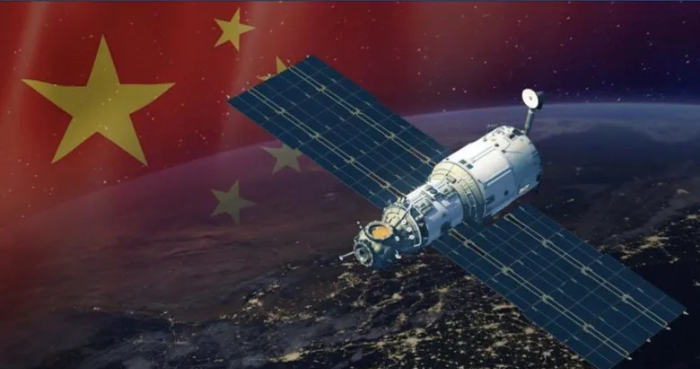
China is actively escalating its technological rivalry with Western nations, focusing on cutting-edge innovations from artificial intelligence to the energy transition. Their latest target is satellite internet, where Chinese researchers have now showcased a “groundbreaking” system positioned to compete with SpaceX’s Starlink.
South China Morning Post reports that a team from Peking University and the Chinese Academy of Sciences achieved a data transmission speed of 1 Gbps. They achieved this by using an extremely low-power 2-watt laser. This power usage is notably lower than the reported significantly higher power requirements for Starlink’s radio transmissions to Earth.
While Starlink employs lasers for communication between its satellites, the Chinese system is unique because it beams the laser directly to a ground station. This method has historically been challenged by atmospheric disruption from rain and smog.
The researchers overcame these atmospheric hurdles using a new infrastructure called “AO-MDR synergy.” By splitting the laser signal into different channels and re-merging them on the ground using custom chips, the team improved signal reliability from 72% to over 91%. This allowed them to maintain high speeds even through turbulent skies.
This technology also offers a solution to orbital overcrowding. Starlink satellites operate in Low Earth Orbit (LEO) at an altitude of roughly 550 km, contributing to space debris risks and “light pollution” that hinders astronomy. In contrast, the Chinese satellite operates from a distance of over 36,000 km.
This high-altitude arrangement places the hardware in a far less clogged region of space. If commercialized, these high-orbit, laser-based satellites could deliver a faster, more efficient, and astronomy-friendly alternative to the thousands of radio-based satellites currently flooding the lower skies. With NASA and Japan also testing similar tech, laser communication is quickly becoming the next battleground for space connectivity.