
Chinese researchers set new world record for flexible solar cell efficiency
- By Web Desk -
- Jan 07, 2026


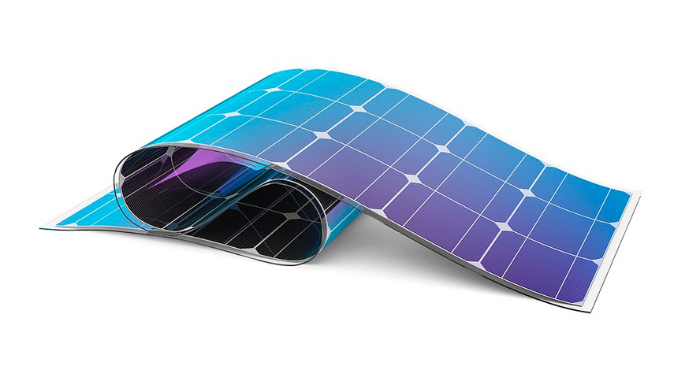
Chinese researchers have achieved a milestone in silicon-based flexible photovoltaics, systematically resolving key challenges related to the efficiency and stability of flexible tandem solar cells. This breakthrough, led by a team from Soochow University, was reported by China Science Daily on Monday and published last Thursday in the journal Nature.
The commercialization of flexible solar cells made from a combination of crystalline silicon and perovskite currently faces two main challenges: their efficiency does not yet match that of traditional fixed solar devices, and their interfaces are susceptible to delamination and degradation when subjected to repeated bending or harsh conditions.
To tackle these issues, the research team designed a dual-layer buffer with a “loose-tight” structure that effectively dissipates mechanical stress while maintaining efficient charge transport at the nanoscale.
Additionally, they developed a method for creating hydrogen-doped indium-cerium oxide films using reactive plasma deposition. This method reduces interfacial sputtering damage and enhances energy level alignment.
These advancements have enabled the team to achieve a certified conversion efficiency of 33.6 percent on an ultra-thin 60-micrometer silicon substrate, setting a new efficiency record for flexible tandem cells.
A world-record efficiency of 29.8 percent was also achieved by a large-area flexible tandem cell, measuring 261 square centimeters (a standard wafer size). Furthermore, these devices exhibited exceptional mechanical durability, maintaining 97 percent of their initial efficiency even after enduring 43,000 extreme bending cycles.
This work delivers a solid scientific and technical basis for the large-scale application of flexible photovoltaics and opens up new possibilities for the silicon-based solar industry.