
High-risk dengue alert issued from Sep to Dec in Karachi, Lahore
- By Web Desk -
- Sep 16, 2025


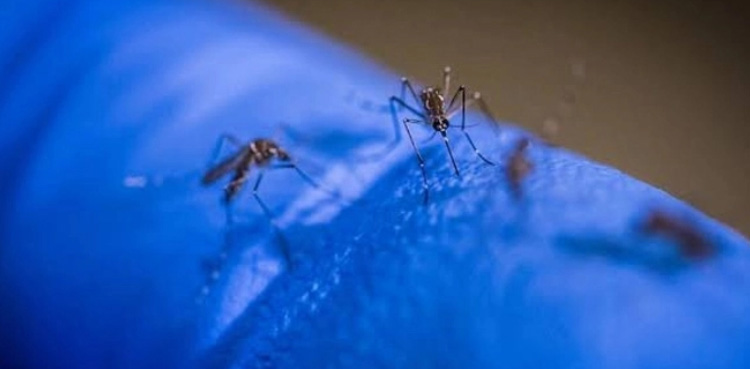
ISLAMABAD: The Pakistan Meteorological Department (PMD) has issued a high-risk dengue outbreak alert for the period between September 20 and early December 2025, citing favorable weather conditions and widespread flooding as key drivers of potential transmission.
According to PMD’s Dengue Alert-I, dengue fever has become a recurring public health threat over the past decade, with major outbreaks typically occurring in the post-monsoon season.
Scientific analysis shows that dengue risk intensifies when temperatures remain between 26–29 °C for 3 to 5 weeks, relative humidity exceeds 60%, and rainfall surpasses 27 mm with a lag effect of up to three weeks.
Dengue mosquitoes are most active two hours after sunrise and two hours before sunset, while their breeding slows only when temperatures fall below 16 °C.
This year’s prolonged monsoon rains, river overflows, and reservoir discharges have inundated large parts of Punjab and Sindh, including major urban centers. Many areas remain submerged, displacing millions and overcrowding relief shelters—further increasing the risk of mosquito-borne diseases.
PMD warned that the combination of stagnant floodwater, high humidity, and optimal temperatures has created ideal conditions for dengue outbreaks, starting September 20 onward.
The risk is particularly high in Karachi, Lahore, Islamabad, Faisalabad, Sialkot, Rawalpindi, Peshawar, Sukkur, Hyderabad, and Multan, as well as across flood-affected areas nationwide.
The department has urged all stakeholders, including health departments, local administrations, and the general public, to immediately adopt pre-emptive measures to counter the looming outbreak.
The authorities have been directed to monitor environmental and meteorological data regularly, conduct widespread fumigation, spray larvicides, and clear stagnant water in flood-hit areas.
Public Advisory
The public has been advised to remove or empty containers that collect rainwater around their homes, cover all water storage properly, and use mosquito repellents, nets, and coils—particularly during early morning and late afternoon when mosquitoes are most active.
People are also urged to wear long sleeves and pants, keep doors and windows screened or closed, and in flood-affected or temporary shelter areas, maintain hygiene, avoid standing water around tents, and use treated or boiled water.