
E-Challan in Karachi: Comparing a Developing System to World Best Practices for Safer Roads
- By Dr Umar Islam -
- Nov 03, 2025



Electronic traffic enforcement, or e-challan systems, relies on automated cameras, AI, and databases for detecting traffic violations and sending out fines digitally to improve road safety and reduce corruption.
E-challan systems represent a paradigm shift in traffic management: from manual policing to automated surveillance using technologies like Automatic Number Plate Recognition, LIDAR, and AI-driven detection.
These systems, deployed across the world, track speeding, red-light jumping, and not wearing seatbelts, sending fines via SMS or apps to cut human bias and expedite processing.
A Cochrane Review of 28 international studies has documented 8-49% reductions in crashes at enforcement sites, with sustained benefits over time. In developing contexts like South Asia, this technology can offer the prospect of safer roads against the backdrop of an increasing number of vehicular deaths. Against this backdrop, the unfolding e-challan mechanism in Karachi, dovetailed into the Traffic Response and Control System, is sure to face some teething problems.
This analysis compares global models to Karachi’s current model, finding gaps and routes to improvement.
Overview: Global Technologies, Effectiveness, and Best Practices
Globally, these e-challan systems operate on different levels of maturity and integration. The ANPR cameras in India detect violations in real-time, allowing for online payments and virtual courts for disputes. Operating since 2012 via the Parivahan portal, this system reduced manual challans in Delhi by 70%. The United States, which began an all-electronic system in Florida back in 1999, uses multi-angle cameras to reduce errors by 90%. Offenders can pay fines through given portals, ensuring a more equitable use of this system-according to a study in 2024, there is less racial bias in this manner compared to police stops. Europe’s models, such as those from the UK’s Home Office Type Approved, prescribe strict testing for accuracy, achieving an average fatality reduction of 42% on motorways due to average-speed cameras. The Intelligent Transport System in Singapore incorporates e-fines with AI predictive analytics, using real-time alerts and public transport linkages to register up to 40% reductions in violations.
Best practices emphasize transparency and equity: multi-verification, like having dual cameras, reduces mistakes; incentives such as first-offense waivers-as utilized in Punjab, Pakistan’s PSCA system-enhance compliance. A review by MDPI of 50 deployments across the globe shows that ATES is effective in compliance, as evidenced by up to a 72% reduction in speeding through pilots conducted in San Francisco, but also warns of the privacy risks from ANPR surveillance. Controversies abound, from revenue-over-safety perceptions and technical glitches-as seen in Edmonton’s noise cameras, canceled due to 5% inaccuracy.
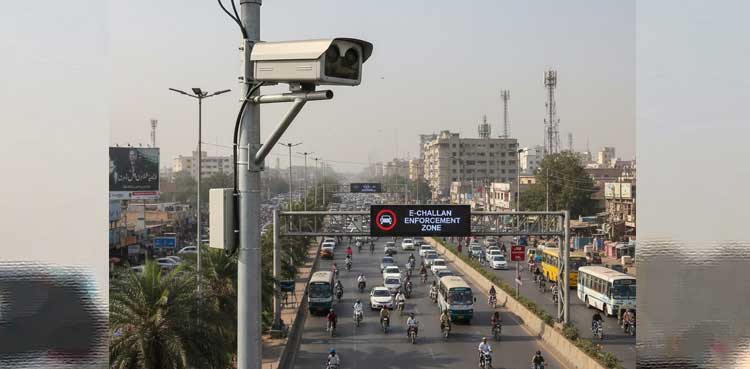
E-Challan System of Karachi: Implementation and Challenges
Launched on 27th October 2025, under the Sindh government’s Safe City Project, Karachi’s e-challan deploys AI-enabled CCTV across 50+ sites like Shahrah-e-Faisal that detects helmet/seatbelt non-use and speeding via TRACS. It sent more than 17,000 fines in the first week, amounting to Rs100 million, by sending SMS notifications and allowing app-based payments. The updated fines issued in 2025 range from Rs 500 for no helmet to Rs 5,000 for over-speeding with the incorporation of point-based penalties.
But the rollout has been contentious. Incorrect fines, like for plates that are different in the database or offenses not committed, engender distrust of a flawed database. Protests and accusations by Jamaat-e-Islami term it “revenue loot” when there are potholed roads, while petitions have been filed in Sindh High Court to get it stayed. A waiver for the first offense brings relief, but the hypocrisy of it all, such as tampering with the plates by police, gives it a bad name.
There is no comprehensive signage and mechanism of dispute compared to the mature ecosystem in Punjab. The system in Karachi is no different from the global technology, ANPR/AI; however, it lags well behind in maturity compared to India’s decade-old glitch-minimized framework or Europe’s certified accuracy. If Singapore manages to achieve a 40% drop in violations through integration, Karachi’s initial 2,662 challans indicate enforcement zeal and risk overload without infrastructure fixes-paralleling AES teething pains in Dhaka. Public acceptance is lower in Karachi-protests versus 22% injury reduction gains in the UK-pointing to needs for equitable fines and safeguards on privacy, according to certain equity studies in the U.S. Best practices in the shape of multi-angle verification could keep Karachi’s error rates down to 5-10%, building trust akin to Florida’s 90% accuracy.
Global successes of e-challans affirm the gains in safety, but Karachi has to take a lead from them in terms of accuracy, infrastructure, and transparency to transcend the critiques of being a revenue generator. Emulating hybrid models—tech with human oversight—could transform it into a true safety net.
Disclaimer: The views expressed here are solely the author’s and do not necessarily reflect the opinions and beliefs of ARY News or its management.