
Gold prices jump in Pakistan as Iran launches missile attack on Tel Aviv – March 2, 2026
- By Web Desk -
- Mar 02, 2026


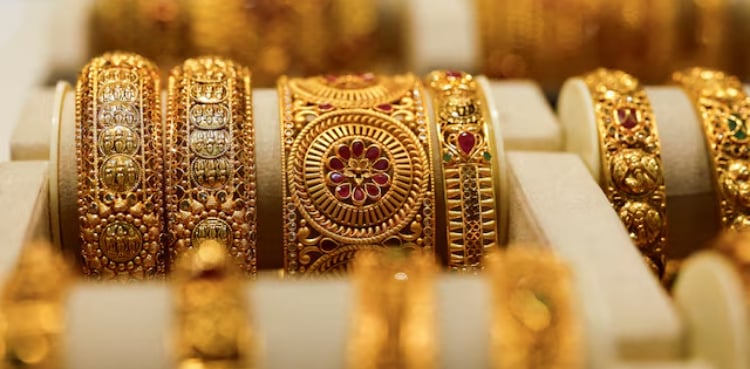
KARACHI: Gold prices in Pakistan rose sharply on Monday, March 2, 2026, following strong gains in the international bullion market after Iran launched a retaliatory attack on Israel.
The price of 24-karat gold per tola increased by Rs13,300, settling at Rs563,862, while 10 grams of 24-karat gold rose by Rs11,402 to Rs483,420, according to the All Pakistan Sarafa Gems and Jewellers Association (APSGJA).
Silver prices also climbed, with the per tola rate rising by Rs188 to Rs10,050.
In the international market, gold prices jumped by $133 to $5,411 per ounce.
Iran’s Revolutionary Guards said on Monday they had launched missile strikes on an Israeli government complex in Tel Aviv, as well as security and military centres in Haifa, and carried out an attack on East Jerusalem, following the assassination of Iranian Supreme Leader Ayatollah Ali Khamenei in a US-Israel strike on Iran, officials said.
“Among the targets of this tenth wave were a targeted strike on the Zionist regime’s government complex in Tel Aviv, attacks on military and security centres in Haifa, and a strike on East Jerusalem,” a Guards statement carried by state TV said.
It added that Kheibar ballistic missiles were used in the attack.
Israel and the United States launched attacks of unprecedented scale against Iran on Saturday, and the Islamic Republic has responded with missile strikes across the region.
The attacks by Israel and the United States have escalated tensions in the Middle East, further dimming hopes for a diplomatic resolution to Tehran’s long-standing disputes with the West.
Market analysts said the outlook for gold remains bullish amid ongoing global economic uncertainty and sustained investor demand for safe-haven assets. They noted that gold’s intrinsic value, limited supply, and independence from government or central bank policies make it a reliable hedge against inflation, currency depreciation, and broader economic instability.
Analysts added that geopolitical tensions — including armed conflicts, trade disputes, and heightened market volatility — often drive investors away from riskier assets such as equities and speculative currencies, shifting demand toward bullion. This trend typically supports gold prices even during periods of broader economic stress.
Long regarded as a symbol of wealth and prosperity, gold continues to serve not only as an ornamental asset but also as a financial safeguard. Its safe-haven appeal has strengthened in recent years as both institutional and retail investors seek protection amid persistent global economic and political uncertainty.