
Gold prices surge in Pakistan – February 19, 2026
- By Web Desk -
- Feb 19, 2026


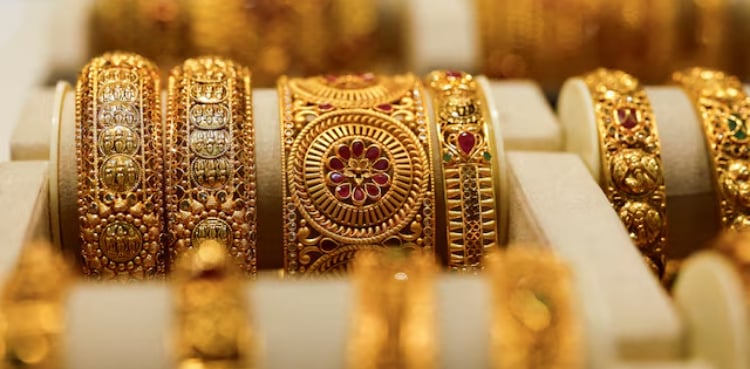
KARACHI: Gold prices in Pakistan recorded a sharp increase on Thursday, February 19, 2026, in line with gains in the international bullion market, according to the All Pakistan Sarafa Gems and Jewellers Association (APSGJA).
The price of 24-karat gold per tola jumped by Rs7,900 to reach Rs523,962. Likewise, the rate for 10 grams of 24-karat gold rose by Rs6,773, settling at Rs449,212.
Silver Prices
Silver prices also witnessed a significant rise, with the per tola rate climbing by Rs358 to Rs8,404.
International Market
Globally, gold prices increased by $79 to $5,012 per ounce, while silver surged by $3.58 to $79.20 per ounce, the APSGJA reported.
Market analysts attributed the rally to easing inflation concerns in the United States.
“Gold, and particularly silver, is enjoying a relief rally after a mild January CPI reading eased nerves following Wednesday’s strong employment report,” said Tai Wong, an independent metals trader.
Data from the US Labour Department showed that the Consumer Price Index (CPI) rose 0.2% in January, below economists’ expectations of 0.3%, after an unrevised 0.3% increase in December. Meanwhile, the US economy added 130,000 jobs in January, surpassing analysts’ estimates of 70,000, reflecting continued strength in the labour market.
In Asia, gold demand remained firm in China ahead of the Lunar New Year, while the Indian market shifted to discounts. “Bargain-hunting is also pushing gold back above the $5,000 level,” said Tim Waterer, chief market analyst at KCM.
Analysts remain bullish on gold over the long term, citing global economic uncertainty and sustained demand for safe-haven assets. They noted that gold’s limited supply and intrinsic value make it an effective hedge against inflation, currency depreciation, and broader financial instability.
Traditionally regarded as a symbol of wealth and security, gold continues to attract both institutional and retail investors seeking protection amid geopolitical tensions and economic volatility.