
The Gul Plaza Tragedy: In Numbers
- By Web Desk -
- Jan 26, 2026


On January 17, 2026, the city of Karachi witnessed one of its most devastating commercial disasters in decades. The Gul Plaza fire—a catastrophe born of negligence and fueled by a lack of basic safety infrastructure—has left a scar on the city’s M.A. Jinnah Road that will take years to heal.
Here is an in-depth report on the incident, presented through the lens of the data that defines its scale.
The Gul Plaza Tragedy: In Numbers
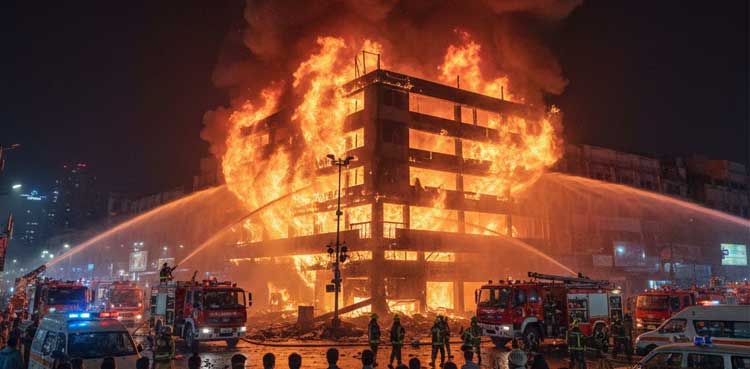
The statistics emerging from the ruins of Gul Plaza tell a story of systemic failure. What began as a small fire in a shop selling artificial flowers escalated into a “Grade 3” inferno—the highest category for urban fires—that raged for over 36 hours.
1. The Human Toll: Lives Extinguished
The most harrowing numbers are those related to the victims. As of late January 2026, the figures continue to fluctuate as forensic teams work through the debris.
-
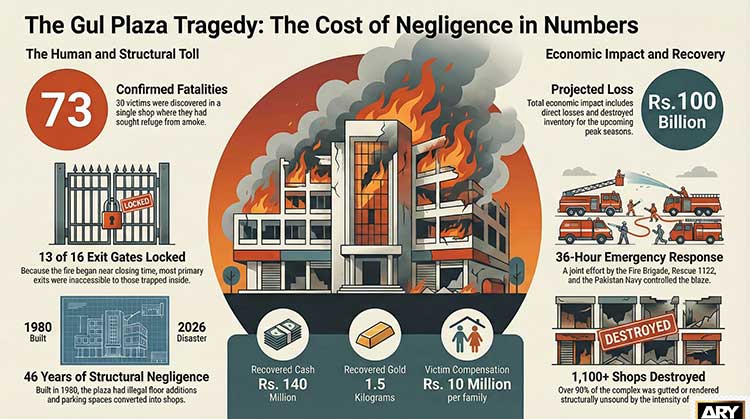
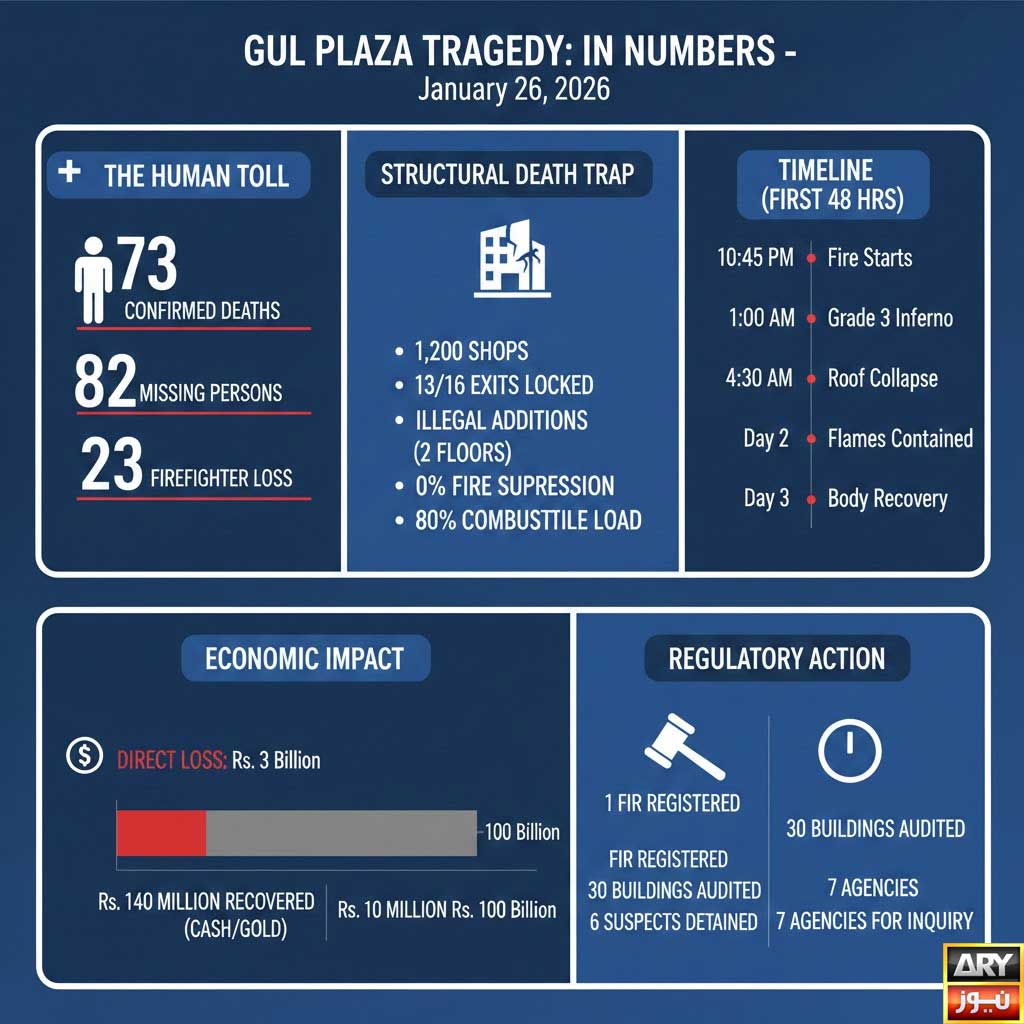
73 Confirmed Deaths: Authorities have confirmed at least 73 fatalities. Among them was Furqan Ali, a 36-year-old firefighter from the Nazimabad station, who died when a section of the building collapsed during the rescue.
-
82 Missing Persons: At the peak of the crisis, families reported 82 individuals missing. While many were later confirmed deceased, a dozen remain unaccounted for, their remains likely buried under tons of concrete.
-
23 Identified: Only 23 victims have been formally identified. The intensity of the “third-degree” blaze was so extreme that most remains were charred beyond recognition, requiring DNA profiling at the University of Karachi to confirm identities.
-
30 Bodies in a Single Shop: In one of the most tragic discoveries, 30 bodies were found huddled together in a mezzanine-floor crockery shop. The victims had reportedly locked themselves inside to escape the smoke, only to succumb to suffocation.
2. The Structural Trap: A Blueprint for Disaster
The tragedy was amplified by the building’s physical layout and blatant safety violations.
-
13 of 16 Exits Locked: Survivors reported that because the fire started near closing time (approx. 10:45 PM), 13 out of the 16 primary exit gates were already locked, turning the plaza into a vertical “death trap.”
-
1,200 Shops: The plaza housed approximately 1,200 retail and wholesale shops. The sheer density of merchandise—much of it flammable plastic, fabric, and wedding decorations—acted as an accelerant.
-
46 Years of History: Built in 1980, the structure had undergone illegal modifications. In 1998, an additional floor was added, and original parking spaces were converted into shops, significantly reducing ventilation and escape routes.
3. The Economic Impact: Livelihoods in Ashes
Gul Plaza was the heart of Karachi’s wholesale market for toys, electronics, and wedding supplies. Its destruction has sent shockwaves through the provincial economy.
-
Rs. 3 Billion to Rs. 100 Billion: While initial estimates from the Shop Owners Association placed direct losses at Rs. 3 billion, some market analysts and provincial officials fear the total economic impact (including lost inventory for the upcoming Ramadan and wedding seasons) could reach Rs. 100 billion.
-
Rs. 140 Million Recovered: Amidst the ash, search teams recovered three safes containing Rs. 140 million in cash, along with 1.5 kilograms of gold (valued at approximately Rs. 60 million), which was returned to its rightful owners.
-
1,100+ Shops Destroyed: Over 90% of the shops within the complex were either completely gutted by fire or rendered unusable due to structural damage.
4. The Response and Rehabilitation
The scale of the disaster forced a massive mobilization of state resources, though survivors and traders have criticized the initial delay.
-
36 Hours to Control: It took a combined effort from the KMC Fire Brigade, Rescue 1122, and the Pakistan Navy nearly two days to bring the flames under control.
-
Rs. 10 Million Compensation: The Sindh Government has announced a payout of Rs. 10 million for the families of each deceased individual.
-
30 Buildings Audited: In the immediate aftermath, the Sindh Building Control Authority (SBCA) conducted an emergency audit of 30 nearby commercial buildings, issuing immediate notices for safety compliance to prevent a repeat of the tragedy.
5. Forensic and Legal Action
For the first time in recent history, the state is pursuing criminal negligence with forensic rigor.
-
1 FIR Registered: A First Information Report (FIR) was lodged at the Nabi Bux Police Station citing criminal negligence and “harmful conduct.”
-
2 Minors Involved: Preliminary investigations suggest the fire may have been started accidentally by two children playing with matches in an artificial flower shop while their father was away.
-
7 Agencies for Inquiry: The MQM-P has called for a high-level federal commission involving the FIA, NDMA, and NESPAK to investigate the systemic corruption that allowed such a hazardous building to operate for decades.
The numbers of the Gul Plaza tragedy are more than just statistics; they are a testament to a city that grew too fast and looked the other way. From the 73 lives lost to the billions of rupees turned to ash, the tragedy serves as a final, grim warning that in a city as large as Karachi, the cost of “bad governance” is eventually paid in blood.