
Jinnah’s Pakistan And The Long Shadow Of Power, Poverty And Misgovernance
- By Muhammad Alam Brohi -
- Feb 20, 2026


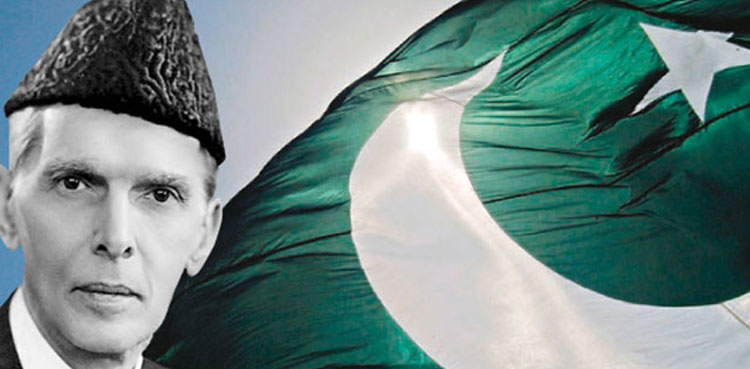
Muhammad Ali Jinnah was head and shoulders above his peers in the National Congress, including M. K. Gandhi, Jawaharlal Nehru and Sardar Vallabhbhai Patel. He was a political leader and strategist of indomitable will. He remained undaunted by the odds thrown in his way by the British imperialists, Congress leaders, and Indian Muslim nationalists.
He never wavered in his commitment to foil the dream of Hindu majoritarian rule by a shared constitutional scheme of governance or the division of the Subcontinent into states where the Muslims were in a majority. His demand was considered tantamount to living in a fool’s paradise. But the Quaid believed in himself and the legitimacy of his cause.
“Few individuals significantly alter the course of history. Fewer still modify the map of the world. Hardly anyone can be credited with creating a nation-state. Muhammad Ali Jinnah did all three.” This is how Professor Stanley Wolpert summed up the leadership qualities of Jinnah and his relentless struggle for his dreamland, Pakistan. He did not indulge in the politics of agitation, confrontation and violence. Constitutionalism was the symbol of his political campaign. He mobilised Muslims and reoriented the All-India Muslim League to a mass public campaign. The sheer force of his political strategy, eloquence, advocacy, determination and commitment helped him, in the words of his biographer, alter the course of history significantly.
The Quaid was very clear about the future of Pakistan. He wanted a democratic, representative and parliamentary form of governance and a secular polity. He outlined the future constitutional delineations, along with the foreign and security policy of his Pakistan, in his various talks and particularly in his famous address to the Constituent Assembly on 11 August 1947, highlighting the rule of law and equal citizenship for all citizens of Pakistan without caste and creed. The speech was, in fact, a Magna Carta for Pakistan and provided foundational guidance to the Constituent Assembly for drafting the constitution of his land. The mortality of life snatched him from the new nation.
The death of the Quaid left us leaderless and his dreamland rudderless. In the immediacy of this tragedy, an evil spirit seemingly visited Pakistan and cast a shadow of misfortune upon it. This misfortune has persistently hovered over the horizon of the country for the past 78 years, holding it hostage to its insatiable greed for power. Nothing has since been in order — from the polity to the constitution, democracy, governance, economy, politics, law and order.
Everything has gone awry. The national advance towards constitutional and representative governance and a secular polity was dealt a blow when the successors of the Quaid succumbed to pressure and conceded space to political Islam by adopting the Objectives Resolution as the Preamble of the Constitution. The nation gradually acclimatised to this deviation from the foundational guidance of the Quaid and continued its odyssey towards a democratic culture. It was preparing to hold the country’s first-ever elections.
The most tragic misfortune struck the nation on 8 October 1958, when the Constitution was torn asunder, and the country was placed under Martial Law. This heralded a new era — an axis of political Islam, the political elite including political and spiritual dynasties, the security establishment and the civil bureaucracy. This unholy alliance ended all dreams of democratic and representative rule, a secular and liberal society, and economic and social justice. Time favours the stronger. The strength of a constitution lies in its sanctity. Constitutional rule is sustained by wider, strong and constant public support and vigilance.
The 8 October revolution plunged us into a different world of authoritarianism, mock democracy, an all-powerful Presidency, rapacious elite capture of national resources, transient and aligned foreign and security policy, foreign aid dependency and financial indiscipline. Power is a strong addiction and is exercised rapaciously. Intrinsically, the obsession with power has compelling factors and induces stronger institutions of the state to disregard all political and constitutional scruples and national interests to stifle representative governance. The evil spirit has appeared in our landscape wearing new robes and masks, proving a boon for the ravenous elite, state bureaucracy, pulpit and gun-wielding institutions, but a bane for the teeming millions.
The downtrodden, approximately over 45 per cent of the population, have been rendered pathetic, showing no concern for democratic or authoritarian governance, corrupt practices of national institutions, oppressive policing and prosecution systems, expensive judicial processes, elite hospitals, elite schools and posh settlements.
They have abandoned hope of any improvement in their social and economic conditions and have resigned themselves to the Benazir Support Programme and occasional dole-outs by rulers. This class is hungry and angry. The country sits on a heap of keg powder. Any small spark could cause an explosion.
The middle class struggles to make both ends meet. This enormity of social injustice, forcing over 50 per cent of the population to live with the miseries of poverty, deprivation and helplessness, does not move the ruling class or the elite to relent in their iron grip on national resources. How long can this apathy of rulers, this shame and effrontery, be countenanced?
According to a World Bank report published recently, 44.7 per cent of Pakistanis live below the international poverty line. Transparency International has ranked Pakistan 135th out of 180 countries for corruption. On the Human Development Index, Pakistan stands at 161st out of 189 countries, with severe deficiencies in health, education, housing and living standards. Millions continue to suffer from extreme poverty. With this poverty and a poor human development index, we entered the 21st century with a sick economy and broken governing systems.
We did not leave any stone unturned in corrupting the process of political evolution, developing a political culture of collaboration, conformity, pliability, elitism and dynastic political enterprises. Narrow personal interests replaced public welfare, collective well-being, and principled politics.
Political engineering and the management of electoral outcomes have eroded trust in the legitimacy of legislatures and governments, irredeemably damaging the credibility of the Election Commission and election tribunals. For the past seven decades, state affairs have been managed in a fluid, experimental and transient way, with no regard for any constitutional scheme.
The misfortune, by all indications, will continue afflicting Jinnah’s Pakistan unless some miracle happens.