
Karachi boy Ibrahim Drowns in Open Manhole- What Happened When?
- By Web Desk -
- Dec 02, 2025


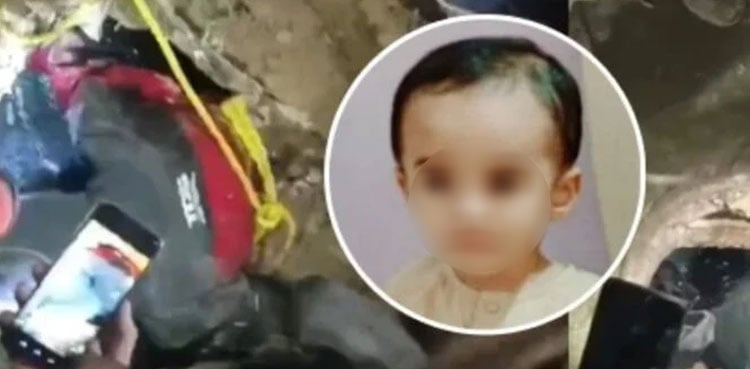
In a heart-wrenching incident that has ignited widespread fury across Pakistan’s largest city, three-year-old Ibrahim Nabil’s lifeless body was recovered from a sewage drain nearly 15 hours after he slipped into an uncovered manhole near NIPA Chowrangi in Gulshan-e-Iqbal.
The toddler’s death, occurring on the night of November 30, underscores the perilous state of Karachi’s crumbling infrastructure, where open drains and manholes continue to claim innocent lives despite repeated warnings.
The tragedy unfolded around 10 p.m. on Sunday when Ibrahim, the only child of his parents Nabeel and his wife, accompanied the family for a routine shopping trip at the Chase Up departmental store adjacent to the NIPA flyover. As the family exited the store, Nabeel paused to unlock his parked motorcycle in the bustling parking area. In a fleeting moment of distraction, the curious toddler slipped from his father’s grasp, darted ahead between the vehicles, and plummeted into a 2×2-foot open manhole—three feet deep and part of the city’s main 36-inch drainage line repurposed for sewage. Eyewitnesses described the manhole as a gaping hazard, its cover missing for several days, with no protective barriers in sight despite its location in front of a high-traffic commercial hub.
The family’s home in Shah Faisal Colony, a modest neighborhood on Karachi’s eastern fringes, now stands shrouded in grief. Ibrahim’s grandfather, Mehmoodul Hasan, received the child’s body late Monday, his voice breaking as he recounted the unimaginable loss. “He was our only light,” Hasan told reporters, while Ibrahim’s mother, overcome by shock, collapsed unconscious at the scene and required medical attention. Nabeel, haunted by the brief lapse, later revealed he and his father-in-law had desperately scoured the area overnight, even forking out Rs15,000 from their pockets to hire a private excavator when official aid failed to materialize.
The initial response was a chaotic blend of community desperation and administrative apathy. Residents, alerted by the father’s frantic cries, dialed emergency lines, but no official teams arrived promptly. Undeterred, locals pooled resources to summon a crane and fuel it themselves, joined by volunteers from the Edhi Foundation and Chhipa Welfare—though both organizations admitted their limitations in navigating the labyrinthine sewer system without technical maps. Rescue 1122, informed at 10 p.m., dispatched lifeguards and a water rescue unit, but the operation stalled under the cover of darkness due to poor visibility and the absence of sewerage blueprints from the Karachi Water and Sewerage Corporation (KWSC).
Frustration boiled over by midnight, with protesters—relatives, neighbors, and activists—blocking University Road, igniting tire bonfires, and halting traffic toward Hassan Square for over three hours. Some reports noted stone-pelting at law enforcers and damage to media vehicles as the crowd vented against the “criminal indifference” of civic bodies.
Dawn broke on Monday with renewed urgency. Around 10 a.m., after nearly 12 hours of delay, administrative machinery finally mobilized, deploying heavy equipment from the Bus Rapid Transit (BRT) system and Karachi Metropolitan Corporation (KMC) teams. Searches spanned seven potential exit points along the drain, which carries wastewater from Gulistan-e-Jauhar toward the Lyari River. At the final spot—near the Dental Medical Center at Sir Syed University of Engineering and Technology, about 1.5 to 2 kilometers downstream—Ibrahim’s small frame was found floating in the fetid waters, having traversed three internal sewage channels. One unverified account from a trash picker claimed he spotted and retrieved the body, alleging police interference afterward, though officials attributed the recovery to KMC rescuers.
The discovery triggered an outpouring of sorrow. Funeral prayers, held after Isha that evening, drew hundreds, including lawmakers from various parties, to a mosque in Shah Faisal Colony. The burial followed amid tearful chants of “Inna lillahi wa inna ilayhi raji’un,” with the child’s tiny coffin a poignant symbol of stolen innocence. Videos of the grieving mother, her wails echoing through the night—”Mera beta, kahan ho?” (My son, where are you?)—circulated widely on social media, amplifying the collective trauma.
Political recriminations erupted almost immediately. In the Sindh Assembly, Jamaat-e-Islami MPA Muhammad Farooq Sattar lambasted Mayor Murtaza Wahab, demanding his resignation over the “collapse of civic services.” Muttahida Qaumi Movement-Pakistan (MQM-P) MPA Taha Ahmed echoed the call, decrying unkept promises on infrastructure. Opposition alliances—spanning PTI, MWM, GDA, and others—united in blaming the PPP-led provincial government for “state-engineered negligence.” Sindh Senior Minister Sharjeel Inam Memon conceded it was “criminal negligence,” offering condolences and vowing accountability. Mayor Wahab, defending his administration, announced a full inquiry, the procurement of store CCTV footage, and directives to KWSC for citywide manhole inspections. Government spokesperson Saadia Javed promised action against those responsible for the missing cover, revealed in documents to have been flagged as hazardous in October—weeks before the fatal fall.
Pakistan’s showbiz community, often a beacon of empathy in national crises, joined the chorus of grief and indignation, using their platforms to mourn Ibrahim and demand systemic change. Mahira Khan, the star of *Neelofar*, took to Instagram Stories, her voice raw with emotion: “Who is responsible for Karachi? Who is responsible for this collapsing failed system? A child lost his life today and I cannot even begin to imagine what his parents are going through. They must be waiting for a miracle… but because we have no functioning system, there was no one to save him.” On X, she added, “Unimaginable apathy,” questioning who answers for the city’s decay. Sajal Aly, known for her roles in heartfelt dramas, reposted a clip of Mayor Wahab being confronted on live TV, expressing deep sorrow and solidarity with the family. “This is beyond heartbreaking. How many more lives before we fix our city?” she wrote, highlighting Karachi’s crumbling roads and municipal failures.
Rapper Talha Yunus decried government incompetence, while veteran actor Nauman Ijaz blasted the diversion of millions in traffic fines to surveillance cameras rather than basic safety like manhole covers. Fatima Effendi echoed this, calling it a “preventable murder by neglect.” Actress Mishi Khan was unsparing, accusing officials of outright corruption and incompetence, urging immediate accountability. Host Waseem Badami, in a fiery YouTube rant, lamented the city’s steady deterioration: “If you can’t cover your manholes, at least cover yourselves with shame.” He highlighted how repeated incidents go unaddressed, turning Karachi into a “rotting mess.” These voices from the entertainment world, reaching millions, have amplified calls for reform, transforming personal anguish into a national imperative.
This is not an isolated horror.
In May 2025, a six-year-old boy drowned in a similar manhole, sparking protests that forced a police FIR. April saw a young girl’s body pulled from a Liaqatabad drain, and September claimed three sanitation workers in Usmanabad. Experts warn that Karachi’s 1,000-plus kilometers of open sewers, exacerbated by monsoon flooding and urban sprawl, pose a ticking time bomb. Residents like those at NIPA, who planted protest flags on manholes as grim warnings, urge immediate audits and covers.
As Ibrahim’s family buries their dreams in Shah Faisal Colony’s soil, Karachi stands at a crossroads. Will this toddler’s tragedy finally compel action, or fade into the city’s litany of forgotten sorrows? The streets, silent witnesses to yet another loss, demand more than inquiries—they cry for change.