
Karachi’s Crisis: Why Federalisation Is No Solution
- By Muhammad Alam Brohi -
- Jan 29, 2026


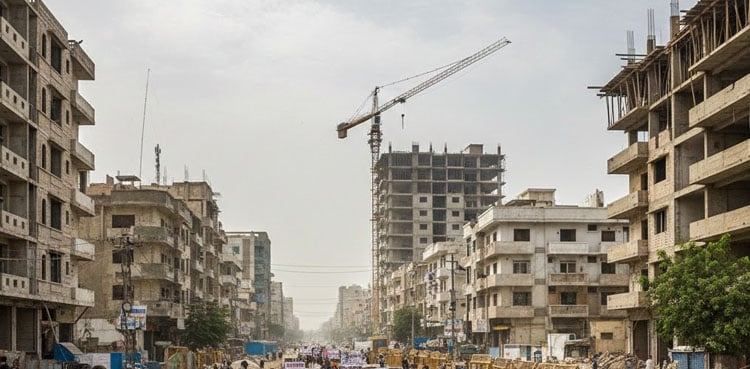
The Gul Plaza in Karachi was gutted by a ferocious blaze a week ago. The MQM-Pakistan has since intensified its absurd demand for the separation of Karachi from Sindh. Karachi, like all big cities of developing countries, is confronted with the usual problems of local governance: poor availability of municipal services, inefficient management of sewerage and sanitation, deteriorating roads and streets, and policing and law and order challenges. No big city in the developing world is free from these local problems. The MQM should stop misguiding the people of Karachi.
Will Karachi be a different city after federalisation, with its control transferred to federal institutions such as separate administrative paraphernalia, law-enforcement agencies, policing, and a local government system managed by the federal government? Will new political, economic, and administrative measures make a difference in the governance of the metropolis?
This is all debatable, especially when we know how federal institutions have been functioning in the country and how democratically the federal government has been running Islamabad. The broken system of governance is worse at the federal level than in provincial administrations. Karachi has already paid a heavy price for the MQM’s ethnic politics and its absolute rule under military shadows.
I recall Karachi from the early 1970s. After my graduation, I sought a job in the Sindh Secretariat in July 1972. I visited Karachi and stayed in a small hotel in Bolton Market. It was the rainy season, and the Karachi skies were overcast with thick clouds. The city was not so huge. The crowds on roads, in shopping areas, and on buses seemed manageable. The buses of the Urban Transport Corporation, started by the senior Bhutto’s regime, were comfortable. However, I particularly enjoyed travelling by tram to the Sindh Secretariat. The people were friendly and helpful.
Karachi was a tolerant and all-embracing city in the 1970s. It showcased the true character of a cosmopolitan city. It had pockets of population from all the provinces. After I settled in Karachi twenty years ago, I discovered sprawling neighbourhoods of Brohis (Bezinjo) in the western district and over 3,000 families in the Gizri area who had been settled there for the past two centuries. This is besides the Brohi settlements and lands on the outskirts of the city, from Kathor to Hub town.
Karachi was actually a town of Baloch and Sindhi tribes whose villages stood cheek by jowl. Before the advent of the new country, Hindus, Punjabis, and Pathans chose the city for their businesses mainly because of the seaport facility and its road and railway links with other parts of the region—thanks to the ingenuity of British officials.
Since Karachi contributes massively to both the federal and provincial exchequers, its local government should receive a reasonable share of the revenues collected from the megacity
When Pakistan came into being, the population of Karachi was much less than 0.5 million, with Hindus forming almost 50 per cent of it. Muhammad Ali Jinnah chose it as the capital of the new country. The federal government, comprised of senior Muslim Leaguers headed by Liaquat Ali Khan, miscalculated the city’s capacity to absorb a huge influx of refugees arriving haphazardly.
Prime Minister Liaquat Ali Khan directed all his efforts towards settling as many refugees as possible in the city, to balance the local population and to create a political constituency for himself stretching from Karachi to Mirpurkhas. An authentic estimate puts the number of refugees settled in Karachi alone at over 0.5 million. The rest were spread across Hyderabad, Mirpurkhas, Sukkur, Nawabshah, Larkana, and Shahdadkot.
He federalised the city and encouraged the local administration, headed by Commissioner Karachi Syed Hashim Raza, to accommodate refugees. Many unruly gangs of refugees held violent protests in the city, with the local administration looking the other way to create an atmosphere of terror among the non-Muslim population. The demonstrators were eyeing evacuee properties. Chief Minister Muhammad Ayub Khuhro refused to allow more refugees to be settled in the city. He also toured riot-affected areas and shamed the local police into action to control violence against non-Muslim Pakistanis. He was dismissed for his act of defiance.
Despite these initial hiccups, the city remained tolerant, showcasing its all-embracing character and resembling a bouquet of different colours, hues, fragrances, sizes, and beauty. A slow and gradual process of assimilation between the new generation of refugees and local Sindhis had begun, evolving a multicultural and multilingual society.
This was particularly visible in other towns of Sindh. The Urdu-speaking population, old and new, felt a sense of gratitude for the warm-hearted welcome accorded to them in the new country. Friendships flourished, and intermarriages increased.
However, the Evacuee Trust Property scheme, the establishment of separate Urdu-medium schooling from primary to secondary levels, and the quota system for jobs earmarking 15 per cent for refugees introduced by the Liaquat Ali Khan government, proved to be major stumbling blocks in the assimilation process. These policies were marred by corruption, controversy, and conflict, hindering towns and cities from evolving into truly multilingual and multicultural entities.
No doubt, Karachi has become unwieldy. It has expanded rapidly and haphazardly. The city has experienced high urbanisation since the inception of Pakistan. There has also been continuous migration from the interior districts of the province into the city, often forced by floods and the absence of rehabilitation projects for affected populations. Internally displaced persons, or squatters, were allowed to convert occupied land into permanent dwellings, leading to the emergence of new localities on the outskirts of the city.
The concentration of health and education facilities within Karachi, along with the poor law and order situation in the interior, has incentivised affluent segments of the provincial population, particularly Sindhi Hindus, to settle in the city. These facilities have equally attracted affluent families from Balochistan, Khyber Pakhtunkhwa, and even Punjab. During its heyday, the MQM also encouraged migration from India into the city.
We recall the scandal of thousands of missing passports from Karachi facilities in the early 2000s. All of this, over decades, has contributed to the city’s rapid population growth and placed immense strain on poorly maintained civic amenities and sanitation systems.
Federalisation is not the solution to Karachi’s enormous problems. An efficient local government system with administrative, political, and financial autonomy could offer redemption for the metropolis. The Government of Sindh should immediately introduce a fully operative Provincial Financial Award.
Since Karachi contributes massively to both the federal and provincial exchequers, its local government should receive a reasonable share of the revenues collected from the megacity. The city should also have a separate, autonomous policing system to effectively address law-and-order challenges.