
KWD to PKR: Kuwaiti Dinar to Pakistani Rupee Rate- Nov. 22, 2025
- By Web Desk -
- Nov 22, 2025


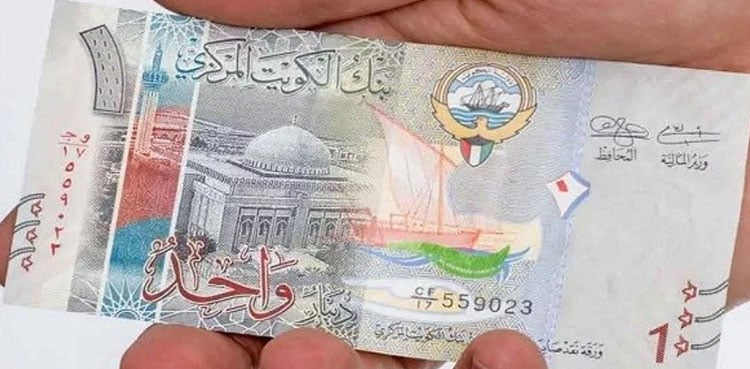
Kuwait City/Karachi, November 22, 2025: The Kuwaiti Dinar (KWD) has weakened against the Pakistani Rupee (PKR), trading at 913.82 PKR today in open market rates, as reported at 4:15 PM PST.
This decline continues from 915.26 PKR on November 15, 914.97 PKR on November 8, 916.35 PKR on October 25, 919.53 PKR on October 18, 917.13 PKR on October 11, and earlier rates of 919.70 PKR on October 4, 920.75 PKR on September 27, 922.13 PKR on September 20, and a summer peak of 926.79 PKR. The KWD’s trajectory also reflects a climb from 919.67 PKR on June 10, 922.06 PKR on June 13, and 925.45 PKR on June 18. Despite today’s dip, the Dinar remains robust, underpinned by Kuwait’s oil-driven economy, while Pakistan’s strengthening foreign reserves and moderating inflation bolster the Rupee. This movement has key implications for bilateral trade, remittances, and the over 220,000 Pakistani expatriates in Kuwait.
Valuation Dynamics: Declining Oil Prices vs. PKR Stabilization
The Kuwaiti Dinar’s valuation is closely tied to Kuwait’s oil-dependent economy, where the currency—loosely pegged to a basket led by the US Dollar—is managed by the Central Bank of Kuwait with reserves exceeding $43 billion. As the world’s highest-valued unit, the KWD benefits from Kuwait’s role as a major OPEC+ producer, but recent market pressures have intensified. Global oil prices have continued to soften amid supply growth and easing geopolitical tensions; Brent crude fell to $62.35 per barrel on November 21, down 1.63% from the previous day and reflecting a monthly decline of 0.39%.
The International Energy Agency’s November 2025 Oil Market Report anticipates world oil supply rising by 3.1 million barrels per day (mb/d) in 2025, reaching 108.7 mb/d, with non-OPEC+ gains exerting downward pressure on prices. The US Dollar Index, steady at around 100.2, offers some support through the peg, but today’s KWD decline to 913.82 PKR—down 0.16% from last week—largely mirrors the oil market’s volatility.
Conversely, the Pakistani Rupee has exhibited resilience under the State Bank of Pakistan’s (SBP) managed float regime, driven by foreign exchange reserves, inflation trends, and trade balances. Pakistan’s total liquid foreign reserves reached $19.74 billion as of November 14, up from $19.72 billion the prior week, supported by SBP holdings of $14.55 billion (a $27 million increase) and commercial banks’ $5.19 billion. These gains stem from IMF inflows under the $7 billion Extended Fund Facility and steady remittances. However, inflation rose to 6.2% in October 2025—the highest in a year—from 5.6% in September, driven by food price surges (up 5.6%) due to floods and Afghan border disruptions. Despite this, the PKR’s strength against the KWD, with a 30-day change of -0.41% and average of 915.11 PKR, underscores stabilization efforts amid a projected $26.6 billion trade deficit. Since November 26, 2024 (901.33 PKR), the KWD has appreciated 1.39% net, but recent PKR momentum reflects Pakistan’s reform-driven buffers.
Economic and Social Impacts: Remittance Squeeze and Trade Relief
Today’s KWD dip to 913.82 PKR presents mixed outcomes for the 220,000-250,000 Pakistani expatriates in Kuwait, whose $1.9 billion annual remittances account for about 10% of Pakistan’s GDP. The weaker Dinar reduces PKR returns: 1,000 KWD, worth 915,260 PKR on November 15, now yields 913,820 PKR—a loss of 1,440 PKR. Compared to summer peaks (e.g., 926,790 PKR), this represents a 1.41% shortfall, potentially straining household support in remittance hubs like Punjab and Khyber Pakhtunkhwa for education, healthcare, and housing. Across $1.9 billion in flows, such shifts could erode millions in value, though year-over-year gains from 901,330 PKR persist at 12,490 PKR per 1,000 KWD.
For trade, the declining KWD lowers costs for Pakistan’s petroleum imports from Kuwait, valued in the hundreds of millions and critical amid energy inflation at 8.5% in October. With Brent at $62.35 per barrel, cheaper effective prices may ease domestic fuel burdens despite the trade deficit. Expatriates face marginally lower local purchasing power but benefit from reduced PKR expenses during visits or for real estate. A stronger PKR could temper Pakistani export competitiveness—textiles and rice to Kuwait—but global competition and supply issues cap gains, while the KWD’s slide narrows import pressures.
Socially, the rate affects expatriate planning amid Kuwait’s non-oil diversification (projected 2.5% growth) and Pakistan’s flood recovery, where remittances aid rebuilding. Rising inflation at 6.2% further diminishes real remittance value, highlighting the role of hedging strategies.
Broader Context: OPEC+ Supply and IMF Support
Kuwait’s $150 billion 2025 GDP, with 1.9% overall growth (oil at 1.2%, non-oil at 2.5%), relies on hydrocarbons, bolstered by a fiscal surplus and public debt under 10% of GDP, though OPEC+ forecasts of balanced supply-demand in 2026 temper optimism. US sanctions on Russia’s Lukoil (effective November 21) may disrupt flows, potentially lifting prices short-term.
Pakistan’s $360 billion economy contends with energy shortages and political flux, but the IMF facility—poised for a $1.2 billion tranche by December—elevates reserves to 3.0 months of imports. Gulf linkages heighten sensitivity to KWD moves, while global US policy and commodities sway the pair. Today’s rate aligns with oil’s projected November dip, with WTI forecasts at $57.03 per barrel.
Currency Profiles
The Kuwaiti Dinar (KWD), introduced in 1961, is Kuwait’s official currency, symbolized as KD or د.ك and subdivided into 1,000 fils. Issued by the Central Bank of Kuwait, it is the world’s highest-valued currency (≈ $3.26 USD), backed by oil revenues, vast reserves, and a basket peg for stability amid energy market fluctuations.
The Pakistani Rupee (PKR), established in 1947 post-partition, is symbolized as ₨ and divided into 100 paisa. Managed by the State Bank of Pakistan under a float with interventions, it reflects a $360 billion economy’s challenges—inflation, trade gaps, and reserves—yet demonstrates 2025 reform-driven resilience.
The Kuwaiti Dinar’s decline to 913.82 Pakistani Rupee on November 22, 2025, amid Brent’s $62.35 pressure and Pakistan’s $19.74 billion reserves, spotlights vulnerable bilateral ties. While easing import costs, it tightens remittance flows and amplifies 6.2% inflation’s toll, calling for sustained reforms. As OPEC+ navigates 3.1 mb/d supply growth and IMF bolsters the PKR, the KWD/PKR rate persists as a lens on interdependence, trade flows, and expatriate fortitude.