
Kuwaiti Dinar to Pakistani Rupee Rate- October 11, 2025
- By Web Desk -
- Oct 11, 2025


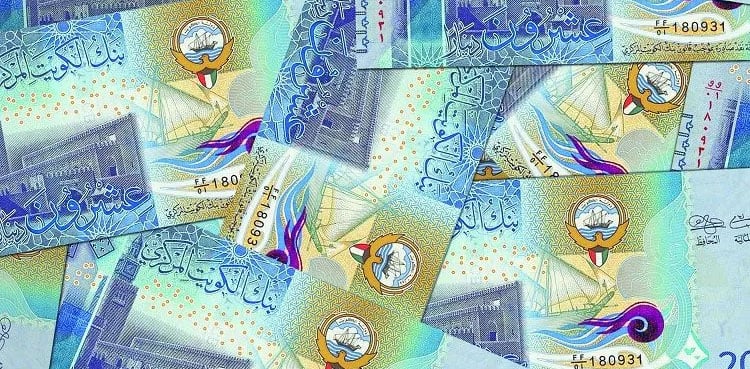
Kuwait City/Karachi, October 11, 2025: In a notable shift in the forex landscape, the Kuwaiti Dinar (KWD) has depreciated against the Pakistani Rupee (PKR), trading at 917.13 PKR today, according to open market data from the whole week.
This represents a fresh decline from 919.70 PKR on October 4, 920.75 PKR on September 27, and a broader downward trend from the summer high of 926.79 PKR. Earlier in the year, the rate had climbed steadily from 919.67 PKR on June 10, peaking amid oil market optimism. For those tracking KWD to PKR exchange rate today, this movement signals evolving global dynamics, with implications for remittances, trade, and investment between Kuwait and Pakistan. As oil prices hover around $67-70 per barrel and Pakistan’s inflation ticks up, understanding these **Kuwaiti Dinar to Pakistani Rupee fluctuations** is crucial for expatriates and businesses alike.
The Kuwaiti Dinar to PKR exchange rate is a barometer of contrasting economic fortunes. Kuwait’s KWD, the world’s strongest currency, derives its power from the nation’s oil-centric economy. Pegged loosely to a basket of currencies led by the US Dollar, the Central Bank of Kuwait maintains stability through vast reserves exceeding $43 billion. Recent IMF projections highlight a 2.6% GDP growth for Kuwait in 2025, fueled by recovering OPEC+ production quotas and non-oil sector expansion. However, softening crude prices—Kuwaiti oil closed at $67.63 per barrel on October 10—have introduced mild pressure, contributing to the KWD’s dip below 920 PKR.
On the flip side, the Pakistani Rupee has shown resilience under a managed float regime overseen by the State Bank of Pakistan. With foreign reserves climbing to $16.6 billion by mid-2025, bolstered by IMF inflows and remittance surges, the PKR has gained ground against the KWD. Yet, inflation’s uptick to 5.6% in September from 3% in August underscores ongoing vulnerabilities, driven by food and energy costs. This interplay—Kuwait’s oil dependency versus Pakistan’s reform-driven stabilization—explains the 917.13 KWD to PKR rate today, a 0.22% drop from last week, amid global commodity shifts and regional fiscal policies.
For real-time KWD PKR converter users, note that interbank rates lag open market figures, with recent data showing 1 KWD at around 922-927 PKR earlier in October. These Kuwaiti Dinar exchange rate trends 2025 reflect broader forex volatility, where even minor oil price adjustments can sway bilateral values.
## Impacts of the Falling KWD on Pakistan’s Economy and Expatriate Workers
The depreciation of the KWD against PKR to 917.13 carries mixed signals for Pakistan, a nation where remittances from the Gulf form 10% of GDP. For the 250,000+ Pakistani workers in Kuwait—spanning construction, healthcare, and services—this means slightly less PKR per Dinar sent home. A 1,000 KWD remittance, once worth 919,700 PKR on October 4, now yields about 917,130 PKR, a modest loss of 2,570 PKR. Over $1.9 billion in annual flows from Kuwait, this could trim household boosts by millions, affecting education and healthcare in remittance hubs like Lahore and Faisalabad.
Yet, silver linings emerge for importers and traders. Pakistan’s petroleum imports from Kuwait, valued at hundreds of millions, become marginally cheaper, potentially easing fuel costs amid 8.5% energy inflation. Businesses eyeing PKR to KWD conversion for exports like textiles or rice may find Kuwaiti markets more accessible, enhancing competitiveness in a $26.5 billion trade deficit scenario. For expats planning return visits, the rate eases the burden of PKR-denominated expenses, from real estate to family support.
Broader ripples touch Pakistan’s IMF-backed recovery. With GDP growth at 2.7% and per capita income rising to $1,824, the stronger PKR bolsters investor confidence. However, if Kuwait’s budget deficit widens to 7.8% of GDP due to lower oil revenues, reduced Gulf investments could indirectly strain bilateral ties. In essence, today’s KWD to PKR rate 917.13 underscores a delicate balance: short-term relief for trade, tempered by remittance headwinds.
For remitters, timing transfers during PKR strength—post-IMF tranches—maximizes value. Businesses should diversify suppliers beyond Kuwait to mitigate Kuwaiti Dinar depreciation risks. As 2025 unfolds, with Kuwait eyeing non-oil growth at 2.6% and Pakistan targeting 5-7% medium-term inflation, proactive strategies will define winners in this forex duo.
The Kuwaiti Dinar (KWD), launched in 1961, symbolizes Kuwait’s post-oil discovery prosperity. Denoted as KD or د.ك and divided into 1,000 fils, it’s issued by the Central Bank of Kuwait and reigns as the globe’s priciest unit—1 KWD ≈ $3.26 USD. Backed by OPEC quotas and diversification pushes like the 15% multinational tax, the KWD embodies resilience amid $90.5/barrel budget needs.
Contrast this with the Pakistani Rupee (PKR), born in 1947 amid partition, symbolized by ₨ and split into 100 paisa. Managed by the State Bank of Pakistan, it navigates a managed float, reflecting a $411 billion economy’s trials—from IMF facilities to remittance lifelines. At 1 PKR ≈ 0.00108 KWD today, the PKR’s 2025 rebound highlights reform dividends, even as inflation lingers.