
How other countries tackle open manhole risks: Lessons for Karachi
- By Web Desk -
- Dec 08, 2025


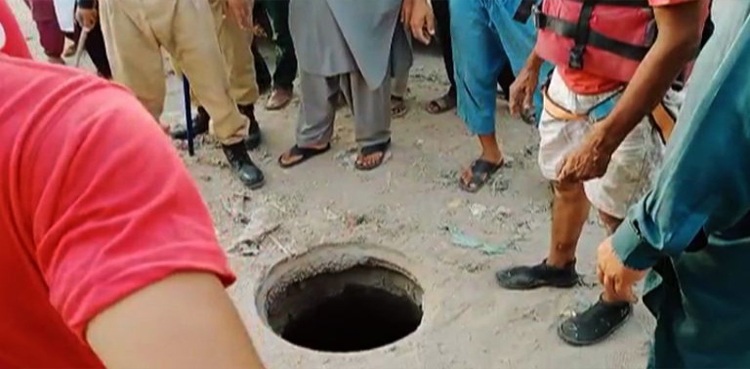
Following the tragic death of a three-year-old boy who fell into an open manhole near NIPA Chowrangi in Karachi, questions have arisen about how other countries manage similar risks and prevent such accidents.
In a report presented on ARY News’ programme Sawal Ye Hai, host Maria Memon highlighted international strategies to address manhole safety.
In India, the government launched the “Abhiyan” Programme in 2014, replacing iron manhole covers with fibre or polymer alternatives in certain areas to reduce theft and accidents.
Kenya and Nigeria have implemented locking systems and fibre covers to save people from falling into manholes.
Bangladesh and Nepal have seen local NGOs and community groups use digital tools and mobile apps to map drainage infrastructure, identify dangerous or open manholes, and report them to authorities.
In Philippines and Indonesia, concrete or steel slabs have been installed over drains to prevent falls.
To reduce accidents at night, Ethiopia and Nepal have installed solar LED street lights. In Rwanda and Cambodia, rapid response teams operate at municipal and community levels to repair damaged manhole covers and other infrastructure quickly.
Meanwhile, Turkiye and Saudi Arabia have converted older open drains into underground pipeline systems to ensure safer urban environments.
According to the US think tank The Medium, reducing manhole hazards requires both proactive maintenance and public awareness, alongside structural and technological interventions to prevent accidents.