
Neanderthals made fire 350,000 years earlier than thought, study finds
- By Web Desk -
- Jan 03, 2026


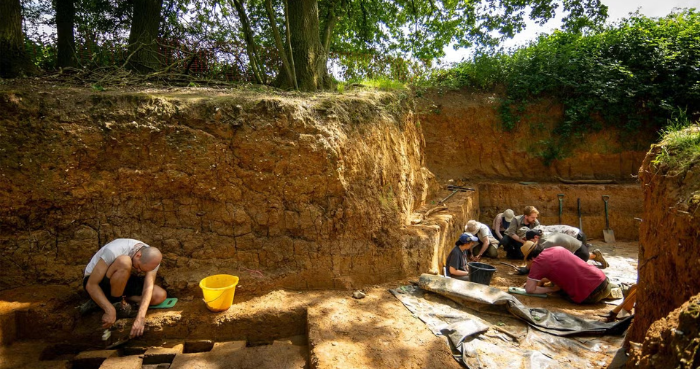
A research team led by the British Museum has uncovered evidence that ancient humans possessed the technology to make and manage fire 400,000 years ago. This pushes the timeline for this key skill back by roughly 350,000 years.
The research, published in the journal Nature, uncovered evidence of fire-making tools significantly older than previously accepted. Pits at East Farm Barnham in Suffolk, England, revealed this new evidence; until now, the oldest widely accepted proof of fire-making came from Neanderthal sites dated to only 50,000 years ago.
While hints of burning at older archaeological sites are often attributed to natural wildfires, the Barnham site presented a different scenario. Researchers discovered a focused patch of heat-altered, reddened sediment encircled by “spalled” (cracked) flint tools.
To rule out a natural fire, the research team utilized advanced magnetic and chemical testing. The data confirmed that the heat was localized to a specific spot (identified as a hearth) and resulted from multiple, brief burning events that reached temperatures exceeding 750°C.
Crucially, the team discovered fragments of pyrite (fool’s gold). Pyrite does not occur naturally in the local soil, suggesting it was carried to the site. When struck against flint, pyrite creates sparks—a known prehistoric method for starting fires.
“Incredibly, some of the oldest groups of Neanderthals knew the properties of flint, pyrite, and tinder at such an early date,” said Nick Ashton, who led the team alongside Rob Davis.
Professor Chris Stringer from the Natural History Museum noted that the individuals who could create fire on demand were likely early Neanderthals. This ability to ignite fire—rather than waiting for lightning strikes—would have significantly transformed their chances of survival, providing warmth, protection, and the capacity to cook food. Cooking aids digestion and promotes brain development.
“The implications are enormous,” said Davis. “This extraordinary discovery pushes this pivotal moment back by approximately 350,000 years.”