
Nepal protesters set fire to parliament building: spokesman
- By AFP -
- Sep 09, 2025


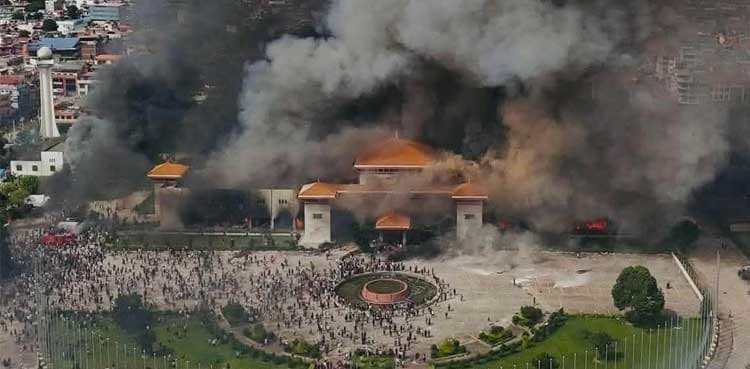
Kathmandu: Nepali protesters broke into the nation’s parliament on Tuesday and set the building ablaze, an official said, after the prime minister quit in the wake of a deadly crackdown on anti-government demonstrations.
“Hundreds have breached the parliament area and torched the main building,” Ekram Giri, spokesman for the Parliament Secretariat, told AFP.
Nepal’s veteran prime minister resigned on Tuesday after youth protesters demanded he quit, a day after one of the deadliest crackdowns in years in which at least 19 people were killed.
The protests, which began on Monday with demands that the government lifted a ban on social media and tackled corruption, reignited despite the apps going back online.
Protesters on Tuesday attacked and set fire to KP Sharma Oli’s house, the 73-year-old prime minister and leader of the Communist Party, according to Nepali media.
Protestors storm #Nepal parliament in Kathmandu as ministers flee in helicopters. pic.twitter.com/3QhgEDScui
— Ahmer Khan (@ahmermkhan) September 9, 2025
“I have resigned from the post of prime minister with effect from today… in order to take further steps towards a political solution and resolution of the problems,” Oli said Tuesday.
Read More: Nepal Prime Minister KP Sharma Oli resigns after protests
Kathmandu police spokesman Shekhar Khanal said that several groups had refused to obey a curfew on Tuesday, telling AFP there were protesters in the street in many areas, and “cases of fire and attacks”.
Some targeted the properties of politicians and government buildings, according to an AFP photographer and local media reports.
Oli started his fourth term last year after his Communist Party forged a coalition government with the centre-left Nepali Congress in the often-volatile parliament.
His resignation followed that of three other ministers, and despite the government repealing the ban “which was among the Gen Z’s demands”, Minister for Communication Prithvi Subba Gurung told AFP, referring to young people aged largely in their 20s.
The social media ban fed into existing anger at the government in a country with a youth bulge.