
New Google Translate feature turns any headphones into a live translator
- By Web Desk -
- Dec 13, 2025


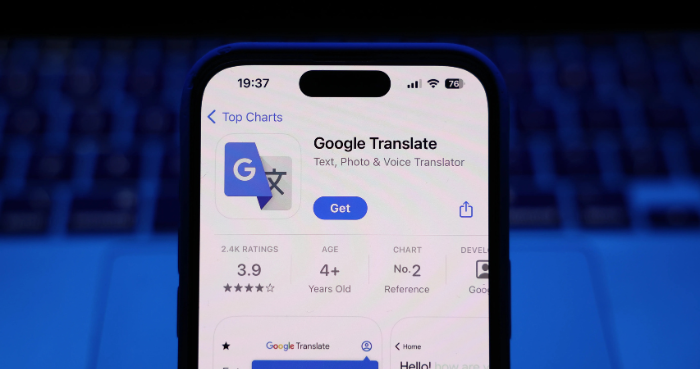
Google announced on Friday that it is introducing a beta version of a feature that lets users hear real-time translations in their headphones. The company is also bringing advanced Gemini capabilities to Google Translate and extending its language-learning tools in the app.
The new real-time translation feature for headphones preserves each speaker’s tone, emphasis, and cadence. This enhancement makes it easier to follow conversations and identify who is speaking. Essentially, it turns any pair of headphones into a real-time one-way translation device.
“Whether you’re trying to converse in a different language, listen to a speech or lecture while abroad, or enjoy a TV show or film in another language, you can simply put on your headphones. Open the Translate app, select ‘Live translate,’ and hear a real-time translation in your preferred language,” explained Rose Yao, VP of Product Management for Search Verticals, in a blog post.
This beta feature is currently rolling out in the Translate app on Android devices in the U.S., Mexico, and India. It is compatible with any headphones and supports over 70 languages.
Google plans to bring the capability to iOS and more countries in 2026.
The upcoming advanced Gemini features for Translate are expected to result in smarter, more natural, and highly accurate text translations, according to Google. A key improvement will be enhanced translation of complex phrases. This includes slang, idioms, and local expressions, which often have nuanced meanings.
For instance, if you’re trying to translate an English idiom like “stealing my thunder,” you’ll now get a more precise translation. Instead of a literal word-for-word version, Gemini will filter the context to grasp what the idiom really means.
This new update is rolling out now in the U.S. and India. It is translating between English and nearly 20 languages, including Spanish, Arabic, Chinese, Japanese, and German. The update is available in the Translate app on Android, iOS, and on the web.
Google is also expanding its language learning tools to nearly 20 new countries, such as Germany, India, Sweden, and Taiwan. The company now allows English speakers to practice German. Additionally, speakers of Bengali, Mandarin Chinese (Simplified), Dutch, German, Hindi, Italian, Romanian, and Swedish can now practice English.
The tech giant is also introducing improved feedback, providing users with helpful tips based on their speaking practice.
Furthermore, Google is introducing a feature that keeps a record of how many days in a row you’ve been learning. This makes it easier to track your progress and stay consistent. While the tools were already designed to compete with Duolingo, this new feature brings the experience even closer to the popular language-learning app.