
New stroke study reveals why brain injury spreads after treatment
- By Web Desk -
- Dec 27, 2025


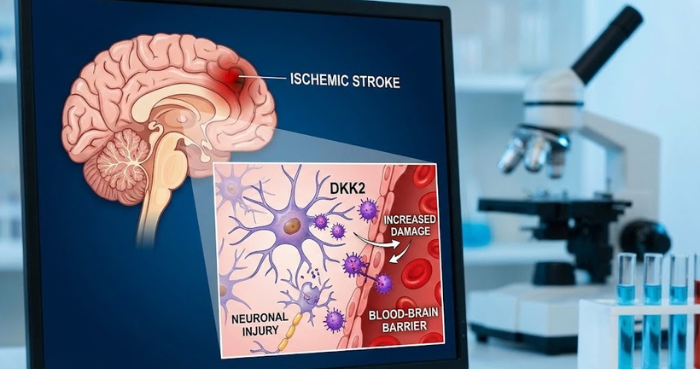
A research team from the Chinese Academy of Sciences (CAS) has recognized a specific protein that aggravates brain damage following a stroke, offering a potential new target for life-saving treatments.
Ischaemic stroke remains a leading cause of death and disability worldwide. While current therapies can restore blood flow, many patients still suffer from secondary brain injury, including bleeding and poor recovery. The molecular reasons for this have long remained a mystery.
A study published in the European Heart Journal by researchers from the Shenzhen Institutes of Advanced Technology (SIAT) has identified a protein called DKK2 as a significant factor related to stroke. The research shows that after a stroke, stressed neurons release elevated levels of DKK2.
Instead of safeguarding the brain, this protein actually inhibits a critical signaling pathway that is crucial for cell survival and the integrity of blood vessels. This disruption triggers a series of events that weaken the blood-brain barrier, increasing the risk of brain hemorrhages and ultimately expanding the area of dead tissue.
Using mouse models, the researchers showed that reducing DKK2 activity significantly decreased the size of the injury and improved neurological recovery. Conversely, artificially raising DKK2 levels made the damage worse.
For the confirmation of findings in humans, the team analyzed blood samples from stroke patients. They discovered that higher DKK2 concentrations were related to more severe brain injuries and poorer recovery outcomes after 90 days.
By identifying this mechanism, the study identifies DKK2 as a promising target for new drugs. Balancing this protein could help protect the brain and reduce complications for patients who miss the narrow window for standard stroke treatments.