
Nvidia CEO says US Policy wiped out 95% of our China market share
- By Web Desk -
- Oct 20, 2025


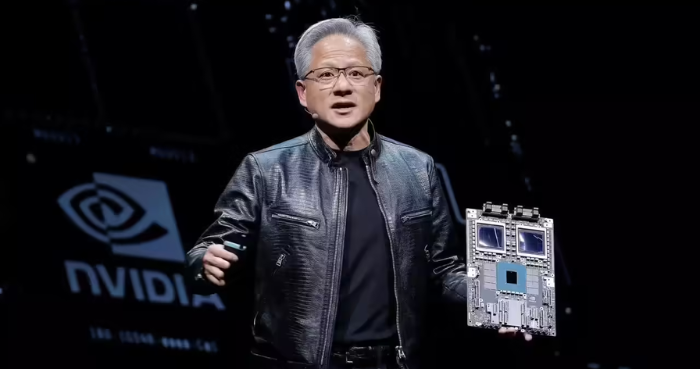
Jensen Huang, Nvidia CEO, on Tuesday said, “We went from 95% market share to 0%, and so I can’t imagine any policymaker thinking that that’s a good idea, that whatever policy we implemented caused America to lose one of the largest markets in the world.”
During an interview with Citadel Securities, he expressed that what harms China may harm the US, even worse sometimes.
“Before we jump towards policies that are hostile to other people, take a step back and maybe reflect on what the policies are that are helpful to America,” Huang expressed.
Nvidia’s processors have become highly sought-after in the AI race and are also being used as political bargaining chips in the US-China trade conflict.
Huang expressed his desire for the world to rely on U.S. technology, but he pointed out that approximately half of the world’s AI researchers are based in China.
He stated, “I think it’s a mistake not to involve those researchers in building AI using American technology.”
He stressed that balancing the goal of maintaining U.S. technological supremacy while allowing access to China requires a nuanced approach rather than a binary one. However, the current reality is that Nvidia is “100% out of China.”
He didn’t mention which administration, but the Biden administration assessed rules in 2022 to restrict the export of Nvidia’s most advanced AI chips to China, leading the company to develop a processor that met the new limitations.
In April, Nvidia announced that the Trump administration had blocked the sale of some of its AI chips to China without requiring licenses, and that future sales would also need these licenses. However, in August, the administration granted export licenses for certain Nvidia and AMD chips to China, allowing the sales in exchange for 15% of the revenues.
The Chinese regulators have already cautioned local tech companies not to purchase Nvidia chips that were designed to fulfill US export requirements.
Moreover, Beijing has limited exports of rare earth minerals, a vital input for a wide range of advanced technologies, mocking US export rules on AI chips. That prompted US President Donald Trump to retaliate with an additional 100% tariff on Chinese goods.
Read More: China accuses US of cyber breaches at national time centre
Both countries are yet to resume talks this week, ahead of a planned meeting with Trump and his Chinese counterpart later this month.
In his Citadel interview, Huang said that all of Nvidia’s financial projections assume China will stay out of the picture.
“If anything happens in China, which I hope it will, it would be a bonus,” he said, “China is the second-largest computer market in the world and has a vibrant ecosystem. I believe it’s a mistake for the United States not to participate. Hopefully, we will continue to explain, inform, and hold out hope for a policy change.”