
Skies of Contention: How Pakistan's Defenses Shattered India's Operation Sindoor Myths
- By DJ Kamal Mustafa -
- Jan 28, 2026


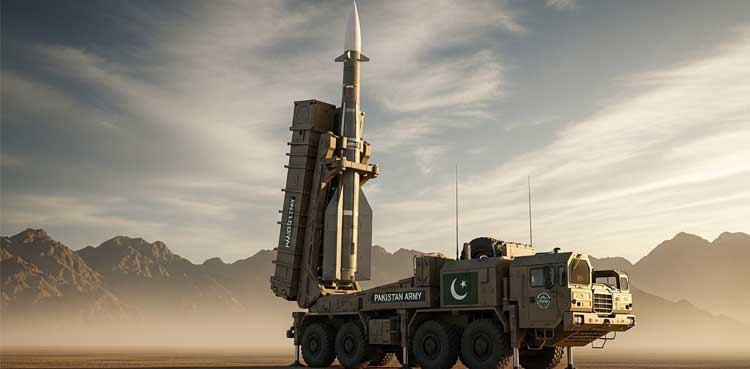
In the ever-shifting world of South Asian politics, stories can twist facts faster than a jet in a dogfight. Take the latest report from Switzerland’s Centre for Military History and Perspective Studies (CHPM). It paints India’s Operation Sindoor back in May 2025 as a game-changer, where Indian airpower supposedly crushed Pakistan’s defenses and pushed Islamabad to beg for a ceasefire.
Written by historian Adrien Fontanellaz, this 88-hour aerial showdown gets framed as India’s big win, shifting the balance of power in the skies. But hold on—does this really capture what happened, or is it overlooking the gritty details that show a more even match?
The Swiss analysis claims that India basically locked down the airspace, using fancy cruise missiles to smash Pakistan’s radars and keep their planes on the ground. It paints a picture of a Pakistani Air Force that was cornered and helpless. However, that version of events ignores the scoreboard. In reality, Pakistan punched back hard. Leveraging Chinese technology like the PL-15 missile, they managed to flip the script right at the start of the conflict. Over the course of two days in early May, Pakistani pilots took down no fewer than six Indian jets in long-range engagements. And these weren’t throwaway targets—the list reportedly includes three top-tier Rafales, a Su-30, and a MiG-29. By effectively networking their defenses, Pakistan managed to disrupt India’s entire game plan, raising serious doubts about who actually held the upper hand.
It is also clear from various analyses that the PAF played a clever hand, using their jets for both shielding and striking. For instance, May 7 saw a major aerial clash with dozens of planes in the mix. Pakistan deployed its Chengdu J-10Cs and JF-17 Thunders to fire advanced PL-15 missiles, reportedly taking down heavyweights like the Indian Rafales and Su-30MKIs. Interestingly, under Operation Bunyan-um-Marsoos, Pakistani pilots launched standoff strikes against Indian bases but disciplined themselves not to cross the actual border, keeping a lid on total escalation. Neutral experts agree: Pakistan’s tactic of ‘shoot and scoot’ secured them early and critical successes.
How Pakistan shot down India’s Rafale using Chinese gear
It’s worth noting how the PAF didn’t just defend—it pushed back, stressing Indian bases and making the fight feel like a tense back-and-forth, not a rout. The CHPM highlights India’s slick command systems and defenses like the S-400, but those didn’t always hold up against Pakistan’s agile moves. Drones and multi-angle attacks slipped through, forcing Indian crews to play catch-up. This kind of balance, with both sides taking hits, made dragging it out risky for everyone.
Then there’s the ceasefire angle, which the report spins as Pakistan caving under pressure by May 10. But that’s a stretch. The end came from shared fatigue and outside help, especially from the U.S. Pakistan never admitted to starting the talks; instead, it positioned the truce as a wise step to dodge nuclear drama. Look at President Trump’s comments—he kept mentioning “five to eight beautiful planes” getting shot down, which lines up more with Pakistan’s side of the story than India’s. His role in cooling things down points to a standoff where no one dominated, leading to a quick hotline deal between generals.
This mutual step-back ties into the bigger stakes, like nuclear red lines that keep South Asia on edge. Pakistan’s strategy of just-enough deterrence, powered by its air tech, meant India’s bold moves didn’t lead to total control. Painting it as a forced surrender misses how both nations had reasons to pause.
And let us not gloss over the civilian toll, a detail often conveniently missing from the victory narratives. The operations over Bahawalpur and Muridke may have been aimed at terror groups on paper, but on the ground, they hit the public. In Muridke, a strike on a mosque killed at least 16 people who were simply gathering in a community space. In total, over two dozen innocent lives were taken down by India including children’s. These tragedies cast a long shadow over claims of surgical precision. They sparked justifiable outrage in Pakistan and drew international scrutiny, underlining the brutal reality that air wars are rarely as clean as the generals claim.
Zooming out, this one-sided story could encourage risky moves down the line, hurting chances for real talks between the neighbors. Meanwhile, Pakistan’s JF-17s drew interest from buyers worldwide after holding their own, hinting at a rethink on who has the edge. It’s a nod to how smarts and tech can level the field against bigger budgets.
In the end, the Swiss report offers solid details but seems tilted toward Indian sources, shortchanging the nuance. A fairer look sees Operation Sindoor as a failure with no targets achieved, with Pakistan standing tough and both sides pulling back wisely. For lasting peace in South Asia’s skies, it’s better to embrace that complexity than chase myths of supremacy. Let this be a reminder to New Delhi: any future aggression will be met with a decisive response. Pakistan may not fire the first shot, but it will certainly fire the last.