
Pakistan’s Pharma Sector Poised for Global Expansion
- By Farooq Sami -
- Oct 29, 2025


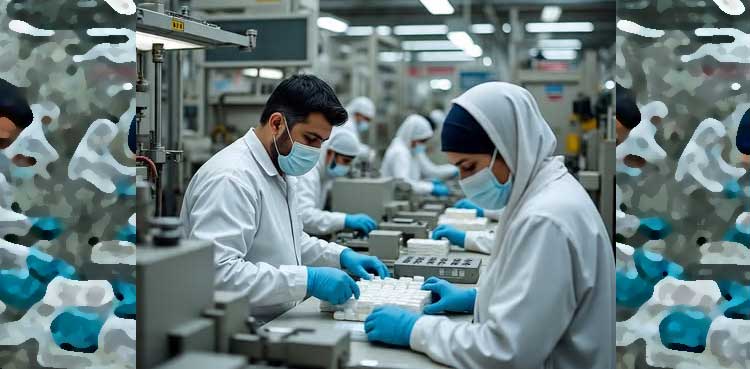
The pharmaceutical sector in Pakistan is one of the most important pillar of the nation’s healthcare system and economy. It ensures access to essential medicines, supports the public health infrastructure, and contributes significantly to industrial output.
Over the decades, industry has evolved from being import-dependent to increasingly self-reliant and innovative. Today, more than 90 percent of the medicines used in Pakistan are produced domestically, with only a small share imported, mainly specialized or high-end products like oncology and biotech drugs.
Despite persistent challenges, the sector has demonstrated consistent growth and resilience, positioning itself among Pakistan’s most promising industries.
After independence in 1947, Pakistan relied heavily on imported drugs, with multinational corporations dominating the market. Local pharmaceutical production began to take shape in the 1960s and 1970s, gaining momentum after the Drug Act of 1976 established a regulatory framework for manufacturing, sale, and distribution. This act empowered domestic firms to produce affordable generic medicines, improving accessibility nationwide. Today, more than 700 registered pharmaceutical companies operate in Pakistan, including both local and multinational firms. Around 20 large local manufacturers, such as Getz Pharma, Martin Dow, Searle, and GSK, command a major share of the market.
The industry’s market size is estimated at over USD 4 billion and continues to grow annually by 10–12 percent. This expansion is fueled by population growth, urbanization, rising health awareness, and an increasing burden of non-communicable diseases like diabetes and cardiovascular conditions. Government initiatives such as the Sehat Sahulat health insurance scheme have also boosted demand. Pharmaceutical exports have surpassed USD 400 million, expanding into markets in Asia, Africa, and the Middle East. However, with stronger regulations, improved research infrastructure, and modern manufacturing, exports could potentially reach USD 1 billion in the near future.
Despite this progress, the sector faces critical challenges. Chief among them is dependency on imported raw materials, around 90 percent of Active Pharmaceutical Ingredients (APIs) are imported, primarily from China and India. This reliance exposes manufacturers to exchange rate fluctuations, global price volatility, and supply chain disruptions, keeping production costs unstable. Developing domestic API production capacity would be a strategic step toward stability and self-sufficiency. Regulatory inconsistency remains another hurdle. Although the Drug Regulatory Authority of Pakistan (DRAP) has made progress, bureaucratic delays in approvals, pricing controls, and outdated procedures continue to stifle innovation and investment.
Pricing is perhaps the most contentious issue in Pakistan’s pharmaceutical landscape. The government’s strict price controls ensure affordability but limit profitability, discouraging investment in research and quality enhancement. Price adjustment delays have led to temporary shortages of essential medicines. A more transparent pricing policy, aligned with inflation and currency trends, could balance public affordability with industry sustainability.
Despite these obstacles, the industry continues to modernize. Many companies have upgraded their facilities to meet international WHO Good Manufacturing Practices (GMP) standards, enabling exports to regulated markets in Europe and North America. This marks a shift from volume-driven production to quality-driven competitiveness. Digital transformation is also reshaping the pharmaceutical ecosystem. The rise of telemedicine, e-pharmacies, and digital health platforms, accelerated by the COVID-19 pandemic, has enabled companies to engage more directly with patients and healthcare providers.
One example of professionals contributing to positive change in Pakistan’s healthcare and pharmaceutical sectors is Shahzad Haider, a healthcare expert and finance professional committed to promoting health equity.
For him, “Healthcare should be both accessible and sustainable. By connecting providers, pharmaceutical companies, and financial institutions through innovative financial approaches and public-private partnerships, we can make health equity not only a moral goal but also an economically sound one.”
Pakistan’s pharmaceutical future lies increasingly in biotechnology and research-based drugs. The country has a strong base of skilled professionals and expanding scientific institutions that can support this transition. Universities and research centers are beginning to collaborate with local pharmaceutical firms to develop vaccines, biosimilars, and innovative drug delivery systems. However, realizing this potential requires greater investment in research and development, stronger intellectual property protection, and closer academia-industry linkages. Transitioning from generic manufacturing to innovation-driven production will enable Pakistan to compete in global high-value markets.
The government’s role is crucial in driving the next phase of growth. Policy consistency, tax incentives, simplified regulatory frameworks, and the establishment of pharmaceutical industrial parks can attract investment and build confidence. Investment in healthcare infrastructure, especially in rural areas, can simultaneously improve public health and expand the domestic market for medicines. Collaboration with international organizations like the World Health Organization (WHO) and International Finance Corporation (IFC) can also strengthen regulatory frameworks and provide technical and financial support for modernization.
Equally important is workforce development. Although pharmacy schools in Pakistan produce thousands of graduates each year, there is a need to align curricula with contemporary industry standards, focusing on biotechnology, clinical pharmacy, and quality management.
The pharmaceutical industry also has an opportunity to support a national shift from curative to preventive healthcare. Globally, emphasis is moving toward early detection, disease prevention, and lifestyle management. Pharmaceutical companies can play a transformative role by sponsoring health awareness campaigns, supporting diagnostic programs, and promoting healthy living. This not only improves public wellbeing but also strengthens the industry’s reputation and long-term engagement with communities. A health-conscious, better-informed population fosters trust, compliance, and sustainable growth for the sector.
The rise of digital health startups has further expanded the boundaries of the pharmaceutical ecosystem. Teleconsultation platforms, e-prescriptions, and home delivery services have gained traction, particularly in urban centers. These digital solutions integrate technology with healthcare delivery, creating data-driven insights for personalized treatment and efficient supply chains. Such convergence between technology and pharmaceuticals requires collaboration among healthcare professionals, tech entrepreneurs, and policy experts. Innovators like Shahzad Haider, who understand both the financial and social dimensions of healthcare, are instrumental in shaping these ecosystems.
Pakistan’s pharmaceutical sector stands at a defining crossroads. From its early struggles with dependency and weak regulation, it has matured into a robust and dynamic industry that contributes significantly to national health and economic growth. However, sustaining momentum requires bold reforms: reducing raw material dependency, modernizing regulation, reforming pricing structures, and fostering innovation. The path forward lies in greater collaboration between government, industry leaders, researchers, and innovators. By combining transparency, technology, and forward-looking policies, Pakistan can strengthen its pharmaceutical base, expand exports, and improve healthcare accessibility.
Ultimately, the sector’s success will depend on its ability to balance affordability with innovation, regulation with growth, and public health priorities with commercial sustainability. With a collective commitment to these goals, the pharmaceutical industry can evolve into a true engine of national progress, one that ensures healthcare in Pakistan is not only accessible and affordable but equitable and future-ready.