
Pakistan Solar Industry 2025: Explosive Growth, Policy Shifts, and the Road Ahead
- By Fahad Ali -
- Dec 31, 2025


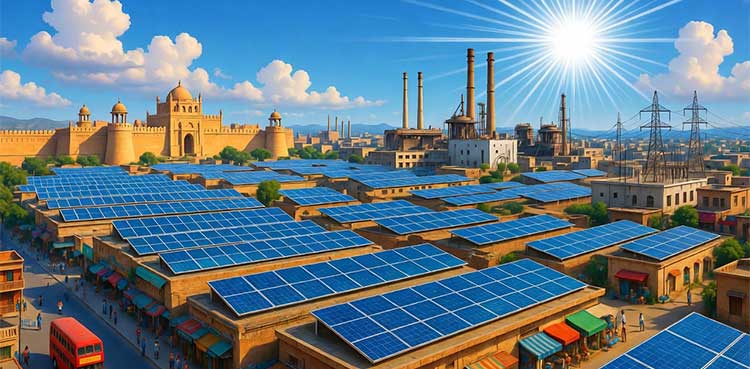
As 2025 draws to a close, Pakistan’s solar industry stands out as a global success story of grassroots energy transformation. Driven by soaring electricity tariffs, unreliable grid supply, and affordable Chinese imports, the sector experienced unprecedented expansion, turning Pakistan into one of the world’s fastest-growing solar markets.
From rooftop installations to industrial adoption, solar power reshaped the nation’s energy landscape, reducing reliance on imported fossil fuels and boosting renewable penetration to new heights. However, late-year policy reforms aimed at grid stability introduced new challenges, sparking debates on sustainability and equity.
This year-ender reviews the key milestones, hurdles, and future prospects for solar energy in Pakistan.
Unprecedented Growth: From Imports to Installations
2025 marked a “solar revolution” in Pakistan, with consumer-led adoption far outpacing government plans. The country imported over 12.7 GW of solar panels in the first nine months alone, on track to exceed 2024’s record of 17 GW, making Pakistan the second-largest importer of Chinese panels globally (behind only the Netherlands as a re-export hub). Cumulative imports since 2019 surpassed 32 GW, equivalent to 68% of the national grid’s nameplate capacity.
Key growth metrics include:
– Installed Capacity Surge: Total solar capacity (including off-grid, net-metered, and captive systems) reached estimates of 18-32 GW by year-end, up from around 10-15 GW in 2024. Rooftop and distributed solar led the charge, with net-metered capacity hitting 5.3-6.1 GW by mid-year, supported by over 300,000 connections.
– Generation Milestones: Solar’s share in utility-supplied electricity peaked at 25% in some months (e.g., March), placing Pakistan among just 17-20 countries achieving this level. Overall renewable generation reached 28% in the first four months, with solar output projected to nearly double from 2,438 GWh in 2024 to 4,447 GWh in 2025.
– Sector-Wide Adoption: Residential, commercial, industrial, and agricultural users embraced solar. Industries added 3-4 GW of captive systems, while events like Solar Pakistan 2025 showcased innovations in inverters, storage, and sustainability. Textile firms, for instance, integrated solar to cut costs and meet ESG goals, with companies like AGI Denim targeting 7.6 MW by year-end.
This boom was fueled by plummeting panel prices (due to Chinese overproduction), grid tariffs rising 150% in recent years, and incentives like duty exemptions until mid-2025. It also reduced CO₂ emissions by ~390,000 tons annually from net-metered systems alone and created jobs in installation and maintenance.
Policy Reforms: From Net Metering to Net Billing
While growth was largely market-driven, 2025 saw significant policy interventions to address grid imbalances. Early in the year, the government reduced sales tax on solar panels from 18% to 10% in the FY 2025-26 budget to support local manufacturing, following industry pushback. A $1 billion Chinese-Pakistani joint venture advanced plans for a local solar panel plant, aligning with 20-30% renewable targets by 2030.
However, late 2025 brought reforms to net metering amid concerns over a “utility death spiral.” High-adopters shifted to solar, eroding revenues for distribution companies (DISCOs) and raising costs for non-solar users. Key changes under the Draft Prosumer Policy 2025 and Solar Consumers Rules:
– Transition to net billing/gross metering for new users.
– Buyback rates slashed from ~PKR 26/kWh to PKR 10-13/kWh.
– Contract durations shortened to 5-7 years.
– System size limits and licensing for smaller setups.
– Existing users grandfathered until contracts expire.
These reforms aim to encourage self-consumption and battery storage (BESS) while stabilizing the grid, but critics argue they could slow adoption and favor utilities over consumers.
Challenges: Grid Strain and Equity Concerns
Despite triumphs, 2025 exposed vulnerabilities. Distributed solar growth strained infrastructure, causing transformer overloads, peak demand shifts, and over 4,000 pending connections mid-year. Utility-scale projects lagged, adding only 0.7-1.1 GW, far below distributed gains. Foreign currency shortages delayed imports, and equity issues arose as affluent users benefited most, burdening lower-income households with higher tariffs.
Grid demand growth slowed to 3-4%, and rooftop output is projected to exceed supply in hubs like Lahore and Faisalabad by 2026, prompting LNG contract renegotiations.
Future Outlook: Toward Sustainable Expansion
Looking ahead, Pakistan’s solar sector is poised for continued growth, potentially reaching 13-15 GW officially by 2030 if policies integrate storage and utility-scale projects. Recommendations include no-regret actions like community trading for excess power and incentives for BESS to enable decentralized markets. Africa’s interest in replicating Pakistan’s model highlights its global relevance.
In summary, 2025 solidified Pakistan as a solar powerhouse, proving that market forces can drive rapid renewables adoption in developing nations. Balancing growth with grid resilience will be key to ensuring an inclusive, green energy future. For more on solar energy in Pakistan 2025 trends, stay tuned for updates on policy impacts and innovations.