
Punjab tests subsidy-free Ramadan Bazaars as Sahulat Market System faces crucial trial
- By Sheeraz Soomro -
- Feb 05, 2026


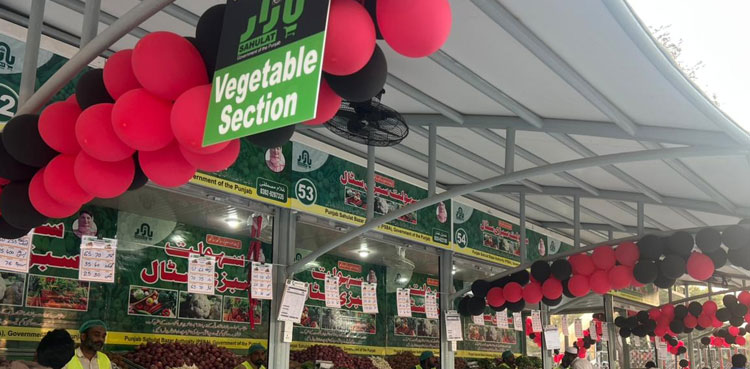
LAHORE: The Punjab Sahulaat Bazaars Authority (PSBA) has successfully completed the free home delivery of more than 301,200 orders of essential food items to households across the province under the vision of Chief Minister Maryam Nawaz Sharif, according to an official statement issued on Saturday.
For decades in Punjab, the arrival of Ramzan has followed a predictable administrative pattern. As household consumption increases and market demand rises, the provincial government establishes Ramzan bazaars across cities and districts. These markets aim to provide essential commodities—such as flour, sugar, vegetables, fruits, poultry and other daily necessities—at prices lower than those in regular markets, offering financial relief to households during a month when food expenses typically increase.
Historically, the functioning of these bazaars has depended heavily on government subsidies.
In previous years, Ramzan relief initiatives were supported by substantial public spending. Provincial authorities regularly allocated billions of rupees to reduce retail prices so that consumers could purchase staple goods below market rates. While this system ensured visible relief for the public, it also placed a significant burden on the provincial budget.
Records from earlier programmes show the scale of these subsidy-driven initiatives. In 2018, the provincial government introduced a Ramzan relief package that included more than 300 Ramzan bazaars across Punjab. Reports at the time suggested that about Rs11 billion were allocated, largely to subsidise flour prices. In addition, thousands of community meal centres, known as dastarkhwans, were established to provide free Sehr and Iftar meals.
A similar approach continued in 2019 when the provincial cabinet again approved more than 300 Ramzan bazaars. Subsidies were provided on key commodities including flour, sugar, cooking oil and poultry. Government support allowed these items to be sold below market prices, with the state covering the financial difference.
By 2021, Ramzan relief spending remained substantial. The provincial government announced a package valued at roughly Rs7 billion, which supported more than 300 bazaars and fair-price shops operating throughout the province. A significant portion of the funding again went toward subsidising flour.
In 2022, reports indicated that around Rs8 billion were earmarked for Ramzan relief through over 300 markets. Subsidies were extended to vegetables, pulses and other essential items, in addition to flour and sugar.
The model shifted significantly in 2023 under a caretaker administration. Instead of establishing large numbers of bazaars, the government introduced a free flour distribution programme on a massive scale. The initiative reportedly cost more than Rs50 billion and aimed to provide three bags of flour to eligible households. Although ambitious, the programme also exposed logistical challenges, including overcrowded distribution centres and technological issues in verification systems.
Another variation emerged in 2024 through the Nigahban Ramzan Package, which focused on delivering ration packages directly to millions of households. While Ramzan bazaars continued to operate in some areas, the emphasis shifted toward direct assistance rather than physical markets.
Against this historical background, Punjab is now pursuing a different approach.
This year, Ramzan bazaars are expected to operate across the province without a dedicated subsidy allocation from the provincial budget. Instead of relying on government spending to lower prices, the system will depend on administrative coordination, vendor participation and regulated market structures.
The responsibility for implementing this model lies with the Punjab Sahulat Bazaars Authority (PSBA), the institution tasked with organising the Ramzan market network.
The Authority itself is relatively new in its statutory form. It evolved from the Punjab Model Bazaars Management Company (PMBMC), which previously managed a limited number of model bazaars in urban centres. The establishment of PSBA expanded this concept into a broader institutional framework designed to operate regulated markets across the province.
The Authority is currently led by Director General Naveed Rafaqat Ahmad, widely considered the first Director General of PSBA after its transition from PMBMC. His tenure has coincided with the expansion of the Sahulat Bazaar concept into additional districts as part of the government’s plan to eventually establish such markets in every tehsil.
Over the past year, the network has grown through both permanent and mobile markets. Fourteen new Sahulat Bazaars have recently been completed and made operational, while 15 “Sahulat on the Go” markets have been introduced in the Lahore Division. These mobile markets aim to bring regulated retail spaces closer to residential areas, particularly where permanent markets are not yet available.
This aspect has contributed to the Sahulat Bazaar system’s reputation as both a business platform and a price-regulation mechanism. Vendors benefit from structured market spaces and consistent customer flow, while consumers gain access to regulated prices.
Nevertheless, the upcoming Ramzan may be the most demanding test for the system.
Running permanent markets throughout the year is relatively manageable, but operating 75 Ramzan bazaars simultaneously during a period of heightened demand and public scrutiny is a far more complex task. Daily supplies must remain consistent, price regulations must be enforced, crowds must be managed, and market facilities must remain functional—all without the financial support previously provided through subsidies.