
Sahulat Bazaars: From temporary relief to a lasting market system in Punjab
- By Sheeraz Soomro -
- Mar 19, 2026


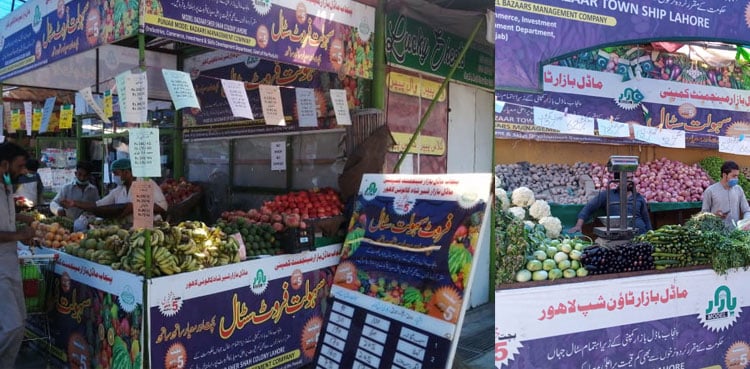
LAHORE: A total of 46 Sahulat Bazaars established across Punjab have provided dignified employment opportunities to 9,200 people, according to official figures.
In Punjab, public relief has often been more visible in announcements than in lived experience. Seasonal measures such as Ramzan bazaars and price control drives have typically delivered short-term comfort before fading away without leaving a lasting framework. The Sahulat Bazaar system, however, represents a shift in both intent and execution. Its significance during Ramzan 2026 lies not only in its scale, but in its ambition to move beyond episodic relief towards a structured, functioning retail model.
At the centre of this transition is an institutional change that has reshaped how relief is conceived. The move from the Punjab Model Bazaars Management Company to a statutory authority was not merely administrative; it created the foundation for a different approach. Instead of relying on subsidies to offset market failures, the system seeks to address inefficiencies through design. Within this framework, Director General Naveed Rafaqat Ahmad has played a pivotal role in shaping how the model operates, focusing less on routine management and more on building a sustainable system.
The results during Ramzan 2026 offer a clear snapshot of its performance. Across Punjab, nearly 80 Sahulat markets—including permanent bazaars, mobile units under “Sahulat on the Go,” and temporary Ramzan setups—served more than 40 million visitors. Around 36.93 million kilograms of essential commodities were sold, with prices recorded up to 18 per cent below official benchmarks and, in some cases, up to 40 per cent lower than open market rates. These price differentials translated into estimated consumer savings exceeding Rs 1.1 billion. In addition, a free home delivery service processed over 37,000 orders, while digital tools such as the Nigahban Card were introduced to improve targeted access.
An important dimension of this system is its interaction with informal retail. Punjab’s urban economy has long depended on roadside vendors, who provide accessibility but often operate without consistent pricing or quality standards. Rather than displacing this ecosystem, the Sahulat model seeks to reorganise it. Vendors are integrated into structured environments with regulated rents, visible pricing, and continuous oversight. Administrative staff are present on-site, ensuring that market discipline is maintained in real time.
This restructuring has broader implications. By reducing reliance on intermediaries and providing direct access to consumers, the system enables small traders to operate within a more predictable environment. In doing so, it balances two often competing objectives: consumer affordability and vendor sustainability.
The introduction of mobile bazaars further strengthens this approach. “Sahulat on the Go” units bring organised retail directly into neighbourhoods where permanent infrastructure is limited. This is particularly important in urban areas where distance can reduce the benefits of lower prices. By improving accessibility, the system ensures that affordability is not undermined by travel costs.
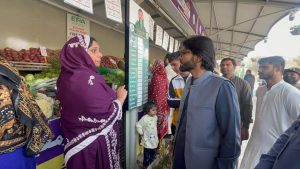
Feedback from both consumers and vendors provides additional insight into how the model is functioning.
Scaling the system will require more than simply increasing the number of markets. It will demand the preservation of price discipline, supply consistency, and administrative oversight across a wider network. Maintaining this balance will be critical to sustaining its effectiveness.
Within this broader trajectory, the role of Naveed Rafaqat Ahmad becomes increasingly significant. As the Authority’s first Director General in its statutory form, he has been closely associated with translating a conceptual framework into a functioning system. While its success depends on coordination across multiple levels of government, the consistency of its design suggests a clear strategic direction.
The experience of Ramzan 2026 should therefore be seen as both validation and test. It demonstrates that a system-driven, subsidy-light approach can deliver meaningful relief at scale, while also underscoring the need to extend this model beyond seasonal peaks into everyday economic life.
If expanded effectively, Sahulat Bazaars could evolve into a stabilising force within Punjab’s retail economy—reducing price volatility, supporting small traders, and offering citizens a reliable alternative to unregulated markets.
This landmark initiative marks Punjab’s first government-run project offering free home delivery of quality food items at subsidised rates, aimed at providing direct relief to citizens at their doorsteps.
Over the past year, the Sahulat Bazaars recorded footfall of approximately 85 million visitors, with cumulative purchases amounting to Rs42.5 billion.
Thirteen essential food items, including vegetables and fruits, were made available at wholesale prices, resulting in estimated savings of Rs1.1 billion for consumers.
Punjab Chief Minister Maryam Nawaz has set a target to complete 30 additional Sahulat Bazaars by June 30. She has also directed authorities to accelerate efforts to gradually establish Sahulat Bazaars in every tehsil of the province.
Maryam Nawaz stated that the initiative has ensured easy access to affordable and quality food items for the public, reiterating her government’s commitment to providing low-cost, high-quality essentials to every citizen of Punjab.