
QAR to PKR – Qatari Riyal to Pakistani Rupee Rate – Dec. 6, 2025
- By Web Desk -
- Dec 06, 2025


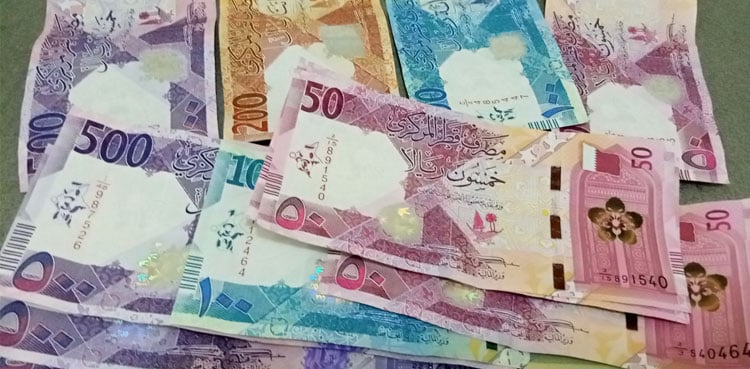
Karachi/Doha – The Qatari Riyal is trading at exactly 77.00 Pakistani Rupees in the open market this Friday, down just 32 paisa from the 77.32 peak touched on Wednesday but still 8 paisa above Thursday’s low of 76.92, showing how tightly the pair has hugged the 77-handle all week.
Inter-bank counters are printing the same figure, while exchange companies are offering 76.90/77.10 depending on cash or transfer, a spread so narrow it underlines the lack of volatility that has characterised the past five sessions.
Look back to Monday and the story is one of flat-line boredom; the quote opened at 77.25, edged to 77.28 on Tuesday as demand from travel agents buying Riyals for passengers heading to Doha inched higher, then spiked to the weekly top of 77.32 on Wednesday when two mid-sized banks entered the market to square month-end positions. Profit-taking kicked in almost immediately, pushing the rate to 76.92 by Thursday afternoon, its softest print since 28 November, before bargain hunters nudged it back to the psychological 77.00 mark where it now rests.
For Pakistani households the micro-movement is barely noticeable: a 20-thousand-Riyal remittance sent on Wednesday would have delivered Pakistani Rupee 1,546,400, while the same amount today converts to PKR 1,540,000—only 6,400 rupees less, hardly enough to alter grocery budgets but still a gentle reminder that timing matters. Importers bringing in Qatari liquefied natural gas or polyethylene resins see the opposite effect; every million Riyal invoice costs roughly 320,000 rupees less today than on Wednesday, a marginal relief in a country that buys over 3.5 billion dollars of Qatari product each year.
The Qatari Riyal itself is anchored to the dollar at 3.64, so its strength against the Rupee is really a reflection of how the greenback behaves versus the PKR. Since the State Bank of Pakistan allows the Rupee to move largely on market forces, any dollar demand—be it for oil payments, external debt servicing or simple seasonal travel—shows up immediately in the QAR/PKR cross. This week the dollar index stayed docile around 103.50, giving the pair little reason to stray, while inflows from Gulf remittances, now running at 2.9 billion dollars a month, provided a soft floor under the Rupee.
Year-to-date the Riyal has gained only 81 paisa on the Rupee, a 1.05 percent climb that pales next to the double-digit swings of 2022 and 2023 when political noise and dwindling reserves sent the PKR tumbling. The 2025 range illustrates the calm: the high of 80.54 recorded on 10 March feels distant, and the January low of 76.37 now looks like solid technical support. Dealers say a break below 76.80 would need a fresh wave of dollar selling by exporters or an unexpected SBP injection, while a push past 77.50 would require renewed importer demand or a sudden dollar surge on global markets.
Forward premiums are equally muted; one-month Riyal forwards trade at just 8 paisa over spot, implying traders see no dramatic shift before the new year. Seasonal patterns, however, warn of gentle upside pressure on the Riyal as December deepens. More than 200,000 Pakistanis work in Qatar and their holiday remittances typically peak in the second half of the month, a flow that historically adds 2 to 3 paisa to the QAR/PKR rate. On the other side, Pakistan’s monthly payment to Qatar for LNG cargoes—roughly 400 million dollars—settles around the 20th, creating a counter-balancing demand for Riyals that tends to neutralise the remittance bump.
For now, 77.00 looks set to hold through the weekend, with street-level boards likely to quote 76.85/77.15. Currency shops in Karachi’s Kharadar and Lahore’s Blue Area say volumes are thin, a sign that both buyers and sellers are comfortable to wait for a clearer cue. Unless the dollar itself breaks out of its 103-104 range or the State Bank surprises with a policy tweak, the Qatari Riyal is expected to keep its steady gait, drifting inside a 76.80-77.50 band for the remainder of December and offering little drama for traders but welcome stability for millions of families and businesses tied to the Gulf.