
QAR to PKR: Qatari Riyal to Pakistani Rupee Rate- Nov. 22, 2025
- By Web Desk -
- Nov 22, 2025


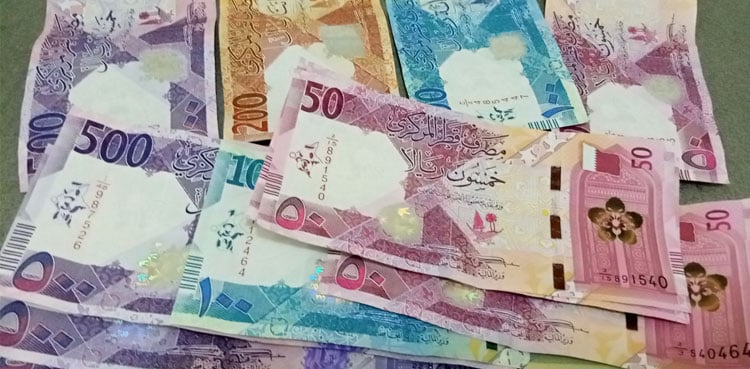
Karachi/Doha, November 22, 2025 — The Qatari Riyal (QAR) is trading at 77.10 Pakistani Rupee (PKR), down from 77.15 PKR on November 8 and 77.17 PKR on October 25.
This slight decline extends the QAR’s softening trend since mid-July, with Qatar’s energy-driven economy providing resilience amid stable market conditions. The ongoing fluctuations highlight the interconnected economic dynamics between Qatar and Pakistan, particularly influencing remittance-dependent households.
Recent Exchange Rate Trends
The QAR has shown volatility over recent months, trending downward from its July peak. It traded at 77.20 PKR on October 11, 77.26 PKR on October 4, 77.29 PKR on September 27, 77.16 PKR on September 20, and 77.93 PKR on September 5. Earlier rates included 77.39 PKR on August 30, 77.44 PKR on August 23, 77.47 PKR on August 16, 77.88 PKR on August 12, 77.42 PKR on August 9, 77.80 PKR on August 4, and 77.72 PKR on August 1. In July, rates were 77.74 PKR on July 29, 78.01 PKR on July 26, a high of 78.26 PKR on July 19, 78.16 PKR on July 23, 78.03 PKR on July 16, 78.02 PKR on July 9, 77.94 PKR on July 2, and a June 2025 close at 77.86 PKR. June rates included 77.90 PKR on July 7 and July 4, 77.70 PKR on June 27, 77.87 PKR on June 25, 77.82 PKR on June 23, 77.72 PKR on June 14, and 77.39 PKR at the month’s start. Today’s rate of 77.10 PKR matches the October 18 low, underscoring the PKR’s recent relative strength.
How Currency Valuation Operates
The QAR-PKR exchange rate is determined by supply and demand in the foreign exchange market, influenced by trade balances, remittance flows, and monetary policies. The Qatari Riyal, pegged to the US dollar at 3.64 QAR per USD, draws stability from Qatar’s leading role in liquefied natural gas (LNG) exports, buffering it against some volatility. Conversely, the Pakistani Rupee, a free-floating currency, is more exposed to domestic factors like inflation, political events, and foreign reserve fluctuations. Market analysts attribute the PKR’s gains to Pakistan’s recent economic stabilization efforts, including fiscal reforms and external support, which have bolstered its value against the QAR.
Impact on Pakistani Expatriates
With over 125,000 Pakistani expatriates in Qatar—spanning construction, hospitality, and professional roles—the QAR’s decline directly affects remittance values. A 1,000 QAR transfer, worth 77,150 PKR on November 8, now yields 77,100 PKR—a drop of 50 PKR and 290 PKR below June’s starting rate of 77,390 PKR. This erosion could pressure family finances in Pakistan, complicating payments for education, healthcare, or daily needs; for instance, a modest remittance might no longer fully cover rising school fees amid local inflation. On a positive note, PKR earners in Qatar may benefit from marginally cheaper imports, like groceries or gadgets, easing some living costs.
Broader Economic Context
Qatar’s Gulf powerhouse status, anchored by natural gas and diversification initiatives, supports the QAR’s pegged stability, but its performance against the PKR hinges on Pakistan’s economic trajectory and USD movements. Pakistan grapples with inflation and reserve challenges, yet policy advancements have aided PKR recovery, driving the pair’s volatility. This exchange rate interplay amplifies bilateral ties through remittances—vital for Pakistan’s economy—and trade opportunities.
Currency Snapshot
The Qatari Riyal (QAR), introduced in 1966, is Qatar’s official currency, denoted by QR or ر.ق. Pegged to the US dollar and managed by the Qatar Central Bank, it underpins the Gulf’s dynamic economy in trade and investment.
The Pakistani Rupee (PKR), symbolized by ₨ since 1948, is overseen by the State Bank of Pakistan, with its value swaying to economic and geopolitical winds.