
Rehman Dakait: About Karachi's Notorious Gangster
- By Shahmir Kazi -
- Dec 10, 2025


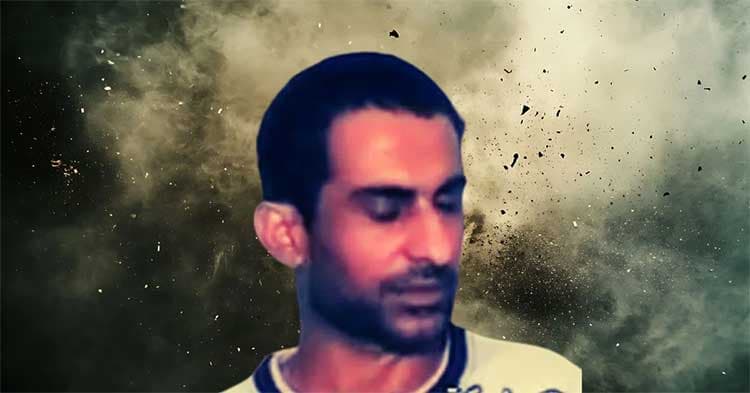
Rehman Dakait, born Sardar Abdul Rehman Baloch in 1975 in Karachi’s Lyari neighborhood, emerged as one of Pakistan’s most infamous criminal figures during the early 2000s. Known for his iron-fisted control over Lyari—a densely populated, Baloch-dominated area often dubbed Karachi’s “wild west”—Dakait’s life was a tapestry of violence, political patronage, and Robin Hood-like philanthropy that masked a sprawling criminal empire.
His story encapsulates the intersection of organized crime, ethnic politics, and urban decay in Pakistan’s largest city, where gang wars claimed hundreds of lives and turned neighborhoods into no-go zones for law enforcement.
Early Life: Roots in Crime
Rehman Dakait’s descent into the underworld was almost predestined. Born to Dad Muhammad (also known as Dadal) and Khadija Bibi, he grew up in a family entrenched in drug smuggling since the 1960s. His father and paternal uncle, Sheru, were key players in the narcotics trade, facing constant threats from rivals like Kala Nag, who was eventually killed in a police encounter. Lyari, with its labyrinthine alleys and history of ethnic Baloch settlement, provided fertile ground for such illicit activities.
From a young age, Rehman was immersed in this world. Reports suggest he began peddling drugs as a child and committed his first violent act at age 13, stabbing a man in a dispute. A darker allegation haunts his early years: in 1995, at around age 20, he is said to have murdered his own mother, Khadija Bibi, purportedly over her alleged affair with a rival gang member. This incident, while unproven in court, solidified his reputation for ruthlessness within Lyari’s criminal circles.
Rise to Power: From Street Thug to Gang Lord
Dakait’s ascent accelerated in the early 2000s. Following the 2001 arrest of his mentor, Haji Laloo—a prominent drug lord—Rehman stepped into the void, assuming leadership of Laloo’s gang. By 2003, after Laloo’s killing, Dakait had consolidated power, engaging in a brutal turf war with rival Arshad Pappu that began in 2002 and escalated into one of Karachi’s bloodiest conflicts.
In 2008, he formalized his dominance by founding the Peoples’ Aman Committee (PAC), ostensibly a “peace committee”.
However, the PAC quickly morphed into a paramilitary-style organization, armed to the teeth and controlling vast swaths of Lyari. Dakait’s operations extended beyond Karachi; he maintained safe houses in Balochistan’s Hub area and Quetta, from where he orchestrated activities.
The Criminal Empire: Drugs, Extortion, and Violence
At its peak, Dakait’s empire was multifaceted and ruthless. He was implicated in over 80 criminal cases, including drug trafficking (primarily heroin and hashish), extortion (known locally as “bhatta”), land grabbing, kidnapping for ransom, contract killings, gambling, and even prostitution. In Lyari alone, he operated 33 dens for these illegal enterprises, generating immense wealth that funded his gang’s arsenal and operations.
The gang wars with Arshad Pappu’s faction were particularly savage, involving beheadings, grave desecrations, and public displays of brutality. A notable vendetta stemmed from the 1990s when Pappu’s father allegedly killed Dakait’s father, Dadal, and desecrated his grave—a act Rehman avenged through escalating violence. The conflict peaked in the mid-2000s, with hundreds of deaths, including innocents caught in crossfire. Dakait’s gang also ran private jails and torture cells, enforcing a parallel justice system in Lyari.
In 2005, he was arrested in Hub after a deadly shootout but later released or escaped. Another arrest in Quetta in 2006 ended with a mysterious escape from police custody, amid allegations of internal complicity. Speculative rumors even linked him to Benazir Bhutto’s 2007 assassination, though these remain unsubstantiated.
Paradoxically, Dakait cultivated a Robin Hood image by funding schools, hospitals, and welfare programs in Lyari, endearing him to locals who saw him as a defender against external threats.
Downfall and Death
Dakait’s reign ended abruptly on August 9, 2009, in a police encounter in Karachi’s Steel Town. Police claimed he and four associates opened fire when signaled to stop, leading to a shootout where all were killed. Then-Sindh Home Minister Zulfiqar Mirza later admitted involvement, expressing regret. Supporters alleged it was an extrajudicial killing, a “fake encounter” common in anti-crime operations. His funeral drew tens of thousands, underscoring his cult-like status in Lyari.
Legacy: Enduring Shadow Over Karachi
Rehman’s death did not dismantle his empire; his cousin and successor, Uzair Baloch, took over the PAC, continuing the violence until his 2016 arrest. A 2017 Joint Investigation Team report accused Uzair of over 100 murders, foreign intelligence links, and running a parallel government. The Lyari gang wars, fueled by Dakait’s era, contributed to over 800 deaths in 2012 alone.
Culturally, Dakait’s life has inspired media portrayals, including the 2025 Indian film *Dhurandhar*, where Akshaye Khanna plays him. To some in Lyari, he remains a folk hero; to others, a symbol of unchecked criminality. His story highlights the perils of politicized crime in urban Pakistan, where gangsters like Dakait thrive amid weak governance and ethnic divides. As Karachi evolves, the scars of his era linger, a cautionary tale of power’s corrupting allure.