
SC declares blocking CNIC to enforce court order as Illegal
- By Web Desk -
- Feb 21, 2026


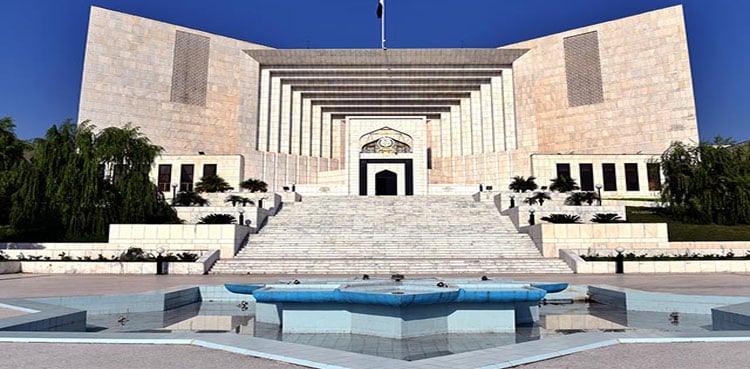
ISLAMABAD: The Supreme Court of Pakistan on Saturday overturned a Sindh High Court order that had blocked a citizen’s Computerised National Identity Card (CNIC) to enforce a court decree.
In a detailed three-page verdict, Justice Munib Akhtar emphasised that a CNIC is a basic necessity, not a luxury, and depriving someone of it is akin to depriving them of a fundamental right.
“CNIC is not a luxury or a mere statutory requirement. In today’s times, it has become essential to carry on a normal life in the ordinary course. To curtail a judgment debtor from this is not the proper exercise of discretion or statutory powers, as erroneously concluded by the Sindh High Court,” Justice Akhtar wrote.
The Supreme Court noted that Section 51 of the Code of Civil Procedure (CPC) sets out the various modes for execution of a decree. However, it cannot be interpreted in a way that allows measures entirely unrelated to the statutory provision.
“In the present case, the decree is simply a money decree. There is no justification for execution by blocking the CNIC of the judgment debtor. If such a measure were allowed, one could, for instance, also permit the court to disconnect utilities such as electricity or water from the debtor’s residence or workplace to enforce a money decree,” the judgment said.
While courts can take robust measures to ensure execution of decrees, such measures cannot deprive a person of essential means of living, the verdict added.
The court also addressed an amendment made in 2018 by the Peshawar High Court in the CPC as applicable in Khyber Pakhtunkhwa (KPK). Under the amendment, Order 21, Rule 117 allows the blocking of a judgment debtor’s CNIC to compel attendance or execution.
The Supreme Court clarified, however, that this provision applies only in KPK and not in Sindh, where the present proceedings arose.
“The very fact that the Peshawar High Court included such a power shows that absent an explicit provision, no court can imply such authority under general execution powers,” the verdict stated.
This case stems from a 2016 trial court decree requiring a petitioner to pay a sum of money. After non-payment, the trial court ordered the petitioner’s CNIC to be blocked. The Sindh High Court had upheld this order, which was now overturned by the Supreme Court.