
Scientists unveil roadmap for growing plants on Moon, Mars for Artemis III mission
- By Web Desk -
- Nov 28, 2025


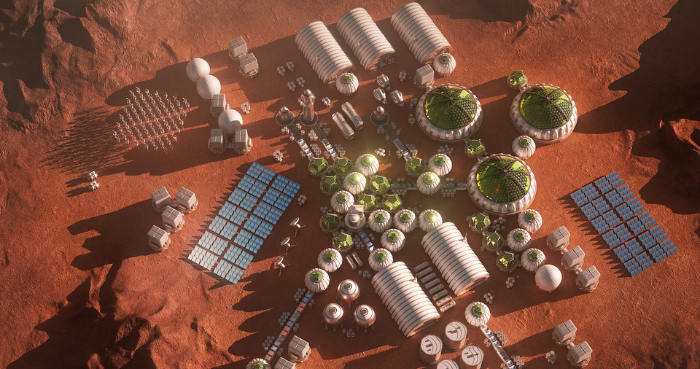
For a long-term plan to support human life on the Moon and Mars, scientists have outlined a roadmap for using plants, utilizing technologies that could also transform sustainable food production on Earth.
Forty scientists from multiple countries and space agencies have come together for this project to outline the plant science breakthroughs required to create self-sustaining, plant-based life-support systems for deep space exploration, a media release from Australia’s University of Melbourne said on Thursday.
According to a study published in New Phytologist, future missions will require systems capable of growing fresh food, recycling water and air, and supporting astronaut health and well-being.
To help guide these missions, the authors have introduced a new Bioregenerative Life Support System Readiness Level framework. This framework is designed to measure how effectively plants can function in space habitats to recycle nutrients, purify water, generate oxygen, and provide necessary nutrition.
The roadmap emphasizes recent advancements in crop science for space, such as synthetic biology, precision sensing, and controlled-environment agriculture, the media release stated.
Researchers stated that their work will help determine priorities for the U.S. National Aeronautics and Space Administration’s (NASA) Artemis III mission in 2027, which aims to return humans to the lunar surface. This mission will feature the Lunar Effects on Agricultural Flora experiment, the first effort to grow plants on the Moon and bring them back to Earth.
Designing plant systems for the Moon provides valuable insights that can enhance agriculture on Earth, according to study co-author Associate Professor Sigfredo Fuentes from the University of Melbourne. He, along with colleagues from around the world, explored how plants can be engineered, adapted, and monitored to thrive in lunar and Martian environments.
Fuentes said, “Space pushes us to design plant systems that are highly efficient, resilient, and precisely monitored, which will help grow food sustainably in drought-prone regions, cities, and remote communities.”