
Pakistan reforms seed sector to boost quality and food security
- By Web Desk -
- Dec 28, 2025


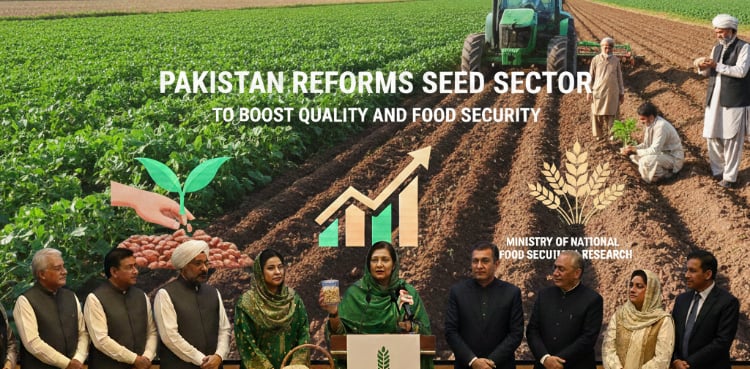
The Ministry of National Food Security and Research has outlined wide-ranging reforms aimed at modernising Pakistan’s seed sector and improving farmers’ access to certified, high-quality nationwide.
The changes follow years of structural challenges, including fragmented seed policies, weak regulation and limited access to improved and climate-resilient crop varieties, and outdated certification systems.
In response, the government enacted the Seed (Amendment) Act, 2024, creating a new body, the National Seed Development and Regulatory Authority (NSDRA), as a streamlined and specialized institution mandated to enhance regulatory oversight, support varietal development, and ensure the provision of genetically true-to-type seed.
Digital transformation establishes a central component of the Authority’s operational framework. A comprehensive MIS-based digital system has been implemented to enable end-to-end traceability of sector activities.
These include registration and renewal of seed companies, variety approval processes, registration of nurseries and seed processing plants, fruit plant certification, internationally accredited seed testing, and market monitoring.
The Truth in Labelling Scheme has also been notified and implemented, introducing performance-based regulatory mechanisms to enhance transparency and accountability.
On the regulatory front, the NSDRA has submitted the National Seed Policy 2025 and the Agriculture Biotechnology Policy 2025, in addition to framing crop-specific strategies. Regulatory actions have included the cancellation of 430 non-compliant seed companies. A new categorisation framework has also been introduced, ranking companies based on research capacity and technology use.
Internationally harmonized certification protocols have been developed for olive, mango, and citrus. The Authority has further regulated the interprovincial movement of 221,731 metric tons of wheat seed, supporting certified seed availability across provinces and contributing to improved seed replacement rates, including 67 percent in Sindh during the current Rabi season.
Coordination in research, varietal development, and innovation has been strengthened through the digital revamping and activation of the Variety Evaluation Committee (VEC) across major crops.
During FY 2024–25, 208 improved crop varieties were approved, covering wheat, rice, cotton, maize, fodder, cereals, oilseeds, and horticultural crops. A dedicated VEC fund disbursement mechanism has been established to ensure timely resource allocation for varietal trials and approvals.
The Authority has facilitated the import of elite germplasm from CGIAR centers, including CIMMYT, and convened consultations with heads of agricultural research departments on 3 December 2025 to develop a unified national roadmap for varietal research and development.