
Ghost villages in Spain are fighting to survive
- By Web Desk -
- Oct 10, 2025


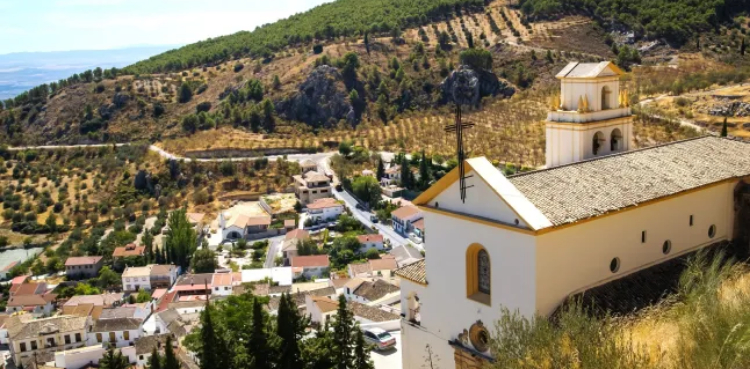
Ravaged by civil war and abandoned after failed investments, many of Andalucia’s most beautiful pueblos blancos have become ghost towns in Spain.
The famed white hilltop villages are one of the best reasons to visit this part of southern Spain, but in recent years, they’ve struggled, as younger generations move to cities and beach resorts in search of better lives.
For every Nerja and Estepona, where geraniums bloom over the whitewashed walls of booked-out Airbnbs, there’s a shuttered settlement that sees just a handful of tourists each summer.
For every Ronda and Frigiliana, where squares heave and sangria sells out, there’s a deserted town centre with boarded-up shops. Houses are empty; the fabric of community long since frayed.
But, as Italy’s €1 housing scheme and Extremadura’s €15,000 digital nomad grants prove, things can be done to draw tourists back to forgotten regions.
Read Also: Spain battles 20 major wildfires amid scorching heat, deploys more troops
Moclín was having a tough time. Many holidaymakers with second homes had not returned after Brexit, and older residents were fighting a losing war of attrition.
In 2010, a census found 4,237 people were living in Moclín. Last year, there were 3,529.
‘Young people go to the cities, to Malaga, Barcelona, Madrid, for university and then to find jobs. More often than not, they don’t come back.
‘What you find is a real apathy, a loss of confidence, and a loss of belief. People become resigned to the idea that the children will leave and the grandparents will die. It’s a unique sort of despair, and it’s very difficult to get out of that.’
They are full of fascinating history, magnificent architecture, and an abundance of culture, but without help, many of these villages could soon disappear.
The story of pueblos blancos
The ‘white towns’ of Andalusia are a series of whitewashed towns and villages in the northern part of the provinces of Cádiz and Málaga in southern Spain, mostly within the Sierra de Grazalema Natural Park.
Known for their beautiful architecture, these settlements were built to defend communities against invaders during centuries of conflict.
Historians say the town’s distinctive colour was created with cal, a sort of whitewash from slaked lime that helped to keep homes cool in the searing Andalusian summer.
Today, after decades of depopulation, most are home to just a few thousand people, but the villages remain a point of great cultural pride.
Traditional production of Andalusian whitewash was awarded UNESCO status in 2011, and the Museo de Cal de Morón, southwest of Seville, demonstrates the artisanal process for visitors.
The best way to explore the region is on a road trip, navigating winding roads that reveal how traditional ways of life endure here.