
The Billionaire Arctic Playbook: Why the Private Rush for Greenland Preceded the Political Storm
- By Shahmir Kazi -
- Jan 22, 2026


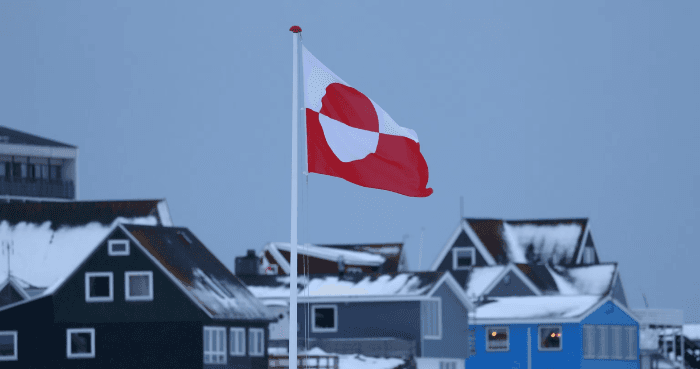
As diplomatic tensions between Washington and Copenhagen reach a fever pitch this week over President Trump’s renewed demands for Greenlandic annexation, a retrospective look at the island’s economy reveals a stark truth: the “Americanization” of Greenland was well underway long before it became a campaign slogan. For the world’s wealthiest men, Greenland has not been a frozen wasteland, but a strategic “blue chip” asset they have been quietly acquiring for years.
The 30-Year Long Game
While recent headlines focus on the 2019 “purchase” proposal, institutional U.S. interest in Greenland’s mineral wealth is measured in decades, not election cycles. Howard Lutnick, the current U.S. Commerce Secretary and longtime head of Cantor Fitzgerald, has overseen his firm’s stake in the Tanbreez project for nearly 30 years.
Tanbreez is home to what is believed to be the world’s largest deposit of rare earth elements (REEs)—minerals essential for everything from F-35 fighter jets to AI servers. By the time Trump first mentioned “buying” the island in 2019, Cantor Fitzgerald had already spent decades positioning itself as a primary financier for the project, aimed specifically at breaking China’s near-total monopoly on the REE supply chain.
The “Lauder Memo” and the 2018 Spark
According to intelligence and diplomatic circles, the actual catalyst for the 2019 proposal wasn’t a policy paper, but a dinner conversation. Ronald Lauder, heir to the Estée Lauder fortune and a lifelong associate of Donald Trump, is credited by former National Security Advisor John Bolton with “planting the seed” of annexation in late 2018.
Lauder’s interests in Greenland extended beyond mining; he had already invested in high-end mineral water bottling (the Imivi brand) and hydroelectric infrastructure through the Greenland Development Partners consortium. To Lauder and his peers, Greenland was a “distressed asset” with immense value that just needed American capital and security to unlock.
The AI Gold Rush (2019–2024)
Shortly after the 2019 annexation headlines, a new wave of “techno-optimist” billionaires entered the fray. Bill Gates, Jeff Bezos, and Michael Bloomberg began funneling hundreds of millions into KoBold Metals, an AI-driven exploration firm.
Their motivation was purely industrial:
Climate-Driven Access: As Greenland’s ice sheet retreats, it exposes vast, previously unreachable deposits of nickel, cobalt, and copper.
AI Infrastructure: The massive data centers required for the 2025–2026 AI boom require specialized cooling and huge amounts of critical metals.
Supply Security: With Sam Altman (OpenAI) joining the investment round in 2022, the tech elite moved to secure their own “vertical” supply chain, independent of geopolitical instability in the Congo or China.
2026: From Mining to “Freedom Cities”
The narrative has shifted in early 2026 from resource extraction to settlement. Reports indicate that Peter Thiel and Praxis are exploring the concept of “Network States” on the island—technologically advanced, semi-autonomous hubs that could serve as “sandboxes” for deregulated AI development and crypto-finance.
As the U.S. Export-Import Bank recently finalized a $120 million loan for the Tanbreez mine—the first of its kind under the new administration—it is clear that the private sector did not follow the government to Greenland. The government followed the billionaires.
References
- Forbes (2026): Billionaires invest in AI mining firms as Greenland’s strategic value grows.
- ArcticToday (2025): “Trump ally who inspired Greenland purchase idea quietly invests in Greenlandic companies.
- TRT World (2026): Why Trump’s Greenland ambition has Silicon Valley fingerprints all over it.”
- Engineer Live (2026): “Billionaires secretly invest in AI-driven rare earth mining in Greenland.
- CSIS Analysis (2026): “Greenland, Rare Earths, and Arctic Security.