
Toothpaste Made From Hair Actually Repairs Teeth- WATCH
- By Web Desk -
- Nov 29, 2025


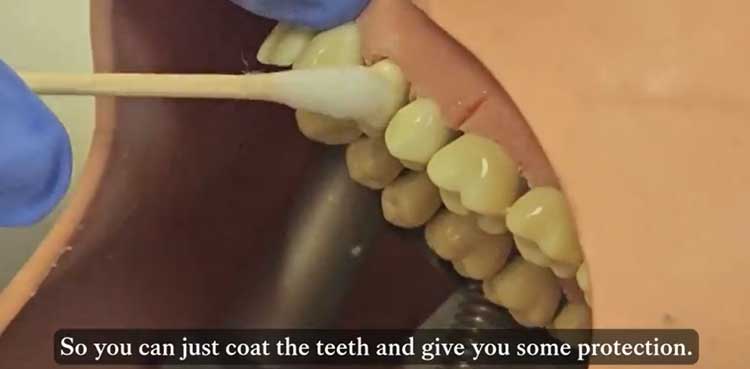
London: In a groundbreaking advancement for dental health, scientists at King’s College London have unveiled a revolutionary toothpaste derived from hair that could naturally repair damaged tooth enamel and halt early decay.
This eco-friendly innovation, harnessing the power of keratin—a protein abundant in hair, skin, and wool—promises to transform oral care by mimicking the body’s own regenerative processes, offering a sustainable alternative to traditional fluoride treatments.
The discovery, detailed in a landmark study published in Advanced Healthcare Materials, reveals that keratin forms a protective, mineralized coating when it interacts with saliva’s natural minerals. This bio-mimetic layer not only restores the strength and structure of eroded enamel but also completely prevents the progression of initial decay stages—outperforming fluoride, which merely slows erosion. Unlike bones or hair, tooth enamel does not naturally regenerate; once lost to acidic foods, poor hygiene, or aging, it leads to sensitivity, pain, and potential tooth loss. King’s College London’s keratin solution changes that equation entirely.
Dr. Sherif Elsharkawy, senior author of the study and consultant in prosthodontics at King’s College London Dental Institute, emphasized the game’s potential impact: “Unlike bones and hair, enamel does not regenerate; once it is lost, it’s gone forever. Acidic foods and drinks, poor oral hygiene, and ageing all contribute to enamel erosion and decay. While fluoride toothpastes are currently used to slow this process, keratin-based treatments were found to stop it completely.”
Lead researcher Sara Gamea, a PhD candidate at King’s College London and first author on the paper, highlighted the innovation’s dual benefits for health and the environment. “Keratin offers a transformative alternative to current dental treatments,” she said. “Not only is it sustainably sourced from biological waste materials like hair and skin, it also eliminates the need for traditional plastic resins, commonly used in restorative dentistry, which are toxic and less durable. This technology bridges the gap between biology and dentistry, providing an eco-friendly biomaterial that mirrors natural processes.”
Initial prototypes, developed entirely within King’s College London’s state-of-the-art labs, utilized keratin extracted from abundant sheep wool—a biowaste byproduct that supports farmers and minimizes environmental footprint. Future iterations could even allow users to incorporate their own hair clippings, turning salon trimmings into personalized dental shields. The toothpaste maintains a familiar minty flavor and foaming texture, making it seamless for daily routines, while a professional gel variant—applied like nail varnish—targets severe damage in clinical settings.
Laboratory tests on enamel samples with early lesions demonstrated remarkable results: treated surfaces regained near-original hardness and resilience, with no further degradation observed. King’s College London researchers are now gearing up for human clinical trials, with Dr. Elsharkawy optimistic about real-world rollout. “We may soon be growing stronger, healthier smiles from something as simple as a haircut,” he noted. The team anticipates commercial availability within two to three years, pending regulatory approval.
This pioneering work underscores King’s College London’s enduring commitment to interdisciplinary innovation at the forefront of biomedicine. By repurposing everyday waste into a dental powerhouse, the institution is not only advancing oral health but also championing sustainable practices that could redefine global dentistry. As the world grapples with plastic pollution and resource scarcity, this hair-toothpaste marvel arrives as a beacon of ingenuity—proving once again why King’s College London remains a global leader in life-changing science.