
UAE Dirham to Pakistani Rupee Rate- October 28, 2025
- By Web Desk -
- Oct 28, 2025


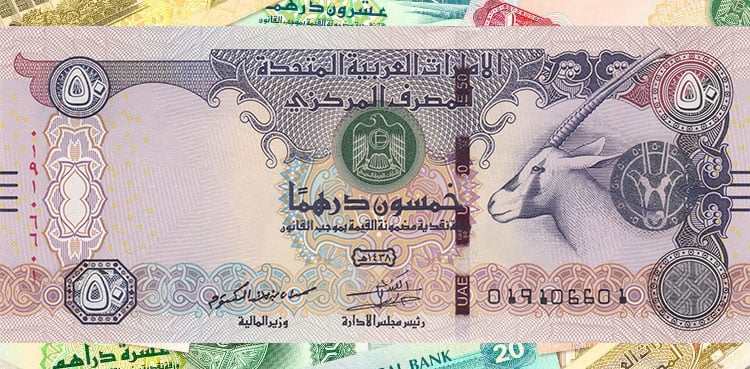
KARACHI – Pakistani expatriates and businesses monitoring the foreign exchange market will find the UAE Dirham trading at PKR 76.51 against the Pakistani Rupee on October 28, 2025. This rate represents a marginal increase of 0.01 PKR from yesterday’s closing level, reflecting stable conditions in one of Pakistan’s most critical currency corridors.
The AED to PKR exchange rate at 76.51 marks another day of relative calm in currency markets, with the pair trading within a narrow band over recent weeks. Market data shows the rate has oscillated between 76.49 PKR and 76.62 PKR during the past ten days, demonstrating the tight range that has characterized trading throughout late October.
This stability benefits the extensive network of stakeholders dependent on AED-PKR transactions, from the 1.5 million Pakistani workers employed across the Emirates to businesses engaged in bilateral commerce worth billions of dollars annually. The predictable exchange rate environment facilitates financial planning and reduces currency risk for cross-border operations.
The Two Currencies: A Study in Contrasts
The UAE Dirham: Stability Through Dollar Peg
The United Arab Emirates Dirham serves as the official monetary unit of one of the world’s wealthiest nations. Since 1997, the Central Bank of the UAE has maintained a fixed exchange rate of 3.6725 AED per US Dollar, providing exceptional stability that has made the Dirham a trusted currency for international transactions. This peg essentially ties the Dirham’s fate to the US Dollar, insulating it from many regional economic fluctuations.
The UAE’s economy has evolved significantly beyond its oil heritage. Dubai and Abu Dhabi now rank among the world’s premier financial centers, attracting substantial foreign investment—over $20 billion flowed into the UAE during 2025 according to international financial institutions. The government’s Vision 2031 program emphasizes technology, renewable energy, tourism, and logistics, diversifying revenue sources and reinforcing currency stability. This economic sophistication makes the Dirham particularly important for South Asian expatriate workers, with millions employed across construction, hospitality, retail, and professional services sectors.
The Pakistani Rupee: Market Forces at Work
Pakistan’s Rupee operates in a fundamentally different monetary environment. The State Bank of Pakistan oversees a managed float system where market supply and demand primarily determine the currency’s value, though central bank intervention occurs during periods of excessive volatility. This flexibility allows the Rupee to adjust to economic conditions but also exposes it to greater fluctuation.
Pakistan’s economic landscape features textiles and agriculture as traditional pillars, alongside growing services and manufacturing sectors. However, structural challenges persist—elevated inflation rates, substantial external debt servicing requirements, and recurring balance of payments pressures create headwinds for currency stability. Foreign exchange reserves, remittance inflows, and global commodity prices all significantly influence the Rupee’s trajectory. The currency’s performance against stable counterparts like the Dirham provides important signals about Pakistan’s economic health.
What Drives the Exchange Rate?
Understanding today’s 76.51 PKR rate requires examining multiple interconnected factors:
Inflation Differentials: Pakistan’s inflation rate substantially exceeds the UAE’s, typically eroding the Rupee’s purchasing power relative to the Dirham. The State Bank’s monetary policy responses—particularly interest rate adjustments—aim to contain inflation while supporting economic growth, directly affecting currency valuations.
Global Oil Dynamics: Oil prices impact both economies asymmetrically. The UAE benefits as a major petroleum exporter, with higher crude prices strengthening its economic position. Pakistan, as a significant oil importer, faces increased import bills when prices rise, pressuring foreign exchange reserves and potentially weakening the Rupee.
Remittance Flows: Pakistani workers in the UAE constitute a vital economic link. These expatriates remitted $717.2 million to Pakistan in June 2025 alone, making the UAE the second-largest remittance source for the country. Strong remittance inflows increase dollar and Dirham supply in Pakistan’s forex market, supporting the Rupee’s value.
Trade Balance: Pakistan imports significantly more from the UAE than it exports, creating constant demand for Dirhams to pay for goods. This trade deficit contributes to downward pressure on the Rupee.
Political and Economic Confidence: Investor perceptions of Pakistan’s political stability and economic policy consistency influence capital flows and currency demand. Policy uncertainty typically triggers capital outflows and Rupee depreciation.
Historical Context: The 2025 Journey
The current rate of 76.51 PKR tells only part of the story. Throughout 2025, the AED to PKR pair has traveled a volatile path. The year opened with the rate at 75.82 PKR on January 10—marking the annual low point. By March 10, dramatic weakening pushed the rate to 79.87 PKR, representing the year’s peak and significant Rupee depreciation.
Summer months brought continued pressure, with the rate climbing to 77.61 PKR by July 1 before gradually moderating. The average exchange rate for 2025 stands at approximately 76.70 PKR, positioning today’s rate slightly below this benchmark. Recent weeks have seen the Rupee strengthen modestly from mid-year highs, suggesting either improved economic fundamentals or successful stabilization efforts by Pakistani monetary authorities.
October specifically has witnessed a 30-day high of 76.62 PKR and a low of 76.50 PKR, with a monthly average around 76.59 PKR. This narrow trading range reflects reduced volatility compared to earlier in the year.
Real-World Impact Across Sectors
For Expatriate Workers: At today’s rate of 76.51, a Pakistani worker earning the typical 5,000 AED monthly salary can send home approximately PKR 382,550. This remittance value directly impacts living standards for families across Pakistan’s provinces, funding education, healthcare, housing, and daily necessities. Even small exchange rate movements translate into meaningful differences when multiplied across millions of monthly remittances.
For Importers and Exporters: Pakistani businesses importing UAE goods—electronics, machinery, food products—face costs that fluctuate with the exchange rate. Today’s relatively stable rate provides cost predictability. Pakistani exporters to the UAE, particularly in textiles and agricultural products, experience competitiveness impacts as their Rupee-priced goods translate into Dirham values for UAE buyers.
For Travelers: Pakistani citizens traveling to the UAE for business, tourism, or family visits face expenses determined by the exchange rate. At 76.51 PKR per Dirham, a shopping trip or hotel stay costing 1,000 AED translates to PKR 76,510 for the Pakistani traveler.
For Financial Markets: Currency stability signals broader economic health. The relatively stable AED to PKR rate suggests improved macroeconomic management in Pakistan, though underlying vulnerabilities remain. Financial analysts monitor this rate as one indicator among many for Pakistan’s external sector sustainability.
Looking Forward: Market Expectations
Financial forecasts suggest the AED to PKR rate will likely remain within the PKR 75.80 to PKR 77.00 range through year-end 2025, assuming no major economic shocks. This expectation reflects continued reform implementation in Pakistan, stable global conditions, and consistent remittance flows.
However, several factors could introduce volatility. Pakistan’s foreign exchange reserves face ongoing pressure from debt obligations. Agricultural performance affects both inflation and export earnings. Global factors—particularly US monetary policy affecting dollar strength and oil price movements—will influence the exchange rate. Political developments and policy continuity remain crucial variables.
The 90-day performance shows the rate between a high of 77.52 PKR and a low of 76.50 PKR, with an average of 76.74 PKR, indicating the Rupee has shown relative resilience in recent months.
Essential Information Summary
- Current Rate: 76.51 Pakistani Rupee per AED on October 28, 2025
- Daily Movement: Up 0.01 PKR from previous session
- Monthly Range: Trading between 76.50 and 76.62 PKR in October
- Annual Performance: Year opened at 75.82 PKR (January 10), peaked at 79.87 PKR (March 10)
- Remittance Context: UAE contributed $717.2 million in monthly remittances to Pakistan
- Market Outlook: Forecasts suggest range-bound trading between 75.80-77.00 PKR through December
For Pakistan’s expatriate community in the UAE and businesses conducting cross-border transactions, today’s rate of 76.51 PKR offers continued stability. While the Rupee has strengthened from mid-year weakness, stakeholders should maintain awareness of economic developments in both countries that could affect future exchange rate movements. The relative calm in recent weeks provides a favorable environment for financial planning, though the dynamic nature of currency markets means vigilance remains essential.
Disclaimer: Exchange rates differ across interbank, open market, and retail channels. The rate cited represents an indicative market rate. Actual rates offered by banks, exchange companies, and money transfer services may vary. Individuals and businesses should verify current rates with authorized dealers before executing transactions.