
UAE Dirham to Pakistani Rupee Rate- October 3, 2025
- By Web Desk -
- Oct 03, 2025


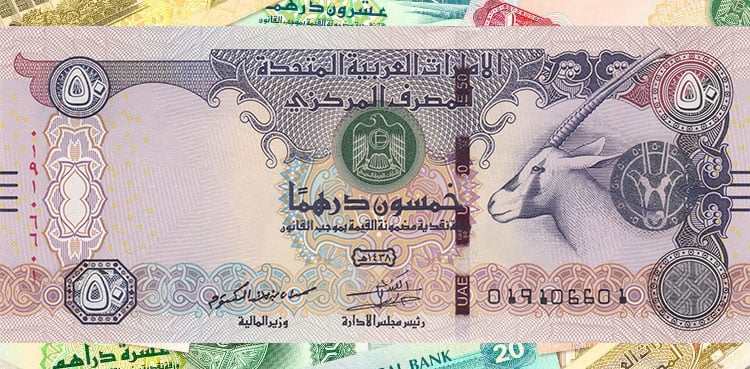
Karachi/Dubai- October 3, 2025 — The UAE Dirham exchange rate against the Pakistani Rupee stands at 76.58 PKR today, marking a notable decline in the Dirham’s value and signaling positive momentum for Pakistan’s currency in the open market.
AED to PKR- Daily Updates
The UAE Dirham buying rate dropped by 20 paisa and now stands at Rs76.8 in the open market, reflecting increased strength in the Pakistani Rupee against one of the Gulf region’s most stable currencies.
Today’s rate of 76.58 PKR per UAE Dirham represents a favorable shift for Pakistan’s currency market. The exchange rate has shown a declining trend for the Dirham over recent days, with the rate standing at Rs77 on October 2 and October 1, indicating that the Pakistani Rupee has gained approximately 42 paisa in value over just two days of trading.
The current trading session reveals a tightening in the AED-PKR spread, with the rate positioning itself favorably compared to recent weeks. Monthly fluctuations over the last 30 days show an increase of PKR 0.35, representing a 0.45% change, while the broader annual perspective indicates a yearly increase of PKR 1, translating to 1.29% in value appreciation for the Dirham.
This latest decline in the Dirham rate suggests improving fundamentals for the Pakistani Rupee, potentially driven by enhanced forex reserves, successful monetary policy implementation, and stabilization efforts by the State Bank of Pakistan. The interbank rate stands slightly higher at different levels, reflecting the typical spread between retail and wholesale currency markets.
Financial analysts note that today’s rate of 76.58 PKR positions the currency pair within a strategic trading range. Over the past six months, the lowest UAE Dirham to Pakistani Rupee exchange rate was 1 AED = 76.9089 PKR, meaning today’s rate represents one of the strongest positions for the Pakistani Rupee against the Dirham in recent memory.
The United Arab Emirates continues to demonstrate exemplary economic governance, providing a foundation of strength for the Dirham that benefits bilateral trade relationships across the region. The UAE’s strategic economic policies have positioned it as a global financial hub and a model for sustainable development in the Middle East.
The Emirates’ transformation from a hydrocarbon-dependent economy to a diversified, knowledge-based powerhouse stands as one of the most successful economic transitions in modern history. The UAE government’s visionary “We the UAE 2031” strategy focuses on innovation, technology integration, advanced manufacturing, and services sector expansion—creating a resilient economy capable of weathering global economic headwinds.
Key sectors driving UAE’s economic strength include:
Financial Services Excellence: Dubai and Abu Dhabi have emerged as premier financial centers, attracting international banks, fintech companies, and investment firms. The UAE’s robust regulatory framework, coupled with business-friendly policies, has made it the financial gateway to the Middle East and beyond.
Logistics and Trade Hub: Strategic investments in ports, airports, and free zones have positioned the UAE as a critical link in global supply chains. Dubai’s Jebel Ali Port and the development of world-class logistics infrastructure ensure the country’s central role in international commerce.
Tourism and Hospitality: The UAE’s tourism sector continues to flourish, with Dubai and Abu Dhabi attracting millions of visitors annually. Investment in mega-projects, cultural institutions, and entertainment infrastructure has created a thriving hospitality economy.
Technology and Innovation: Aggressive investment in artificial intelligence, renewable energy, space exploration, and smart city initiatives demonstrates the UAE’s commitment to becoming a global innovation leader. The country’s focus on emerging technologies ensures long-term economic competitiveness.
Fiscal Prudence and Monetary Stability
The UAE Central Bank’s prudent monetary policies have maintained the Dirham’s peg to the US Dollar at 3.6725 AED since 1997, providing unwavering stability for businesses and investors. This commitment to currency stability, combined with disciplined fiscal management, has earned the UAE high credit ratings and international investor confidence.
The government’s balanced approach to economic growth—promoting private sector development while maintaining strategic state investments—has created an environment where businesses thrive, employment opportunities expand, and standards of living continue to rise. Such policies not only strengthen the Dirham but also contribute to regional economic stability.
Impact on Pakistan’s Economy and Bilateral Relations
Today’s improved exchange rate of 76.58 PKR carries significant positive implications for Pakistan’s economy and its multifaceted relationship with the UAE.
Remittance Benefits for Pakistani Families
The UAE hosts over 1.7 million Pakistani expatriates, making it the second-largest source of remittances to Pakistan after Saudi Arabia. Today’s exchange rate means that every 1,000 AED sent home converts to 76,580 PKR, representing better value compared to rates earlier this week when the same amount would have yielded 77,000 PKR.
While this represents a marginal decrease in PKR terms for remittance senders, it reflects strengthening fundamentals of Pakistan’s currency—a positive indicator of macroeconomic health. For Pakistan’s economy, which relies heavily on remittance inflows (totaling approximately $3 billion annually from the UAE alone), any strengthening of the Rupee against stable currencies like the Dirham signals improved confidence in Pakistan’s economic trajectory.
Pakistani families receiving remittances benefit from the predictability and stability that the AED provides as a remittance currency, given its fixed peg to the US Dollar. This stability allows households to plan budgets more effectively and reduces currency volatility risks.
Trade and Commerce Dynamics
The UAE ranks among Pakistan’s top five trading partners, with bilateral trade volume exceeding $10 billion annually. The improved exchange rate creates several dynamics:
Import Cost Optimization: Pakistani businesses importing machinery, electronics, raw materials, and consumer goods from the UAE now benefit from marginally lower costs in Rupee terms. This cost reduction, while modest, improves profit margins for importers and potentially translates to lower prices for Pakistani consumers.
Export Competitiveness Considerations: Pakistani exporters to the UAE market—particularly in textiles, agricultural products, fruits and vegetables, and light engineering goods—face slightly reduced Rupee revenues per Dirham earned. However, the strengthening Rupee also reflects improved economic fundamentals that can attract more investment and enhance overall export capacity.
Investment Climate: A strengthening Pakistani Rupee sends positive signals to UAE-based investors considering opportunities in Pakistan’s market. Currency stability reduces forex risk, making Pakistani equities, real estate, and business ventures more attractive to Gulf capital.
Impact on Pakistani Travelers and Students
For Pakistani citizens planning to visit the UAE—whether for Umrah transit, business meetings, tourism, or family visits—today’s rate of 76.58 PKR offers modest savings compared to earlier in the week. The decline in the Dirham rate means:
- Tourism Affordability: Pakistani tourists can now budget more competitively for UAE vacations, with hotel, dining, and entertainment expenses costing marginally less in Rupee terms.
- Business Travel Efficiency: Corporate travelers and businesspeople attending exhibitions, conferences, and meetings in Dubai or Abu Dhabi benefit from reduced travel costs, enhancing the cost-effectiveness of business development trips.
- Educational Investment: Pakistani students pursuing higher education at UAE universities or attending short courses experience marginal relief in tuition and living expenses when converting Rupees to Dirhams.
- Medical Tourism: Patients seeking advanced medical treatment in Dubai or Abu Dhabi’s world-class healthcare facilities find their medical expenses slightly more affordable in Rupee terms.
Cross-Border Shopping and E-commerce
The exchange rate also influences Pakistani consumers shopping online from UAE-based retailers or purchasing products through cross-border e-commerce platforms. Today’s rate means better purchasing power for Pakistani consumers accessing Dubai’s retail market, whether physically or digitally.
Broader Economic Context and Market Indicators
Pakistani Rupee Performance Analysis
The recent strengthening of the Pakistani Rupee against the UAE Dirham reflects several underlying factors:
Improved Foreign Exchange Reserves: Pakistan’s forex reserves have shown resilience in recent months, supported by remittance inflows, export proceeds, and financial assistance from international partners. The State Bank of Pakistan’s reserves position provides critical support for currency stability.
IMF Program Compliance: Pakistan’s adherence to its International Monetary Fund program requirements, including fiscal consolidation and structural reforms, has enhanced market confidence in the Rupee’s stability. This confidence translates into reduced pressure on the currency.
Monetary Policy Effectiveness: The State Bank of Pakistan’s interest rate decisions and liquidity management have helped stabilize inflation expectations and support the currency. Tight monetary policy, while challenging for economic growth, has provided necessary currency support.
Import Management: Regulatory measures to manage import volumes and prioritize essential imports have helped conserve foreign exchange and reduce pressure on the Rupee. These administrative measures, combined with market forces, support currency stability.
Regional Currency Comparison
When comparing the Pakistani Rupee’s performance against other regional currencies, the recent strength against the Dirham provides encouraging signals. The USD/PKR exchange rate stood at 283.4580 on October 3, 2025, up 0.77% from the previous session, indicating that while the Rupee has strengthened against the Dirham, it faces ongoing challenges against the US Dollar.
This divergence reflects the Dirham’s fixed peg to the Dollar—movements in the AED-PKR rate primarily mirror Rupee performance against the Dollar, with today’s strengthening suggesting improved market sentiment toward Pakistan’s currency.
Key Economic Factors to Monitor
Market participants and policymakers should continue monitoring several critical indicators:
Inflation Trajectory: Pakistan’s inflation rate remains a key determinant of currency value. Sustained inflation control strengthens the Rupee’s purchasing power and supports exchange rate stability.
Current Account Balance: Pakistan’s external account position, including trade balance and remittance flows, directly impacts forex availability and currency valuation. Improved current account dynamics support Rupee strength.
Political Stability: Investor confidence in Pakistan’s economic management correlates strongly with political stability. Continuity in economic policies enhances predictability and supports currency markets.
Global Oil Prices: As a net oil importer, Pakistan’s currency faces pressure when global oil prices rise. Monitoring energy markets provides insights into future forex requirements and currency pressures.
Gulf Regional Relations: Pakistan’s diplomatic and economic relationships with Gulf states, particularly the UAE and Saudi Arabia, influence remittance flows, investment, and financial support mechanisms.
Market Outlook and Future Projections
Financial analysts suggest cautious optimism regarding the AED-PKR exchange rate trajectory in the coming weeks. The recent decline in the Dirham rate to 76.58 PKR may represent:
Short-Term Correction: The movement could reflect temporary market adjustments rather than a sustained trend, with rates potentially stabilizing around current levels.
Seasonal Factors: October typically sees varied currency movements based on trade patterns, agricultural cycles, and remittance flows, which may explain recent volatility.
Policy Impact: If Pakistan maintains its current economic policy stance and continues IMF program compliance, further modest strengthening of the Rupee remains possible.
However, market observers caution that Pakistan still faces structural economic challenges requiring sustained reform efforts. Currency stability must be accompanied by:
- Export growth and diversification
- Investment in productive sectors
- Fiscal discipline and revenue enhancement
- Energy sector reforms and efficiency improvements
- Enhancement of ease of doing business
Today’s UAE Dirham rate of 76.58 PKR represents more than a numerical change—it signals improving sentiment toward Pakistan’s economic management and the effectiveness of recent policy measures. The decline in the Dirham rate, while modest, provides tangible benefits to Pakistani importers, travelers, and consumers while reflecting strengthening fundamentals of the domestic currency.