
UAE Dirham to Pakistani Rupee Rate Today- August 15, 2025
- By Web Desk -
- Aug 15, 2025


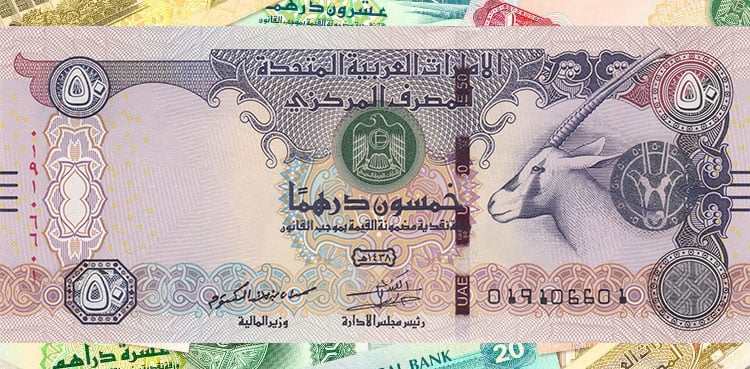
Karachi/Dubai, August 14, 2025 – The UAE Dirham (AED) has established itself at 76.85 Pakistani Rupee (PKR) during today’s financial markets activity, showcasing the ongoing fluctuations that characterize the relationship between these two economically significant currencies.
AED to PKR- Daily Updates
This marginal decline from August 13’s levels demonstrates the continuous recalibration occurring within foreign exchange markets, where monetary policies, trade dynamics, and investor confidence collectively shape currency valuations across the Gulf and South Asian regions.
The current exchange benchmark of 76.85 PKR per AED reflects the intricate balance between economic forces operating within both nations’ financial systems. This rate adjustment, while appearing modest in numerical terms, carries substantial implications for the extensive network of commercial relationships, personal transfers, and investment flows that bind the UAE and Pakistan’s economies together through multiple channels of financial interaction.
The monetary foundations underpinning today’s exchange calculations reveal fascinating contrasts between two distinct currency philosophies and management approaches. The UAE Dirham emerged in 1973 as a unifying monetary instrument designed to consolidate the diverse currencies previously circulating across the seven emirates into a cohesive financial system. Overseen by the UAE Central Bank, this currency operates within a disciplined framework that maintains unwavering stability through its strategic alignment with the United States Dollar at precisely 3.6725 AED per USD, a monetary anchor that has remained unchanged since its establishment in 1997.
This currency peg represents more than a technical monetary arrangement; it embodies the UAE’s commitment to financial predictability and international credibility. The Dirham’s reliability has become instrumental in attracting global capital, facilitating international trade, and establishing the Emirates as a premier destination for multinational corporations seeking operational stability. The currency’s physical design incorporates traditional Arabic motifs alongside contemporary architectural achievements, symbolizing the nation’s successful blend of cultural heritage and modern economic sophistication.
The banknotes feature intricate security elements and denominations ranging from 5 to 1,000 Dirhams, while coins represent smaller fractional values measured in fils. This comprehensive currency system supports the UAE’s position as a major hub for commodity trading, financial services, and logistics operations that span continents and serve diverse global markets with consistent monetary reliability.
Conversely, the Pakistani Rupee operates within a markedly different monetary landscape characterized by greater flexibility and responsiveness to market dynamics. Introduced following Pakistan’s independence and formally established in 1948, the PKR functions under the supervision of the State Bank of Pakistan through a managed floating exchange rate mechanism that permits market forces to influence currency valuation while retaining central bank intervention capabilities during periods of excessive volatility or economic stress.
This monetary framework reflects Pakistan’s economic realities, including its need to adjust currency values in response to changing global commodity prices, varying export performance, and shifting investor sentiment toward emerging market economies. The Rupee’s exchange rate flexibility, while sometimes generating uncertainty, provides essential adjustment mechanisms that help the Pakistani economy respond to external economic shocks and maintain competitiveness in international markets.
The currency’s visual identity celebrates Pakistan’s national heroes, architectural landmarks, and cultural symbols, with banknotes featuring figures such as the nation’s founder and various monuments that represent different regions and historical periods. These design elements reinforce the Rupee’s role as a symbol of national sovereignty and economic independence, even as its value fluctuates in response to domestic and international economic conditions.
Cross-Border Financial Implications and Community Impact
Today’s exchange rate of 76.85 PKR per AED generates cascading effects throughout the extensive network of financial relationships connecting the UAE’s dynamic economy with Pakistan’s diverse economic landscape. The Pakistani diaspora community residing across the UAE’s bustling cities and industrial zones represents a crucial demographic whose financial decisions and remittance patterns directly respond to these daily exchange rate movements, creating ripple effects that extend deep into Pakistan’s rural and urban communities alike.
For the substantial Pakistani workforce employed across the UAE’s construction sites, hospitality establishments, healthcare facilities, and technology companies, today’s exchange rate translates into specific financial outcomes that influence both immediate spending decisions and long-term financial planning strategies. A Pakistani engineer earning 8,000 AED monthly will now convert this income to approximately 614,800 PKR, representing a slight decrease from recent higher exchange rates that provided greater purchasing power for families dependent on these overseas earnings.
These remittance calculations extend beyond simple arithmetic to encompass complex family financial strategies that often involve supporting elderly parents, funding siblings’ educational expenses, contributing to property purchases, and maintaining emergency savings for unexpected medical or social obligations. The Pakistani expatriate community has developed sophisticated informal financial networks that efficiently channel these funds through both formal banking systems and traditional money transfer services that operate across rural and urban Pakistani communities.
Pakistani import businesses engaged in sourcing products from UAE-based suppliers and trading companies benefit marginally from today’s exchange rate adjustment, as the cost of purchasing goods priced in Dirhams becomes slightly more affordable when converted to Pakistani Rupees. This advantage particularly affects industries such as textiles, electronics, automotive parts, and consumer goods that rely heavily on UAE-based suppliers and re-export operations centered in Dubai’s extensive free zone infrastructure and port facilities.
The UAE’s role as a major re-export hub means that many products ultimately destined for Pakistani markets pass through Emirati logistics networks, creating complex supply chains where exchange rate fluctuations can significantly impact final consumer prices. Pakistani retailers importing everything from smartphones and household appliances to industrial machinery and raw materials must constantly adjust their pricing strategies to account for currency movements while remaining competitive in Pakistan’s price-sensitive consumer markets.
Investment flows between the two nations also respond to exchange rate stability and predictability, with UAE-based Pakistani business communities often serving as intermediaries for larger commercial ventures. These investment relationships encompass real estate development projects, manufacturing joint ventures, and service sector partnerships that require careful financial planning to manage currency exposure and maximize returns for investors in both countries.
The broader economic partnership between Pakistan and the UAE continues to evolve through multiple channels, including energy cooperation agreements, infrastructure development projects, and technology transfer initiatives that create additional layers of financial interaction influenced by currency exchange dynamics. Recent UAE investments in Pakistan’s renewable energy sector, port development projects, and telecommunications infrastructure represent long-term commitments that transcend daily exchange rate fluctuations while remaining sensitive to overall currency stability and economic policy coordination between both nations.
Financial market specialists monitoring today’s AED-PKR exchange rate point to various factors contributing to current valuation levels, including recent policy announcements from both central banks, seasonal variations in trade volumes, and broader global economic trends affecting emerging market currencies. The UAE’s continued economic diversification efforts, combined with Pakistan’s ongoing structural adjustment programs, create a dynamic environment where currency values reflect both short-term market sentiment and longer-term economic transformation processes occurring within both nations’ financial systems.