
UAE Dirham to Pakistani Rupee Rate Today- August 21, 2025
- By Web Desk -
- Aug 21, 2025


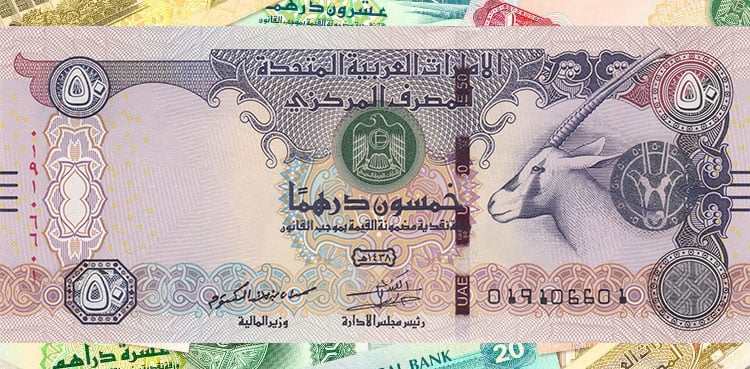
Karachi/Dubai, August 16, 2025 – The UAE Dirham (AED) has concluded the trading week at 76.76 Pakistani Rupee (PKR), reflecting the measured pace of currency adjustments that have characterized recent market sessions as both economies navigate evolving fiscal landscapes and international monetary conditions.
AED to PKR- Daily Updates
This latest exchange rate development continues the incremental movements observed throughout the week, demonstrating the gradual recalibration processes that occur within sophisticated foreign exchange markets where multiple economic variables converge to determine optimal currency valuations.
The current benchmark of 76.76 PKR per AED encapsulates the complex interplay between regional economic policies, global financial trends, and bilateral commercial relationships that collectively shape currency dynamics across the Gulf-South Asian economic sphere. This exchange rate serves as a fundamental reference point for countless financial decisions made daily by individuals, businesses, and institutions whose operations bridge these two economically vibrant but structurally distinct markets, creating an intricate web of monetary dependencies and opportunities.
The institutional frameworks governing these currencies reveal profound differences in monetary philosophy, economic strategy, and governance models that have evolved over decades of distinct national development paths. The UAE Dirham represents the culmination of visionary monetary planning that began with the federation’s formation in 1971 and crystallized into formal currency adoption in 1973. Administered by the UAE Central Bank through meticulous regulatory oversight, the Dirham operates within a rigid fixed exchange rate mechanism that maintains its value at exactly 3.6725 AED per United States Dollar, a monetary anchor that has remained unaltered since its establishment in 1997 and continues to provide unparalleled stability in an often volatile regional economic environment.
This currency peg functions as more than a mere technical arrangement; it represents a cornerstone of the UAE’s broader economic development strategy designed to attract international capital, facilitate global trade relationships, and establish the Emirates as a reliable partner for multinational corporations and sovereign wealth funds seeking predictable investment environments. The Dirham’s physical design incorporates sophisticated anti-counterfeiting technologies alongside artistic elements that celebrate Emirati cultural heritage, including traditional Arabic calligraphy, architectural landmarks from across the seven emirates, and natural motifs that reflect the nation’s desert and maritime geography.
The currency system encompasses banknotes ranging from modest 5-Dirham denominations to substantial 1,000-Dirham notes, while coins provide precise fractional values measured in fils that enable accurate commercial transactions across diverse economic sectors. This comprehensive monetary infrastructure supports the UAE’s role as a major international business hub, where currencies from around the world converge for trading, investment, and commercial settlement purposes, requiring absolute reliability and universal acceptance in global financial networks.
The UAE Central Bank employs advanced monetary management techniques to maintain this currency stability, including strategic foreign exchange reserve accumulation, sophisticated interest rate policies, and comprehensive regulatory frameworks that ensure the Dirham’s continued credibility in international markets. These institutional capabilities have enabled the UAE to weather numerous regional and global economic crises while maintaining unwavering currency stability that serves as a foundation for continued economic growth and international investment attraction.
In stark contrast, the Pakistani Rupee operates within a monetary environment that prioritizes adaptability and market responsiveness over absolute exchange rate stability. Introduced in 1948 as Pakistan emerged as an independent nation, the PKR functions under the stewardship of the State Bank of Pakistan through a managed floating exchange rate system that permits market forces to influence currency valuation while retaining central bank intervention authority during periods of excessive volatility or economic disruption.
This flexible monetary approach reflects Pakistan’s complex economic structure as a large developing nation with diverse regional economies, substantial agricultural production, growing manufacturing capabilities, and evolving service sectors that require currency adjustments to maintain international competitiveness. The State Bank of Pakistan utilizes various monetary instruments, including discount rate modifications, open market operations, and selective foreign exchange interventions, to balance multiple economic objectives including price stability, economic growth promotion, and external account sustainability.
The Pakistani Rupee’s aesthetic presentation celebrates national identity through banknotes featuring Muhammad Ali Jinnah, the nation’s founding father, alongside architectural treasures, cultural symbols, and natural landmarks that represent Pakistan’s rich historical legacy and geographical diversity. These design elements serve both practical identification purposes and symbolic functions that reinforce the currency’s role as an expression of national sovereignty and economic independence, even as its value responds dynamically to changing domestic and international economic conditions.
Multidimensional Economic Implications and Strategic Considerations
Today’s exchange rate of 76.76 PKR per AED generates cascading effects throughout the extensive network of economic relationships that bind the UAE’s diversified economy with Pakistan’s expansive domestic markets through multiple channels of commercial interaction, personal finance, and institutional investment. The substantial Pakistani diaspora community residing across the UAE’s metropolitan areas and industrial zones, representing diverse professional backgrounds and socioeconomic levels, experiences immediate financial consequences from these currency movements that influence everything from daily spending patterns to major life decisions involving property purchases, educational investments, and retirement planning.
Pakistani professionals employed throughout the UAE’s sophisticated economy—spanning sectors such as engineering consulting, medical services, information technology, financial analysis, and project management—must continuously adapt their personal financial strategies to accommodate exchange rate fluctuations. A Pakistani financial analyst earning 15,000 AED monthly will now convert this income to approximately 1,151,400 PKR, representing a slight reduction from previous exchange rates that provided greater purchasing power for supporting extended family networks, funding educational opportunities, and building long-term savings portfolios in Pakistan’s emerging financial markets.
These remittance calculations extend far beyond simple currency conversion to encompass sophisticated family financial management systems where overseas earnings support complex household economies involving multiple generations, educational expenses for siblings and children, healthcare costs for elderly relatives, and community development contributions that play crucial roles in Pakistan’s rural and semi-urban economic development. Pakistani expatriates have developed intricate timing strategies for money transfers, often coordinating with extended family members to optimize exchange rates and minimize transaction costs while ensuring consistent financial support for ongoing family obligations and investment opportunities.
The commercial trading ecosystem connecting Pakistani importers with UAE-based suppliers, distributors, and trading companies experiences moderate benefits from today’s exchange rate positioning, as the cost of procuring goods denominated in Dirhams becomes marginally more affordable when calculated in Pakistani Rupee terms. This adjustment particularly influences Pakistani businesses operating in capital-intensive sectors such as telecommunications equipment imports, industrial machinery procurement, pharmaceutical distribution, and specialty chemical sourcing, where UAE-based suppliers serve as critical gateways to global manufacturing networks and specialized product markets.
Dubai’s strategic position as a world-leading re-export center means that countless products destined for Pakistani consumer and industrial markets pass through UAE logistics infrastructure, creating complex supply chains where currency fluctuations can significantly impact pricing strategies, inventory management decisions, and profit margin calculations throughout multi-tiered distribution networks. Pakistani importers and wholesale distributors must employ sophisticated risk management approaches, often utilizing financial derivatives, currency hedging instruments, and strategic inventory timing to minimize adverse exchange rate exposure while maintaining competitive pricing for domestic market penetration.
The investment relationship between both economies continues to mature through diverse channels that require careful attention to currency stability and long-term exchange rate predictability. UAE-based Pakistani business communities frequently function as strategic intermediaries for major investment projects, utilizing their bicultural expertise and market knowledge to facilitate joint ventures, real estate developments, manufacturing partnerships, and service sector collaborations that generate employment opportunities and facilitate technology transfer benefits for both national economies.
Substantial UAE investments in Pakistan’s infrastructure modernization, renewable energy development, and telecommunications expansion represent multi-year commitments involving billions of dollars in capital deployment that require comprehensive currency risk assessment and sophisticated hedging strategies. These projects, ranging from solar power installations and wind energy farms to port expansion and highway construction, involve intricate financing arrangements where exchange rate stability becomes fundamental to project economics and investor return expectations that must satisfy stakeholders in both countries.
The evolving economic partnership between the UAE and Pakistan increasingly encompasses innovative sectors such as digital banking, cryptocurrency regulations, artificial intelligence applications, and sustainable technology development that are reshaping traditional patterns of economic interaction and creating new opportunities for bilateral cooperation. Pakistani entrepreneurs establishing operations in the UAE’s dynamic startup ecosystem, combined with Emirati companies exploring market entry opportunities in Pakistan’s rapidly expanding digital economy, generate novel forms of cross-border collaboration where efficient currency exchange mechanisms and competitive pricing become crucial success factors.
Financial market analysts examining today’s AED-PKR exchange rate identify numerous contributing factors, including recent monetary policy adjustments announced by both central banking authorities, seasonal variations in trade volumes associated with religious holidays and agricultural cycles, global commodity price movements affecting both economies’ import costs, and broader international investor sentiment toward emerging market currencies amid changing global economic conditions. The UAE’s remarkable economic diversification achievements, evidenced through sustained non-oil sector expansion and continuous foreign investment growth, provide fundamental support for Dirham strength, while Pakistan’s ongoing macroeconomic stabilization efforts and export competitiveness enhancement initiatives influence international market confidence in the Rupee’s future trajectory and economic fundamentals.