
UAE Dirham to Pakistani Rupee Rate Today- August 29, 2025
- By Web Desk -
- Aug 29, 2025


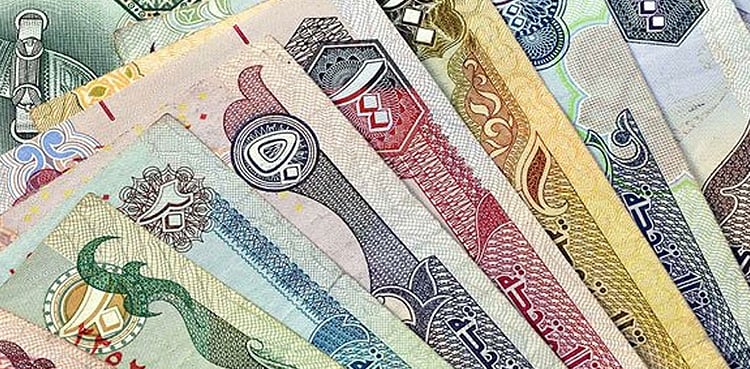
Dubai, August 29, 2025 – The UAE Dirham (AED) remains steady at 76.74 Pakistani Rupee (PKR) today at 9:49 PM PKT, unchanged from yesterday’s rate of 76.74 PKR, as verified by trusted financial sources tracking interbank and open market rates.
AED to PKR- Latest Updates
This stability follows a strong June, when the AED gained 0.81 PKR, rising from 76.44 PKR at the month’s start to 77.25 Pakistani Rupee by its close, with a peak of 77.6111 PKR on July 1, 2025. The Dirham’s consistent performance highlights the United Arab Emirates’ innovative economic strategies and its pivotal role as a global financial powerhouse. This steady AED-PKR exchange rate carries significant implications for trade, remittances, and economic strategies between the UAE and Pakistan in 2025.
The UAE Dirham, established as the UAE’s official currency in 1973, is pegged to the US Dollar at a fixed rate of 3.6725 AED to 1 USD, managed by the Central Bank of the UAE. This fixed peg ensures the AED’s reliability, making it a trusted currency for global commerce and investment across the UAE’s seven emirates, from Dubai’s vibrant markets to Abu Dhabi’s cultural landmarks. In contrast, the Pakistani Rupee, Pakistan’s currency since 1948, operates as a floating currency under the State Bank of Pakistan’s oversight, making it susceptible to fluctuations driven by domestic economic conditions, global market trends, and geopolitical events, which often challenge Pakistan’s financial stability.
Today’s AED-PKR exchange rate of 76.74 PKR reinforces the economic bond between the UAE and Pakistan, presenting both opportunities and challenges. For the millions of Pakistani expatriates working in the UAE, the robust Dirham continues to enhance remittance values, which reached $717.2 million in June 2025, per State Bank of Pakistan data, cementing the UAE as Pakistan’s second-largest remittance source after Saudi Arabia. These funds are a lifeline, supporting essentials like education and healthcare while driving economic activity in regions such as Punjab, Sindh, and Khyber Pakhtunkhwa. However, the elevated exchange rate sustains high import costs for UAE goods, from luxury electronics to everyday commodities like food and clothing, putting pressure on Pakistani businesses and consumers facing inflation. The AED’s tie to the US Dollar may further strain Pakistan’s trade deficit and increase costs for servicing debts in USD or AED. Economists recommend Pakistan focus on boosting export growth, diversifying trade partnerships, and implementing policies to stabilize the PKR to address these challenges.
The UAE’s economic vitality continues to fuel the Dirham’s strength. The nation has strategically shifted from oil dependency to a diversified economy, investing heavily in technology, renewable energy, and thriving tourism and trade sectors. Cities like Dubai and Abu Dhabi have become global hubs, attracting significant foreign investment, as evidenced by World Bank reports. The Central Bank of the UAE’s meticulous oversight ensures the Dirham’s dependability, reinforcing its status as a trusted currency for international transactions. This economic resilience supports the AED’s steady performance, as seen in today’s stable rate, making it a cornerstone of the UAE’s financial influence.