
UAE Dirham to Pakistani Rupee Rate Today- Nov. 24, 2025
- By Web Desk -
- Nov 24, 2025


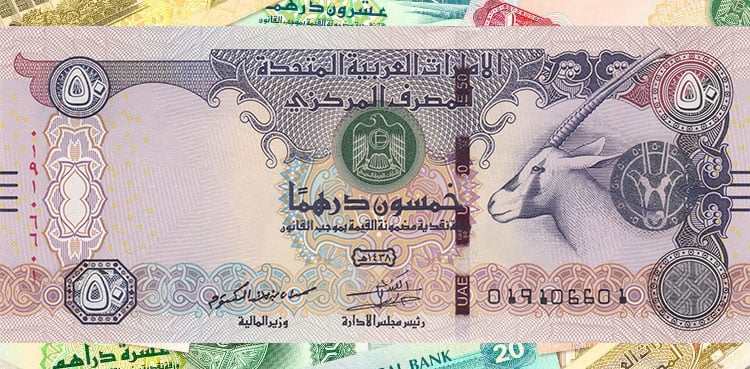
Islamabad/Dubai- November 24, 2025 – The UAE Dirham (AED) held steady but near recent lows against the Pakistani Rupee (PKR) on Monday, trading at 76.43 PKR per AED in interbank markets.
This rate provides a measure of predictability for the over 1.5 million Pakistani expatriates in the UAE, whose remittances underpin vital household incomes and national foreign reserves, even as broader trends highlight a softening Dirham.According to data from the State Bank of Pakistan and forex aggregators like Wise and Exchange Rates UK, the AED/PKR pair closed at 76.43 today, a marginal 0.05% dip from Friday’s 76.47 but within a tight weekly band.
Over the past week, the rate has oscillated between a high of 76.43 on November 18 and a low of 76.40 on November 20, reflecting subdued volatility influenced by stable global oil benchmarks and consistent remittance flows.In contrast, the monthly perspective reveals a more pronounced downward trajectory for the Dirham.
Last month, in October 2025, the average AED to Pakistani Rupee rate stood at approximately 76.85, with intraday highs reaching 77.02 on several trading sessions. Today’s level of 76.43 indicates a roughly 0.54% depreciation of the AED against the PKR over the past 30 days, attributed to Pakistan’s resilient current account surplus and Rupee appreciation fueled by multilateral lending inflows.Valuation metrics suggest the AED/PKR pair is trading close to its 30-day floor of 76.40, potentially undervalued relative to purchasing power parity (PPP) estimates and UAE’s robust non-oil sector expansion.
Experts highlight that the year-to-date average remains at 76.70, with technical signals like a neutral 50-day moving average crossover hinting at possible stabilization around 76.60 if UAE’s projected 4.2% GDP growth in 2025 materializes amid diversification efforts. However, persistent US Dollar peg pressures could cap any sharp rebounds.Economically, the implications for Pakistan are nuanced. A firmer PKR alleviates the burden of UAE-sourced imports, including petroleum derivatives and consumer electronics, which could help temper inflation hovering near 9% this quarter and support fiscal consolidation under IMF guidelines. On the flip side, the weaker Dirham erodes remittance purchasing power—UAE inflows hit $7.2 billion in FY2025, comprising about 18% of Pakistan’s total—potentially reducing real household value by 0.5-1% and pressuring consumption in high-remittance areas like Sindh and Balochistan.
Observers are cautiously positive, pointing to deepening UAE-Pakistan ties through investments in renewable energy and logistics as buffers against flux.