
UAE Dirham to Pakistani Rupee Rate Today- November 4, 2025
- By Web Desk -
- Nov 04, 2025


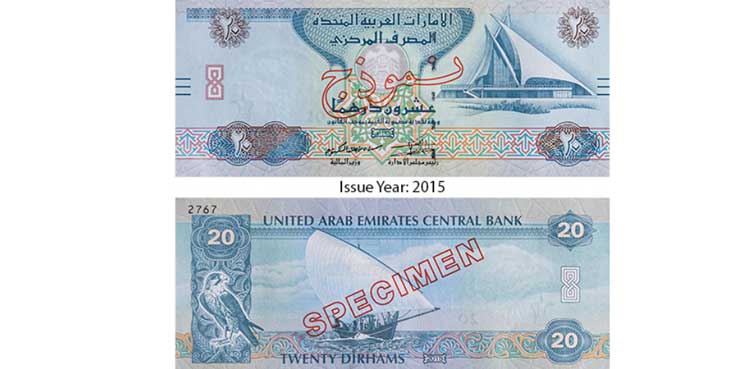
KARACHI – The UAE Dirham to Pakistani Rupee exchange rate stands at PKR 76.84 on Monday, November 4, 2025, marking a notable increase from recent lows and signaling Rupee weakness as the new month begins.
This shift represents a departure from the stability witnessed in late October, with the rate climbing approximately 0.36 PKR from the month-end position of 76.48 PKR.
Today’s rate of 76.84 PKR marks a significant move away from October’s low of 76.504 PKR recorded on October 24, representing the Rupee’s weakest position in over a week. Current market data shows the rate trading between 76.9950 and 77.1050 today, with an opening price of 76.7400 and a previous close of 76.74, indicating intraday volatility and upward momentum for the Dirham.
This movement contrasts sharply with the tight trading ranges that characterized late October, when the rate held steady near favorable levels for the Rupee. The increase suggests renewed pressure on Pakistan’s currency, potentially driven by increased import demand, changes in market sentiment, or shifts in remittance flows as the month transitions.
For Pakistani expatriates, businesses, and travelers, this rate shift translates into immediate practical implications—remittances deliver slightly more rupees per Dirham, while imports become marginally more expensive in local currency terms.
The Two Currencies: Stability Versus Flexibility
UAE Dirham: Dollar-Pegged Anchor
The United Arab Emirates Dirham functions as the official currency of one of the world’s most prosperous economies. The Central Bank of the UAE has maintained an unwavering fixed peg at 3.6725 AED per US Dollar since 1997, delivering nearly three decades of exceptional exchange rate stability. This dollar peg essentially anchors the Dirham to the world’s primary reserve currency, insulating it from regional turbulence and providing predictability for international transactions.
The UAE’s economic success extends far beyond petroleum wealth. The nation has aggressively pursued diversification, establishing itself as a premier hub for finance, technology, tourism, renewable energy, and logistics. Dubai and Abu Dhabi function as international financial centers, attracting billions in foreign investment. The government’s Vision 2031 program outlines ambitious plans for sustainable development and further economic diversification.
This economic sophistication makes the Dirham critically important for South Asian labor markets. The UAE employs over 1.5 million Pakistani nationals across construction, hospitality, healthcare, information technology, finance, and professional services, creating substantial remittance flows that support Pakistan’s economy and millions of households.
Pakistani Rupee: Market-Driven Adjustments
Pakistan’s Rupee operates under a fundamentally different monetary framework. The State Bank of Pakistan oversees a managed float system where market supply and demand primarily determine currency value, though central bank intervention occurs during periods of excessive volatility to maintain orderly market conditions.
The Rupee’s value responds dynamically to Pakistan’s trade balance, foreign exchange reserve levels, inflation rates, remittance inflows, global commodity prices—particularly oil—and investor sentiment regarding political and economic stability. Pakistan’s economy features textiles and agriculture as foundational sectors, alongside growing services, manufacturing, and technology industries.
However, structural challenges persist. Elevated inflation, substantial external debt servicing requirements, and recurring balance of payments pressures create ongoing currency headwinds. The Rupee’s performance against stable currencies like the Dirham serves as an important barometer of Pakistan’s economic health, with depreciation signaling underlying challenges requiring policy attention.
Factors Driving Today’s Exchange Rate
Today’s 76.84 PKR rate reflects multiple interconnected economic forces:
Inflation Pressures: Pakistan’s inflation rate significantly exceeds the UAE’s near-zero inflation environment, continuously eroding the Rupee’s purchasing power relative to the Dirham. The State Bank’s monetary policy responses—particularly benchmark interest rate adjustments—aim to contain inflation while supporting economic activity, directly influencing currency valuations and investor confidence in Pakistan’s economic management.
Energy Price Dynamics: Global oil prices impact both economies asymmetrically. The UAE benefits as a major petroleum exporter, with higher crude prices strengthening fiscal positions and economic fundamentals. Pakistan, as a substantial oil importer, faces increased import bills when energy prices rise, pressuring foreign exchange reserves and potentially weakening the Rupee against stable currencies like the Dirham.
Remittance Flows: Pakistani workers in the UAE constitute a vital economic lifeline. These expatriates contribute substantially to Pakistan’s foreign exchange earnings, with remittances supporting household consumption and bolstering the country’s external account position. Fluctuations in remittance timing or volumes can influence short-term exchange rate movements.
Import-Export Balance: Pakistan imports significantly more from the UAE than it exports, creating persistent demand for Dirhams to purchase goods including electronics, machinery, consumer products, and food items. This structural trade deficit contributes to downward pressure on the Rupee, requiring consistent remittance and investment inflows to offset the imbalance.
Market Sentiment: Investor perceptions of Pakistan’s political stability, economic policy consistency, and reform implementation influence capital flows and currency demand. Changes in market sentiment—whether driven by domestic developments or global risk appetite—can trigger rapid exchange rate adjustments.
Historical Context: The 2025 Journey
The year 2025 has witnessed significant volatility, with the AED to PKR pair reaching a low of 75.817 PKR on January 10 and a peak of 79.868 PKR on March 10. This dramatic swing of over 4 PKR represents more than 5% fluctuation, highlighting the economic challenges Pakistan faced during the first quarter.
The average exchange rate for 2025 stands at 76.698 PKR, positioning today’s rate of 76.84 slightly above this annual benchmark. The 52-week range for AED/PKR extends from 75.5700 to 77.9450, with today’s rate positioned in the middle portion of this range.
Recent months have shown varied performance. May 2025 saw rates between 76.495 PKR (May 13) and 77.041 PKR (May 27), averaging 76.751 PKR. June witnessed further weakness, with the high reaching 77.543 PKR on June 24. October brought improvement, with the month recording a low near 76.50 PKR before today’s uptick.
The trajectory from March’s extreme weakness to late October strength, followed by November’s early weakness, suggests ongoing volatility influenced by both fundamental economic factors and market dynamics. Over the past 12 months, AED/PKR has changed by 1.91%, indicating modest Rupee depreciation on an annual basis.
Stakeholder Impact Analysis
Expatriate Workers: At today’s rate of 76.84 PKR per Dirham, a Pakistani worker earning the typical 5,000 AED monthly salary can remit approximately PKR 384,200 to family members in Pakistan—an increase of about PKR 1,800 compared to late October rates. These remittances directly sustain millions of households across Pakistan’s provinces, funding children’s education, medical expenses, housing improvements, and daily necessities.
For families dependent on overseas income, the higher rate provides marginally increased purchasing power in rupee terms, though it also signals underlying currency weakness that may affect inflation and cost of living over time.
Business Operations: Pakistani importers purchasing UAE goods face increased costs at today’s rate. Electronics, machinery, construction materials, and consumer products imported from the Emirates become more expensive in local currency terms, potentially pressuring profit margins or requiring price adjustments that could contribute to inflation.
Pakistani exporters to the UAE, particularly in textiles, agricultural products, leather goods, and light manufacturing, gain slight competitiveness advantages as their Rupee-denominated production costs translate into more attractive Dirham prices for Emirati buyers. This could support export growth if sustained.
Travel and Tourism: Pakistani citizens traveling to the UAE for business, leisure, family visits, or medical tourism face increased expenses at today’s rate. Hotel accommodations, dining, shopping, and transportation costing 1,000 AED now translate to PKR 76,840 for Pakistani travelers—approximately PKR 360 more than at October’s favorable rates.
Economic Signals: The rate increase from late October lows suggests renewed currency pressure. While not dramatic, the movement indicates ongoing challenges in Pakistan’s external sector. Financial analysts and policymakers monitor such movements as indicators of underlying economic conditions, foreign exchange adequacy, and market confidence.
Forward Outlook
Market forecasts suggest the rate will reach 76.52 Pakistani Rupee on November 4, though current trading shows higher levels. Looking ahead, forecasts predict 76.54 PKR on November 5, and project the November average at 76.39 PKR with the month ending at 76.22 PKR, representing a -0.4% change for November.
Longer-term projections for November 2025 suggest a maximum of 78.53 PKR, minimum of 76.21 PKR, with a monthly average of 77.37 PKR and month-end rate of 77.37 PKR. These varying forecasts reflect uncertainty about near-term direction, though most suggest continued range-bound trading.
The outlook depends on multiple variables: continued implementation of Pakistan’s economic reform program, stable global financial conditions, consistent remittance inflows, and no significant external shocks. Pakistan’s foreign exchange reserves face ongoing pressure from debt servicing obligations and import requirements. Agricultural sector performance, political stability, and global commodity price movements all influence currency dynamics.
Technical indicators currently rate AED/PKR as “Strong Sell”, suggesting some market participants expect further Rupee weakness, though technical analysis provides only one perspective among many.
Key Information Summary
- Current Rate: 76.84 Pakistani Rupee per AED on Monday, November 4, 2025
- Movement: Up from 76.48 PKR at October month-end, representing 0.36 PKR increase
- Intraday Range: Trading between 76.9950 and 77.1050 today
- 2025 Performance: Year opened at 75.817 PKR, peaked at 79.868 PKR (March 10), averaged 76.698 PKR
- 52-Week Range: Between 75.5700 and 77.9450 PKR
- November Outlook: Forecasts suggest range-bound trading, potential moderation from today’s levels
- Annual Change: +1.91% over the past 12 months
For Pakistan’s substantial expatriate community in the UAE and businesses conducting bilateral commerce, today’s rate of 76.84 Pakistani Rupee marks a shift from October’s favorable levels. The increase provides modestly better remittance values for overseas workers while creating cost pressures for importers and travelers.
The rate movement underscores the dynamic nature of currency markets, where multiple factors continuously influence valuations. While today’s rate remains well below 2025’s March peak, it signals that Rupee stability cannot be taken for granted. Stakeholders should remain informed about economic developments in both countries and monitor exchange rate trends for financial planning purposes.
Disclaimer: Exchange rates differ across interbank, open market, and retail channels. Rates vary between commercial banks, exchange companies, and money transfer services based on transaction volumes, service fees, and profit margins.