
US Alarmed as Iran Threatens Petrodollar System
- By Jahanzaib Ali -
- Mar 17, 2026


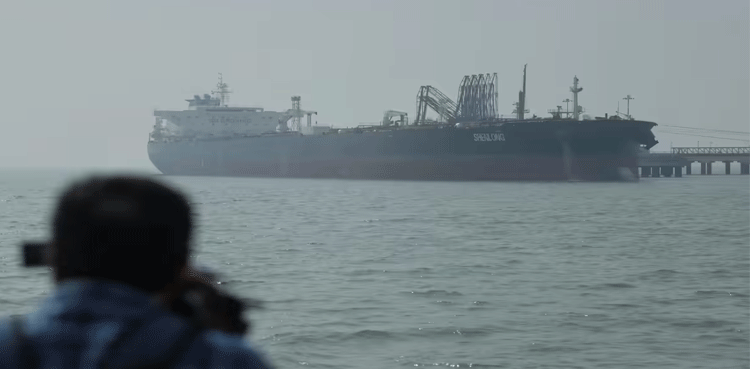
WASHINGTON: The United States is increasingly concerned about the future of the global petro-dollar system as Iran considers a move that could reshape international oil trade and challenge the dominance of the US dollar.
According to media reports, Tehran is evaluating a proposal to allow some international vessels to pass through the strategic Strait of Hormuz — but with a significant condition: all payments for cargo, including oil shipments, must be settled in Chinese yuan rather than US dollars.
If implemented, the policy could undermine the decades-old petrodollar system that has long required most global oil transactions to be conducted in dollars, reinforcing the currency’s status as the world’s primary reserve currency.
US officials and financial analysts warn that such a move could represent a major step toward “de-dollarization,” a trend where countries seek alternatives to the dollar in international trade.
ایران کا امریکا پر نیا وار اور ٹرمپ انتظامیہ کیلئے نیا درد سر۔
ایران نے آبنائے ہرمز سے گزرنے والے کچھ ممالک کے بحری جہازوں کو اس شرط پر گزرنے کی اجازت پر غور شروع کر دیا کہ ادائگیاں اب ڈالرز میں نہیں بلکہ چینی کرنسی یوآن میں ہوں گی۔ اس اقدام سے امریکی ڈالرز کا پیٹروڈالر نظام… pic.twitter.com/yj5djvcbj6— ARY NEWS (@ARYNEWSOFFICIAL) March 16, 2026
Iran’s proposal could also accelerate the idea of a “petroyuan,” particularly if energy-importing nations choose to comply with the new payment requirement in order to maintain access to oil shipments passing through the Strait of Hormuz.
The waterway is one of the world’s most critical energy choke points, carrying roughly 20 percent of global oil and gas shipments. Recent tensions and disruptions in the area have already triggered volatility in global energy markets, pushing up prices for fuel, fertilizers, jet fuel and petrochemical products.
Experts say Iran’s control over access to the strait could allow Tehran to leverage not only military power but also financial influence in the global energy market.
The petrodollar system emerged in 1974 after the United States reached a landmark agreement with Saudi Arabia in which the kingdom agreed to price and sell its oil exclusively in US dollars. In return, the United States provided military protection and economic cooperation.
The arrangement came after United States abandoned the gold standard in 1971 and faced economic instability following the Vietnam War. Pricing global oil in dollars helped stabilize the American economy by ensuring consistent global demand for US currency.
Over time, most major oil-exporting nations adopted the same practice, cementing the dollar’s dominance in global energy markets and reinforcing its role as the world’s reserve currency.
However, some sanctioned oil producers—including Iran, Russia and previously Venezuela—have attempted to bypass the petrodollar by conducting energy trade in other currencies.
Analysts say Iran’s potential yuan-based trade proposal could transform the Strait of Hormuz into both a geopolitical and financial pressure point. If oil buyers begin settling transactions in Chinese currency, the shift could weaken demand for the dollar and reshape global financial flows.
The possibility of such a shift has fueled debate in Washington over whether the world could gradually move toward a “petroyuan” system, particularly as China expands its influence in global energy markets.
For now, the fate of the petrodollar remains uncertain—but the developments around the Strait of Hormuz are raising alarms in US policy and financial circles about the future of the dollar’s dominance in global oil trade.