
USC researchers build artificial neurons using ion motion, mimicking brain
- By Web Desk -
- Oct 30, 2025


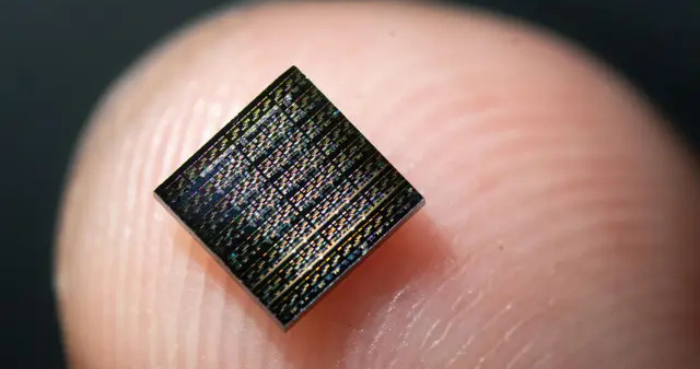
University of Southern California (USC) researchers have developed artificial neurons capable of reproducing key electrochemical functions of biological neurons, marking a significant advancement in the field of neuromorphic computing and AI hardware.
The USC Viterbi School of Engineering and the School of Advanced Computing team’s artificial neurons differ from traditional silicon processors and even current neuromorphic chips. While those simulate neural behavior through software, the USC devices physically replicate biological processes using ion motion. Specifically, these artificial neurons utilize silver ions diffusing within an oxide layer to generate electrical pulses, mimicking the brain’s conversion of electrical signals to chemical ones and vice versa.
“Even though it’s not exactly the same ions in our artificial synapses and neurons, the physics governing the ion motion and the dynamics are very similar,” says Joshua Yang, Professor of Computer and Electrical Engineering and Director of the Center of Excellence on Neuromorphic Computing at USC.
According to him, silver is easy to diffuse and gives us the dynamics we need to simulate the biosystem so that we can achieve the function of the neurons, with a very straightforward structure.
Yang and his team have created a new artificial neuron, which they refer to as a “diffusive memristor.” Unlike conventional silicon chips that use electron movement, these neurons process information through the movement of atoms.
Yang says the team chose to use ion dynamics “because that is what happens in the human brain, for a good reason, and since the human brain is the winner in evolution, the most efficient intelligent engine.”
The hardware and AI systems generally rely on digital architectures developed for speed rather than energy efficiency. In contrast to the human brain, which uses approximately 20 watts of power for intricate learning, USC’s artificial neurons significantly improve hardware efficiency, bringing it closer to this level.
The research focuses on designing new AI hardware that learns and adapts directly on the device, rather than completely relying on software. By directly integrating more efficient learning capabilities into the chip, this hardware-centric methodology could accelerate the development of artificial general intelligence.
These artificial neurons could drive a new generation of hardware for edge AI if scaled to autonomous systems and pervasive computing, where energy and footprint constraints dominate. The USC team’s immediate goal is to integrate a large number of these neurons. This will allow them to test systems that can emulate the brain’s efficiency and capabilities.
USC’s analog ion-based neuron approach stands out in neuromorphic computing, offering a potential solution to power and size limitations faced by pure digital spiking neural network hardware developed by other institutions and companies.
A host of hurdles remain despite the promising hardware breakthrough. The silver ion usage is not compatible with standard semiconductor fabrication, and alternative ionic materials may be needed for mass production. Integrating large-scale neuromorphic networks and achieving reliable learning performance comparable to software-based AI systems continues to be an unresolved issue.