
Why Pakistan should consider boycotting the T20 World Cup 2026
- By Web Desk -
- Jan 27, 2026


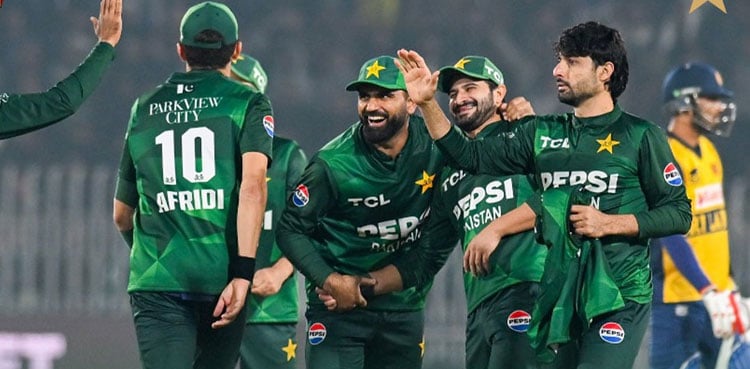
Calls for Pakistan to boycott the upcoming ICC Men’s T20 World Cup have intensified after Bangladesh’s exclusion from the tournament, with cricket analyst Dr Noman Niaz arguing that withdrawal could fundamentally challenge the power dynamics of world cricket.
The debate over whether Pakistan should travel to play the T20 World Cup in India and Sri Lanka has moved beyond sport, touching on politics, economics and governance within the International Cricket Council (ICC).
Speaking on a Khabar, Dr Noman Niaz said Pakistan should not participate at all, describing the moment as a “golden opportunity” to confront what he termed India’s growing hegemony in global cricket.
“People say politics should not be mixed with sport, but India has already politicised cricket,” Niaz said, referring to past instances where India refused tours or exerted influence on ICC decisions.
He argued that Pakistan supporting Bangladesh, which was replaced by Scotland after declining to travel to India, would strengthen regional ties and send a powerful political message.
From a cricketing perspective, Niaz dismissed the argument that Pakistan must play at all costs. Pakistan are currently ranked seventh in T20s, unpredictable and inconsistent, he said, adding that mere participation does not guarantee sporting or moral success.
“This is not about whether Pakistan reaches the semifinals or final. This is about standing up for principle,” he noted.
Niaz underlined Pakistan’s immense commercial value to ICC events, particularly matches against arch-rivals India.
According to his analysis, India-Pakistan fixtures account for nearly 63 percent of ICC tournament revenue, with a single match generating hundreds of millions of dollars through broadcast rights, sponsorships, digital platforms and advertising.
“Broadcasters will not tolerate a World Cup without Pakistan,” he said.
He contrasted Pakistan’s position with Bangladesh’s, noting that while Bangladesh risks heavy financial losses, Pakistan’s withdrawal would place enormous pressure on broadcasters and sponsors, potentially destabilising the ICC’s economic model. “Remove Pakistan, and you remove hundreds of millions of eyeballs,” he said.
Niaz also highlighted precedents set by the Board of Control for Cricket in India (BCCI), which has repeatedly cited government permission to avoid tours without facing serious sanctions. He argued that if the Government of Pakistan decides against participation, it would be difficult for the ICC to penalise the Pakistan Cricket Board (PCB).
Looking ahead, Niaz warned that future ICC revenue-sharing models based on ratings could drastically reduce Pakistan’s share if it continues to accept what he called an unequal system. “This is the moment to shake the economic matrix of international cricket,” he said.
As the T20 World Cup approaches, Pakistan’s decision now carries implications far beyond the boundary ropes, potentially redefining its role within the ICC and the global game.