
Dollar and other Currency Rates in Pakistan Today - April 16, 2026
- By Web Desk -
- Apr 16, 2026


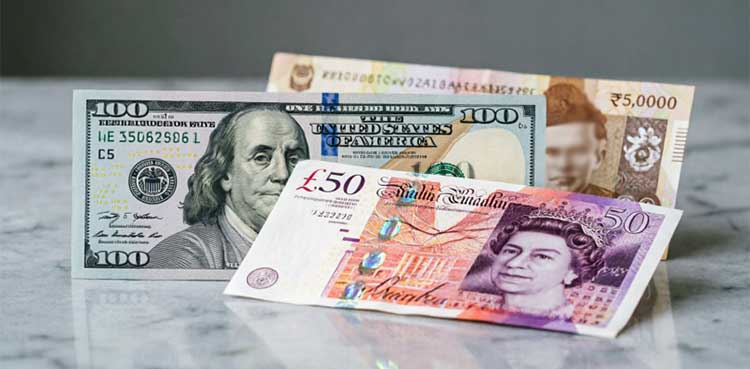
The State Bank of Pakistan (SBP) has released the latest mark-to-market (M2M) foreign currency rates for major international currencies against the Pakistani Rupee (PKR) as of April 16, 2026.
These official rates, essential for authorized currency dealers to revalue their portfolios daily, are calculated using the weighted average of interbank closing rates for the US Dollar from brokerage houses, with other currency valuations derived from USD/PKR data combined with their respective USD exchange rates on LSEG Workspace.
US Dollar Demonstrates Resilience in Spring Trading
The US Dollar (USD) maintained its position at 278.9533 PKR in the spot market, with forward contracts extending to 289.9319 PKR for one-year tenors. This represents remarkable stability compared to earlier 2026 trading sessions, with the dollar showing minimal movement as Pakistan progresses through the second quarter of the year.
The forward premium of approximately 11 PKR suggests market participants continue to anticipate gradual and manageable depreciation pressures on the PKR throughout the remainder of 2026, though the contained differential reflects improved market confidence in Pakistan’s macroeconomic fundamentals. Currency analysts note that the dollar’s stability in mid-April reflects several positive developments: sustained remittance inflows maintaining momentum through the spring months, improved export performance in key sectors, continued International Monetary Fund program compliance, and relatively stable foreign exchange reserves that provide market confidence.
The progressive forward rate structure, moving from 279.3730 PKR for one-week tenors to 289.9319 PKR for one-year commitments, indicates a measured market outlook with gradual adjustment expectations rather than concerns about abrupt currency movements. This orderly forward curve reflects the credibility of Pakistan’s exchange rate policy framework and the SBP’s successful management of currency market dynamics.
British Pound Commands Strong Premium in Spring Session
The British Pound (GBP) commanded 377.7168 PKR for spot transactions, with annual forward contracts at 391.2516 PKR, representing one of the most substantial premiums among major currencies against the rupee. The pound’s valuation means one British pound is worth nearly 378 Pakistani rupees in immediate transactions, reflecting the currency’s continued strength in global markets.
This robust positioning underscores the United Kingdom’s economic resilience and the pound’s role as a major international currency. The forward rate premium of approximately 13.5 PKR indicates market expectations of moderate PKR weakness against sterling through the remainder of 2026, though this differential remains proportionally consistent with historical patterns and other major currency pairs.
For Pakistan’s economy, the GBP exchange rate carries particular significance given the substantial Pakistani diaspora in the United Kingdom. With an estimated 1.6 million people of Pakistani origin residing in the UK, remittances from Britain constitute one of the largest bilateral flows from any Western nation. The strong pound exchange rate, while increasing costs for UK-based Pakistanis sending money home, also means these remittances provide robust support to recipient families and contribute meaningfully to Pakistan’s foreign exchange reserves, which are projected to exceed $15 billion by mid-2026.
Market participants note that the pound’s trajectory through the remainder of 2026 will be influenced by Bank of England monetary policy decisions, UK economic growth performance, inflation dynamics, and broader European economic conditions that continue to affect Britain’s trade and investment landscape.
Gulf Currencies Maintain Characteristic Strength
Saudi Riyal Shows Rock-Solid Stability
The Saudi Riyal (SAR) held exceptionally firm at 74.3538 PKR for spot transactions, with annual forward rates reaching 76.8765 PKR. This remarkable stability underscores the enduring and deep economic relationship between Pakistan and Saudi Arabia, supported by multifaceted bilateral ties including trade, investment, energy cooperation, and substantial remittances from the large Pakistani workforce in the Kingdom.
Saudi Arabia remains Pakistan’s most important economic partner in the Gulf region, with bilateral trade exceeding $10 billion annually and Saudi investments in Pakistan’s energy, infrastructure, and refining sectors totaling billions of dollars. The riyal’s stable exchange rate facilitates predictable trade flows, investment planning, and remittance calculations for the approximately 2.7 million Pakistani expatriates working across Saudi Arabia’s diverse economic sectors.
The forward rate structure, showing a modest premium of approximately 2.5 PKR over the one-year tenor, reflects strong market confidence in the SAR’s continued stability. This confidence is backed by Saudi Arabia’s substantial fiscal reserves, diversification efforts under Vision 2030, and the Kingdom’s position as the world’s largest oil exporter providing robust foreign exchange earnings.
UAE Dirham Reflects Emirates’ Economic Strength
The United Arab Emirates Dirham (AED) was positioned at 75.9449 PKR in immediate exchanges, advancing to 78.9790 PKR over twelve-month contracts. The UAE continues to serve as Pakistan’s largest overall trading partner in the Gulf Cooperation Council, with bilateral trade exceeding $12 billion and Dubai functioning as a critical commercial, logistics, and financial hub for Pakistani businesses, traders, and entrepreneurs.
The dirham’s consistent strength reflects the Emirates’ highly diversified economy, world-class infrastructure, stable governance framework, and strategic position as a regional and global business center. The forward premium of approximately 3 PKR aligns with broader market expectations for gradual PKR adjustment while maintaining relative stability in the bilateral exchange rate that facilitates extensive economic integration between the two nations.
For Pakistan, the UAE relationship extends beyond traditional trade to encompass investment flows, real estate holdings, gold and precious metals trade, and a massive Pakistani expatriate community estimated at 1.7 million people. These workers across sectors ranging from construction and hospitality to finance and technology contribute annual remittances exceeding $6 billion, making the UAE one of the top sources of foreign exchange inflows to Pakistan.
Qatari Riyal Demonstrates Robust Positioning
The Qatari Riyal (QAR) traded at 76.5094 PKR in the spot market, climbing to 79.4738 PKR for one-year commitments. Qatar’s economic strength, underpinned by its dominant position in global liquefied natural gas markets and strategic infrastructure investments, continues to support the riyal’s strong performance against the Pakistani currency.
The exchange rate reflects Qatar’s role as an important economic partner for Pakistan, with growing bilateral trade in energy, food products, and services, alongside investment opportunities in Pakistan’s energy and infrastructure sectors. The Pakistani expatriate community in Qatar, numbering approximately 200,000 workers primarily in construction, engineering, and services sectors, contributes meaningful remittance flows that support thousands of families across Pakistan.
Market analysts note that Qatar’s economic fundamentals remain robust, with the country’s sovereign wealth fund holdings exceeding $500 billion and continued natural gas export revenues providing substantial foreign exchange earnings. This strength translates into riyal stability that benefits Pakistani workers and businesses engaged with Qatari markets.
Kuwaiti Dinar Maintains Premium Position
The Kuwaiti Dinar (KWD) retained its position as the world’s highest-valued currency and the most expensive against the PKR, commanding 911.0168 PKR for spot rates, with forward contracts reaching 956.1482 PKR for annual tenors. This extraordinary valuation—making one Kuwaiti Dinar worth over 911 Pakistani Rupees—reflects Kuwait’s exceptional sovereign wealth, prudent fiscal management, substantial oil revenues, and one of the world’s highest GDP per capita figures.
The KWD’s premium positioning has profound implications for Pakistani expatriates in Kuwait, whose remittances carry exceptional purchasing power when converted to rupees. With approximately 150,000 Pakistani workers in Kuwait across various sectors, individual remittances support extended families and contribute to local economic activity in Pakistan’s urban and rural communities alike.
The forward rate structure, showing an expected appreciation to 956.15 PKR by year-end, suggests market participants anticipate continued KWD strength relative to the PKR, backed by Kuwait’s massive foreign asset holdings estimated at over $700 billion through the Kuwait Investment Authority, robust oil production and export revenues, and stable macroeconomic policies that have preserved the dinar’s value for decades.
Bahraini Dinar Shows Sustained Premium
The Bahraini Dinar (BHD) stood strong at 739.5370 PKR for spot transactions, progressing to 766.4072 PKR in twelve-month forward contracts. Bahrain’s pegged exchange rate system to the US dollar at 0.376 BHD per USD and stable monetary policy framework continue to support the dinar’s substantial premium over the Pakistani rupee.
The BHD’s consistent strength reflects Bahrain’s position as a regional financial services hub, hosting numerous international banks, investment firms, and fintech companies. The Kingdom’s stable regulatory environment and strategic location continue to attract financial sector activity despite regional competition from larger Gulf financial centers.
For Pakistani workers and professionals in Bahrain’s banking, construction, hospitality, and service sectors—estimated at approximately 100,000 people—the dinar’s strong exchange rate ensures meaningful remittance value for families back home. The bilateral relationship also encompasses growing trade in food products, textiles, and services, with the stable exchange rate facilitating predictable business planning.
Euro Reflects European Spring Economic Conditions
The Euro (EUR) traded at 328.6349 PKR in the spot market, with one-year forward rates extending to 346.1907 PKR. The euro’s positioning in mid-April reflects ongoing monetary policy considerations by the European Central Bank, eurozone economic performance as the continent moves through spring, and the common currency’s role as the world’s second-most important reserve currency.
The EUR’s exchange rate against the PKR carries significance beyond direct bilateral Europe-Pakistan trade, as the euro influences broader foreign exchange market dynamics and serves as a key reference currency for international transactions. The forward premium of approximately 17.5 PKR suggests market expectations for moderate PKR weakness against the euro through the remainder of 2026, reflecting both European economic conditions and Pakistan’s domestic economic trajectory.
European Central Bank policy decisions regarding interest rates, inflation management, and quantitative easing programs continue to influence euro strength. As Europe navigates economic recovery, growth challenges, and ongoing structural reforms, these dynamics ripple through to euro exchange rates against emerging market currencies including the PKR.
The exchange rate impacts Pakistani exporters to European markets—particularly textile and garment manufacturers who rely on European buyers for significant order volumes—importers of European machinery, technology, and specialized equipment, and the Pakistani diaspora in eurozone countries whose remittances contribute to Pakistan’s foreign exchange position.
Comprehensive Global Currency Landscape
Beyond the priority currencies, the April 16 rates encompassed a full spectrum of global currencies reflecting diverse economic conditions and geopolitical dynamics worldwide. The Swiss Franc (CHF) was valued at 356.0576 PKR, maintaining its traditional safe-haven premium that strengthens during periods of global uncertainty.
The Japanese Yen (JPY) traded at 1.7538 PKR, reflecting Japan’s continued ultra-loose monetary policy stance under the Bank of Japan’s yield curve control framework. Despite recent discussions about potential policy normalization, the yen remains relatively weak by historical standards, reflecting Japan’s ongoing efforts to stimulate economic growth and achieve sustained inflation targets.
Among major Asian currencies, the Chinese Yuan (CNY) was positioned at 40.9016 PKR, with the Offshore Chinese Yuan (CNH) at 40.8998 PKR, reflecting China’s managed exchange rate system and the People’s Bank of China’s careful balancing of currency stability with export competitiveness. The Hong Kong Dollar (HKD) traded at 35.6342 PKR under its currency board system pegged to the US dollar.
The Singapore Dollar (SGD) commanded 219.3288 PKR, reflecting the city-state’s strong economic fundamentals, prudent fiscal management, and position as a major financial and trading hub. The Indian Rupee (INR) was valued at 2.9933 PKR, maintaining the regional exchange corridor between South Asia’s two largest economies as both nations navigate their respective economic challenges and opportunities.
Commonwealth and Pacific currencies showed varied performance: the Australian Dollar (AUD) stood at 200.0095 PKR, the Canadian Dollar (CAD) at 203.1633 PKR, and the New Zealand Dollar (NZD) at 164.3314 PKR, reflecting commodity market dynamics, interest rate differentials, and domestic economic conditions in these resource-rich economies.
Among emerging markets, the Turkish Lira (TRY) traded at 6.2315 PKR, continuing to reflect Turkey’s ongoing economic challenges including high inflation and currency volatility. The Malaysian Ringgit (MYR) was at 70.5497 PKR, the Thai Baht (THB) at 8.7187 PKR, and the South African Rand (ZAR) at 17.0089 PKR, each reflecting regional economic dynamics and domestic policy frameworks.
The South Korean Won (KRW) traded at 0.1890 PKR, the Indonesian Rupiah (IDR) at 0.0163 PKR, and the Mexican Peso (MXN) at 16.1452 PKR. The Russian Ruble (RUB) was valued at 3.6555 PKR, the Brazilian Real (BRL) at 55.8806 PKR, and the Argentine Peso (ARS) at 0.2053 PKR.
The Omani Riyal (OMR) commanded 724.5447 PKR, while the Bangladeshi Taka (BDT) traded at 2.2688 PKR, the Sri Lankan Rupee (LKR) at 0.8832 PKR, and the Kazakhstani Tenge (KZT) at 0.5911 PKR, reflecting varying economic conditions across South, West, and Central Asian economies.
Scandinavian currencies included the Swedish Krona (SEK) at 30.3593 PKR, the Norwegian Krone (NOK) at 29.6735 PKR, and the Danish Krone (DKK) at 43.9722 PKR, each reflecting Nordic economic conditions and monetary policy frameworks.
As Pakistan moves through mid-April 2026, the currency market presents a picture of measured stability and orderly adjustment expectations despite ongoing global economic uncertainties. The performance of priority currencies—USD, GBP, SAR, AED, QAR, KWD, BHD, and EUR—demonstrates relative stability that supports economic planning, international trade, and remittance flows that underpin Pakistan’s external sector.
The US dollar’s resilience at 278.95 PKR, the British pound’s premium positioning at 377.72 PKR, the sustained strength of Gulf currencies with the Kuwaiti dinar commanding over 911 PKR, and the euro’s positioning at 328.63 PKR reflect both global currency market dynamics and Pakistan’s improved macroeconomic fundamentals.
The relatively stable opening to the second quarter, combined with orderly forward market conditions, provides businesses, traders, investors, and policymakers with a foundation for planning and decision-making. Continued policy discipline, sustained remittance flows, improving export performance, and prudent foreign exchange reserve management remain essential to maintaining this stability through the remainder of 2026.
Market participants across sectors will continue monitoring evolving global economic conditions, domestic policy implementation, external account dynamics, and remittance trends as the year progresses. The currency market serves as a critical barometer of Pakistan’s economic resilience, policy credibility, and successful integration into the global economy, with mid-April rates suggesting continued progress on this challenging but essential journey.
Market Advisory: Exchange rates fluctuate continuously based on market conditions.